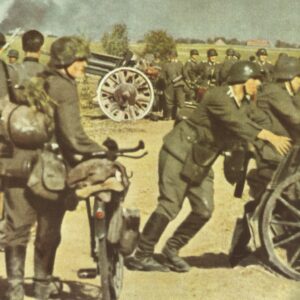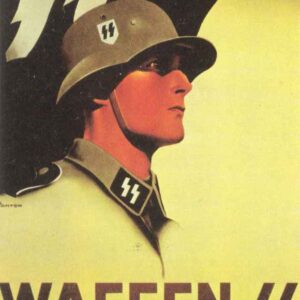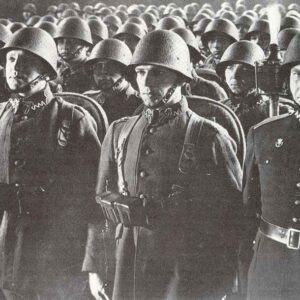
Baltic volunteers with the German Army
Baltic volunteers with the German Army in the Second World War. Service of inhabitants of Estonia, Latvia and Lithuania in the Wehrmacht and Waffen-SS. On 22 June 1941 the Red […]
German Orders of Battle for the campaign in the West, 10 May 1940. Deployment, army groups, armies, corps, divisions, organization and equipment, tanks. Western Campaign 1940 The Western Campaign of
German Orders of Battle for the campaign in the West, May 1940 read more »
Strength and Organization of the US Army in North America, Great Britain and Mediterranean theatre in 1941-42. The US Army at the beginning of World War II At the beginning
Organization of the formations and units of the German Army from the Polish campaign til Operation Barbarossa 1941. Organization of the German Army at the Beginning of WW2 How large
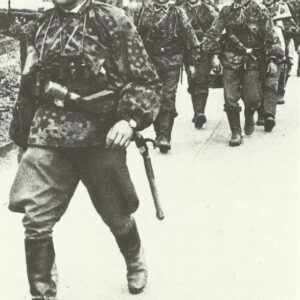
The Waffen-SS – origin, formation, war crimes, combat performance and strength of Hitler’s elite fighters of the Third Reich 1933 to 1945. History of the Waffen-SS Creation of the Waffen-SS
Myths about the Waffen-SS (Part II). Crimes of the Waffen-SS: Einsatzgruppen (special task forces), concentration camp guards and war crimes. Here to Part I: Waffen-SS Myths. Myths of the Waffen-SS
13 Waffen-Gebirgs-Division der SS Handschar, 14 Waffen-Grenadier-Division der SS (1st Ukrainian), 15 Waffen-Grenadier-Division der SS (1st Latvian), 16 SS-Panzer-Grenadier-Division Reichsführer-SS, 17 SS-Panzer-Grenadier-Division Götz von Berlichingen, 18 SS-Panzer-Grenadier-Division Horst Wessel, 19
Creation and Campaigns of the 12th SS Panzer division Hitler Youth. Designations, commanders, insignia, organization, in Normandy 1944, Battle of the Bulge and in Hungary 1945. 12th SS Panzerdivision Hitlerjugend:
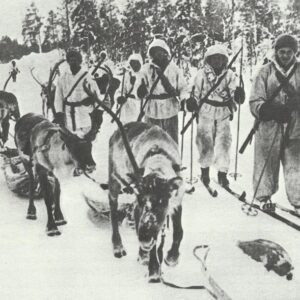
Strength and Organization of the Army, Air Force and Navy of Finland in the Continuation War against the Soviet Union. The Finnish Armed Forces in the ‘Continuation War’ from 1941
The Japanese Army in the Pacific War 1943 to 1945. Distribution of the Japanese armed forces in August 1943 and 1945, the armoured divisions, independent units, amphibious brigades and the
20 Waffen-Grenadier-Division der SS (1st Estonian), 22 SS-Freiwilligen-Kavallerie-Division Maria Theresia (Volunteer cavalry division), 23 Waffen-Gebirgs-Division der SS Kama (2nd Croatian Mountain division), 23 SS-Freiwilligen-Panzer-Grenadier-Division Nederland, 24 SS-Waffen-Gebirgs-Division der SS Karstjaeger
Campiagns of the 3rd SS tank division Totenkopf (Part II: from 1943 to 1945). Back to Part I: SS-Totenkopf-Division 1939-42. Russia 1943 Kursk tank battle and the Donez Basin The
Order of Battle Waffen-SS divisions 26 (2nd Hungarian) – 32 (30th January). Many of the following listed divisions were purely fictitious, in the sense that orders for their formation and
Deployment of Anglo-American forces by theaters in summer 1942. Deployment of the armed forces of the Anglo-Americans (Britain with Commonwealth and United States) by theatres of war (Europe, Middle East,
German Orders of Battle from 3 September 1941 and the Eastern Front after the successful start of Operation Barbarossa from the end of August 1941 until the failure of the
Eastern Front 1941 and German Orders of Battle from September read more »
Strength and Organization of the Army and Air Force of Hungary in 1942. Hungarian Army, Orders of Battle, divisions and equipment, planes of the Air Force. Hungarian Armed Forces Overvoew
The Polish Armed Forces in Exile, 1939-1945. Army units and equipment in France and Britain 1940, Air Force and Navy. Polish Armed Forces in Exile During World War II, Polish
German Orders of Battle before the summer offensive in Russia (Operation Blue) of June 24, 1942. Here to the previous part: German Orders of Battle May 1942 and Operation Blue.
German Orders of Battle and the second summer offensive in Russia read more »
German Orders of Battle on 16 September 1944 at the time of the allied airborne operation ‘Market-Garden’ around Arnhem. The deployment and distribution of the divisions of the Wehrmacht and
Chinese Nationalist Army 1937-1941. The seizure of Mukden on 19 September 1931 marked the beginning of overt Japanese aggression against China, and from 1937 there was open war. The disorganized