
Hollywood movies always make military deployments look like non-stop, glorious action sequences, totally skipping over the fact that actual war is mostly just months of mind-numbing boredom. This breakdown explores the absolute chaos of frontline micro-economies, detailing exactly how bored soldiers turned chocolate rations, cigarettes and invasion scrip into a massive, unregulated wagering syndicate.
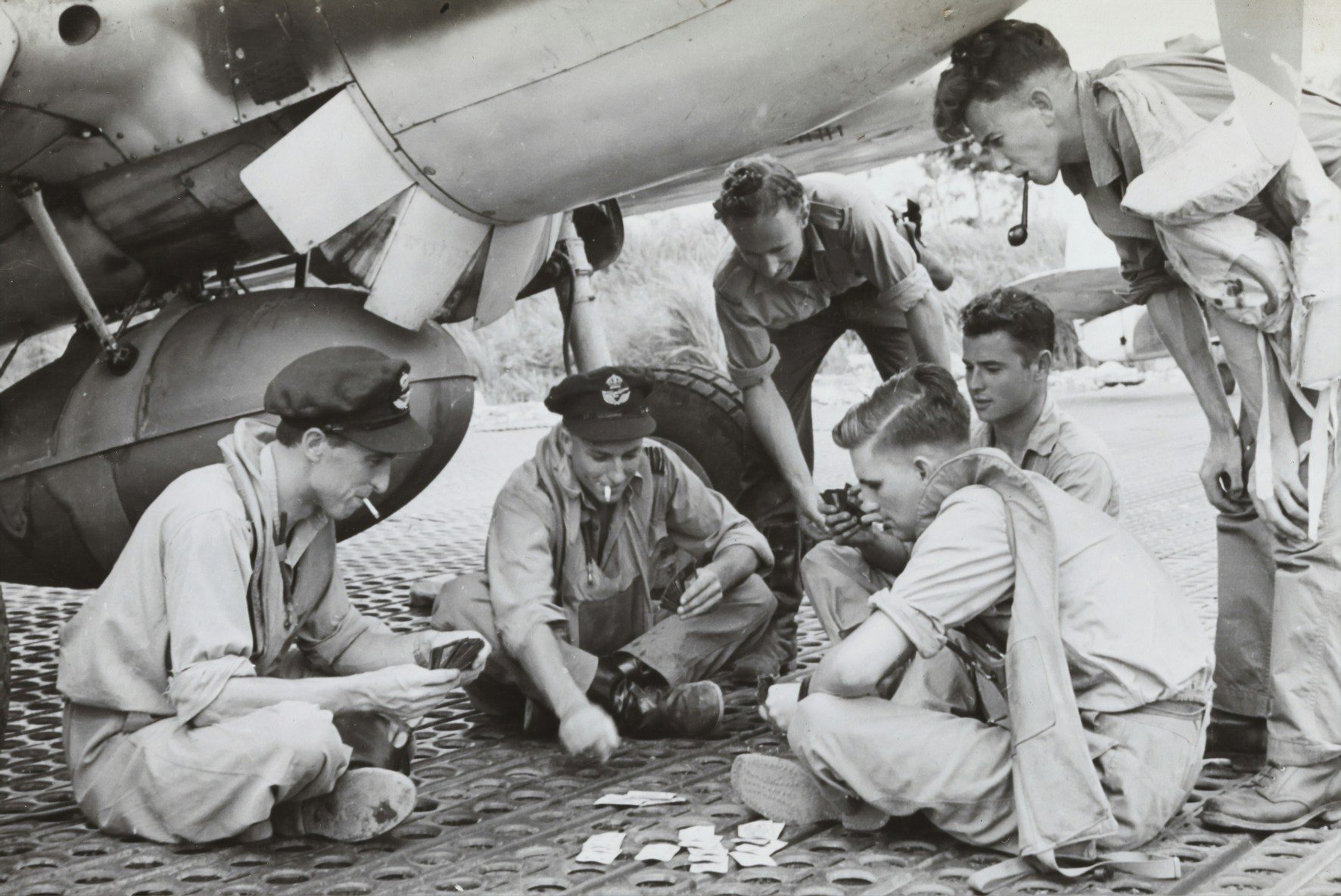
When millions of young guys are abruptly ripped out of their normal civilian lives, thrown into a muddy camp in the middle of nowhere and told to sit around waiting for orders, things get weird really fast. The sheer volume of downtime is enough to drive anyone totally crazy. To stay sane, troops immediately started setting up massive, informal gaming rings right inside the barracks. Modern society is completely spoiled by digital convenience. Today, sports fans and card players just load up a centralized betting dashboard on a smartphone, tapping into secure, regulated markets that track global football matches and digital casino tables in real-time. The modern infrastructure is totally invisible, incredibly fast and completely frictionless. In the 1940s, the “infrastructure” was just a dirty wool blanket thrown over a wooden ammunition crate. The house rules were usually violently enforced by a guy from Brooklyn who happened to own the only unbent deck of cards in the entire platoon.
The Cigarette Standard
Traditional paper money is completely useless when you are stuck in a trench or a bombed-out French village. You cannot walk down to the corner store and buy a hot coffee with a five-dollar bill when the store is currently on fire. Because cash lost all its actual street value, the troops had to invent an entirely new financial system from scratch. The universally accepted currency of the Allied forces quickly became the standard-issue cigarette.
A carton of Lucky Strikes or Camels basically operated like a brick of solid gold. The micro-economy of a military staging area was actually a fascinating study in aggressive supply and demand. Guys who didn’t even smoke would intensely hoard their tobacco rations just to use them as chips at the poker table later that night. A pair of warm, dry socks might cost you three packs. Captured enemy binoculars could easily run you five full cartons. This physical, trade-based economy fueled massive evening card games. When the stakes got heavy, you would literally see mounds of chocolate bars, instant coffee packets and tobacco tins piled up inside a steel helmet in the middle of the floor. It was a totally wild, makeshift stock exchange running right under the noses of the commanding officers.
Craps, Cards and the Two-Up Phenomenon
When different nationalities are suddenly forced to share a cramped staging area in Britain before a massive invasion, cultural exchange happens incredibly fast. The American GIs brought the loud, fast-paced game of Craps across the Atlantic. It required zero equipment other than two dice and a brick wall to bounce them against, making it the perfect alleyway distraction. You could hear the yelling from three tents over. Even basic playing cards were highly valued, often packaged in standard issue infantry gear sent from home.
Meanwhile, the Australian and New Zealand forces popularized a famously simple game called Two-Up. The rules are painfully basic: a “spinner” throws two pennies into the air off a small wooden board, and the surrounding crowd places a betting wager on whether the coins will land on two heads, two tails or one of each. It sounds incredibly boring on paper. However, when a hundred bored infantrymen are screaming at a pair of flying pennies, the energy is absolutely electric. Reading the archives over at the Imperial War Museum proves that these simple, raw games were a massive part of daily survival. Nobody cared about the complexity of the rules. No, they just desperately needed a distraction from the constant anxiety of the front lines.
The Morale Factor
Officially, military brass frowned heavily on running a casino out of a canvas tent. The official rulebooks technically banned these activities, mostly because officers didn’t want fistfights breaking out over a bad hand of blackjack right before a combat patrol. Unofficially? The smart commanders turned a massive blind eye to the whole operation.
Leading a platoon of terrified, exhausted twenty-year-olds is a psychological nightmare. If throwing dice against a brick wall for two hours kept their minds off the fact that they were getting shot at tomorrow, it was considered a totally valid military tactic. Managing morale was just as critical as managing ammunition or fuel logistics. Taking away their only source of entertainment and forcing them to just sit in the mud and think about their grim reality would have caused a total mutiny. The games operated as a vital psychological release valve, letting the guys blow off steam, talk trash and experience a tiny slice of normal human interaction in the middle of a warzone.
The Foxhole Legacy
Looking back at the physical artifacts from that era tells a really compelling story. Museum display cases are full of crude, hand-carved wooden dice, totally worn-out playing cards and military scrip that clearly changed hands a thousand times. The basic human drive to take a risk, back a feeling and participate in a shared community event never actually changes. No, only the technology evolves.
The modern sports fanatic dropping a quick betting slip on a weekend soccer match is basically chasing the exact same adrenaline hit that a GI was looking for when he tossed a pair of dice into the dirt in 1944. The sheer chaos of the frontline economy perfectly illustrates how resilient people are. Even in the absolute worst conditions imaginable, a group of bored guys will always figure out a way to establish a currency, set up the rules and find a way to make the afternoon a little more interesting.