
The relationship between the Germanic tribes and the Roman Empire shaped four centuries of European history. Warfare, migration, and political shifts drove the story from the second century BCE to the collapse of the Western Roman Empire in 476 CE.
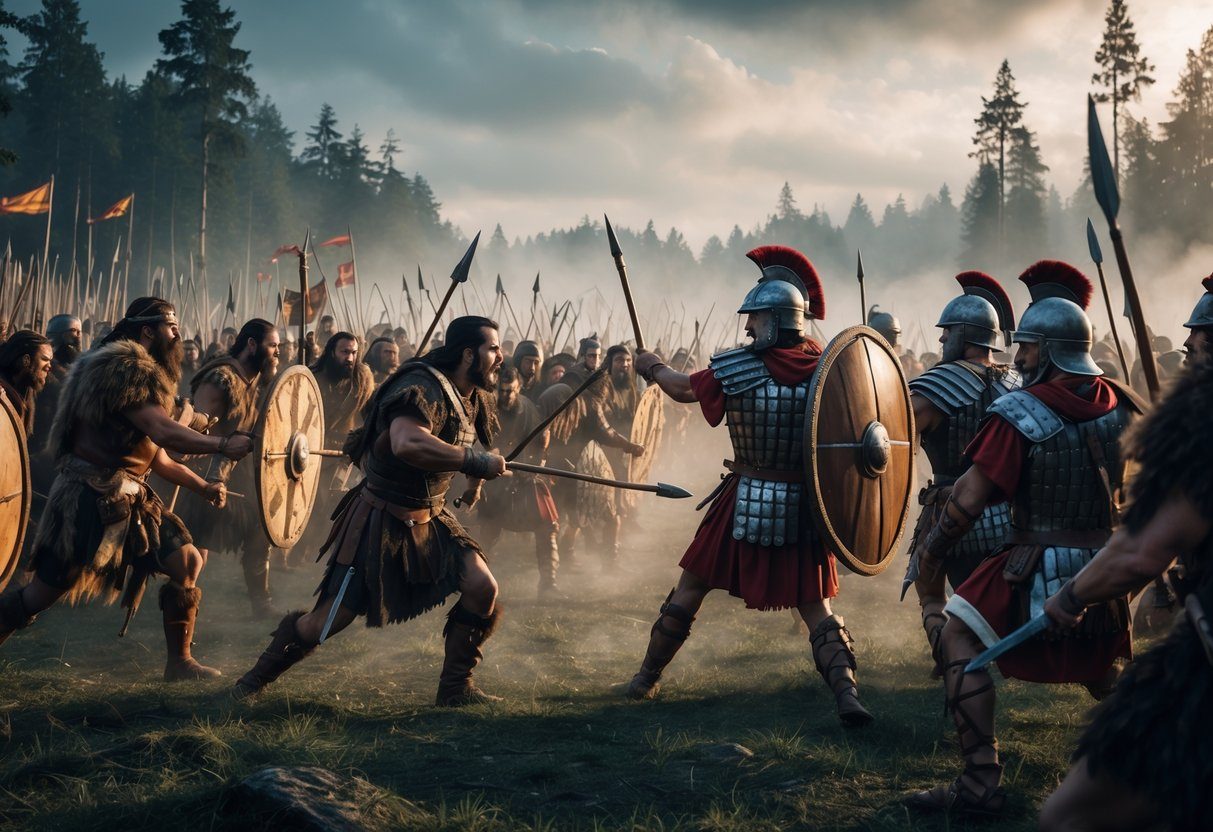
Germanic peoples weren’t a single nation. They were a patchwork of tribes—linked by language and custom—living beyond Rome’s northern borders.

Major battles like Teutoburg Forest in 9 CE made it clear: conquering Germania would bleed Rome dry. Over time, Germanic warriors joined Roman armies even as their tribes kept pushing against the borders.
It was never just war. There was cooperation, too—sometimes both at once.
Origins and Identity of the Germanic Tribes

The Germanic peoples came out of northern Europe around 1000 BCE. They were a mess of tribal groups with shared language roots and overlapping customs.
These tribes spread from the Baltic Sea to the Rhine River. As they wandered, they picked up new quirks but kept a core of shared traditions.
Geographic Roots in Northern and Central Europe
The first Germanic tribes settled along the Baltic and North Sea coasts. Think modern Denmark, southern Sweden, and the Jutland Peninsula.
From those chilly homelands, Germanic peoples headed south. They moved across central Europe, from the Vistula in the east to the Rhine in the west. The Elbe River split some of the tribal lands.
Dense forests and wild terrain covered much of this region. The tough environment shaped Germanic culture and daily survival.
By the time Rome showed up, Germanic tribes had spread through modern Germany, Denmark, the Netherlands, and parts of Poland. Northern Europe gave them the springboard for later expansion.
Linguistic and Cultural Characteristics
Germanic languages belong to their own branch of the Indo-European family. That set them apart from Celts and Romans.
Tribes clung to common cultural habits, even though they lived far apart. Alliterative verse, Migration Period legends, and oral storytelling kept their history alive—writing just wasn’t their thing.
Germanic society revolved around popular assemblies called “things.” Free men gathered to make decisions together, while kings and war leaders handled military stuff.
Most people farmed, hunted, or herded animals. They lived in wooden houses, swapped goods by barter, and rarely used coins. Land usually belonged to clans, not individuals.
Major Tribal Groups and Confederations
“Germani” first meant tribes near the Rhine, but Romans soon used it for all Germanic speakers. There were several big groups:
Northern Germanic Tribes:
- Danes (Denmark)
- Frisians (coastal Netherlands and Germany)
- Saxons (northern Germany, near the Elbe)
Western Germanic Groups:
- Franks (Rhine area)
- Alemanni (southwest Germany)
- Suebi (central German tribes)
Eastern Germanic Peoples:
- Goths (Visigoths and Ostrogoths)
- Vandals
- Burgundians
Tribes sometimes teamed up in loose confederations for war or defense. The Suebi, for example, controlled huge swaths of central Europe. Each group had its own customs but shared plenty of broader Germanic traits.
Some tribes specialized. Frisians traded along the coast, while inland groups stuck to farming and cattle.
Roman Expansion and Early Contacts
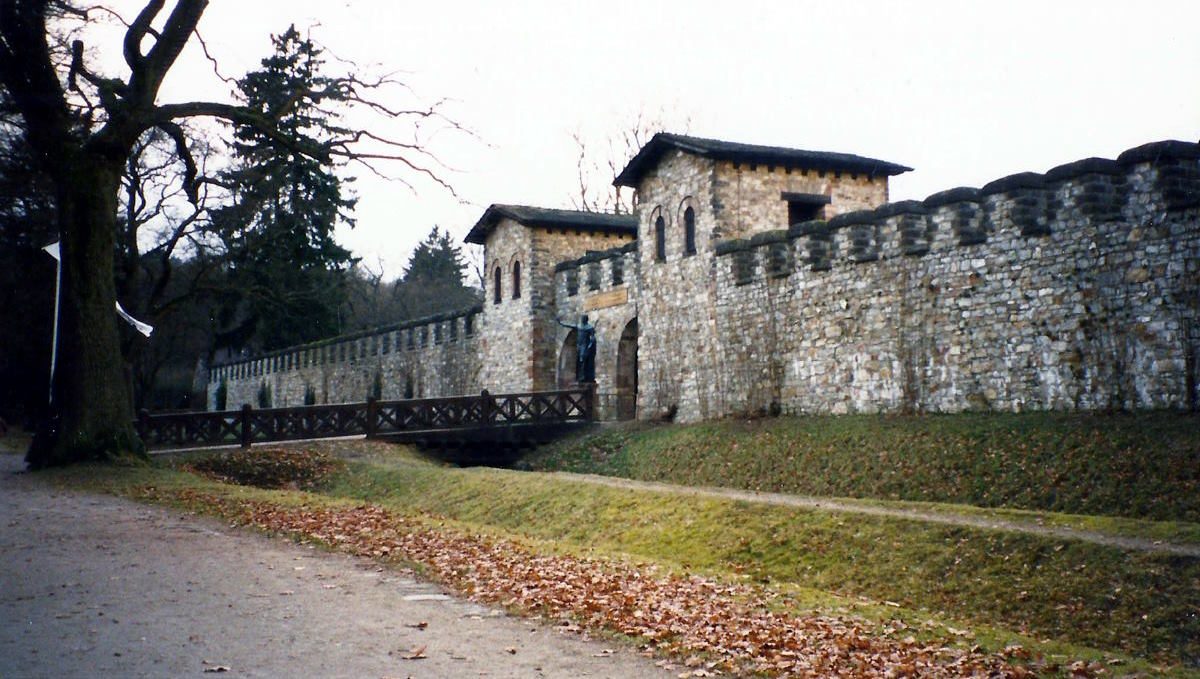
Romans first ran into Germanic peoples in the late 2nd century BC. Migrating tribes invaded, and those first skirmishes soon turned into full-on Roman campaigns under Julius Caesar and later emperors.
Rome built up its frontiers along the Rhine and Danube, turning them into fortified borders.
Roman Perceptions of the Germanic Peoples
Roman writers painted Germanic tribes as wild, tall, and fiercely independent. They obsessed over the tribes’ warrior culture and stubbornness.
The first big clash came during the Cimbrian War (113-101 BC). The Cimbri and Teutones invaded Gaul, Italy, and Hispania, sending Rome into a panic.
Consul Gaius Marius eventually crushed them. The Battle of Aquae Sextiae in 102 BC finished off the Teutones, and the Battle of Vercellae in 101 BC wiped out the Cimbri.
Romans thought Germanic tribes were nothing like the Celtic Gauls. Germans just wouldn’t go along with Romanization, no matter how hard Rome tried.
Roman writers often pointed out:
- Warrior culture
- Independence
- Refusal to assimilate
- Nomadic habits
- Threat to Roman borders
Julius Caesar and Roman Campaigns in Germania
Julius Caesar led the first big Roman push into Germanic territory during his conquest of Gaul (58-51 BC). He used the Germanic threat as his excuse to expand Rome to the Rhine.
In 58 BC, Caesar beat the Germanic king Ariovistus at the Battle of Vosges, pushing the Suebi back across the Rhine. He set the Rhine as Rome’s new border.
Caesar twice crossed the Rhine—in 55 and 53 BC—building bridges for his legions. These shows of force sent a message to the tribes.
The campaign in 55 BC against the Tencteri and Usipetes was brutal. Caesar’s troops killed around 430,000 people, including women and children. The massacre shocked the region.
Major battles under Caesar:
- Battle of Vosges (58 BC): Ariovistus defeated
- Rhine crossings (55, 53 BC): flexed Roman muscle
- Massacre of Tencteri/Usipetes (55 BC): tribes wiped out
Later emperors kept up the fight. Augustus sent Drusus to invade from 12-9 BC, getting as far as the Elbe before disaster at Teutoburg Forest in 9 AD made them rethink things.
Border Fortifications and the Limes
Rome set up massive fortifications along the Rhine and Danube to keep Germanic tribes at bay. The limes became the empire’s main defensive line.
Augustus started building around 16-13 BC. Cities like Mainz, Cologne, and Xanten sprang up along the Rhine, housing legions and running the show locally.
The frontier had several layers of defense:
Component | Purpose | Examples |
|---|---|---|
Legionary fortresses | Full legion bases | Mainz, Cologne, Xanten |
Auxiliary forts | Smaller garrisons | Haltern, Oberaden, Anreppen |
Watchtowers | Warning system | Rhine valley |
Roads | Move troops fast | Lugdunum to Cologne |
Romans also built naval bases along the rivers. Drusus had a canal connecting the Rhine to the North Sea, letting Roman fleets patrol and supply the border.
The limes wasn’t just a wall. Trade and cultural exchange kept flowing. By 50 AD, tribes near the Rhine used Roman coins, and archaeology shows plenty of cross-border commerce.
On the frontier, you saw:
- Rhine-Danube line holding firm
- Permanent legion bases
- Trade networks growing
- Germanic tribes picking up Roman habits
The Battle of the Teutoburg Forest and Its Consequences
The Battle of the Teutoburg Forest in 9 CE stands out as one of Rome’s worst military disasters. Germanic tribes led by Arminius ambushed and wiped out three Roman legions under Publius Quinctilius Varus.
This crushing defeat stopped Roman expansion into Germania for good and forced Rome to rethink its whole frontier strategy along the Rhine.
The Cherusci and Arminius
Arminius, chieftain of the Cherusci tribe, once served in the Roman auxiliary forces. He received Roman citizenship and military training, learning Roman tactics inside and out.
This background let Arminius plan his strategy with precision. He managed to unite several Germanic tribes—old rivals like the Cherusci, Marsi, Chatti, and Bructeri.
The alliance grew from shared anger at Varus’s harsh rule. Roman writers paint Varus as a tyrant, cruel to the conquered tribes.
Key tribes in the alliance:
- Cherusci (led by Arminius)
- Bructeri (8,000 warriors)
- Marsi
- Chatti
- Angrivarii (5,000 warriors)
Arminius kept up the act as Varus’s trusted advisor, all while organizing the rebellion in secret. He tricked the Romans with fake reports of a local uprising, drawing the legions into a deadly forest trap.
Roman Defeat and the End of Expansion
Between September 8-11, 9 CE, near modern Kalkriese in Lower Saxony, the fateful battle unfolded. Varus marched three full legions—XVII, XVIII, and XIX—plus auxiliaries into the Teutoburg Forest.
The Roman force counted about 21,000 men in all. That included 15,000 legionaries, 4,500 auxiliaries, and a few thousand non-combatants tagging along.
Germanic warriors ambushed the Romans as they slogged through dense woods. The terrain totally wrecked the legions’ usual battle formations.
Battle casualties:
- Romans: 16,000-20,000 killed
- Germanic tribes: 5,000 killed
The defeat was almost absolute. Varus chose suicide over capture. The Germanic tribes crushed the legions so thoroughly that Rome never dared use the numbers XVII, XVIII, or XIX for any new legions again.
When news reached Emperor Augustus, he reportedly wandered his palace, crying, “Varus, give me back my legions!” Hard to blame him, really.
Long-Term Impact on Roman Strategy
The Teutoburg Forest disaster ended Roman plans to conquer Germania beyond the Rhine. Augustus dropped his ambitions for new Roman provinces east of the river.
Rome set the Rhine frontier as its permanent northern border. Germania Superior and Germania Inferior provinces popped up in Gaul, but lands beyond the Rhine stayed independent.
Later, Tiberius and Germanicus led punitive raids between 14-16 CE. These were more about revenge than any real conquest.
The defeat left a deep mark on Roman strategy. Rome pretty much avoided big invasions of Germania until the Marcomannic Wars under Marcus Aurelius (161-180 CE).
Strategic consequences:
- Rhine became permanent frontier
- End of eastward expansion
- Shift to defensive strategy
- Germanic independence preserved
The Germanic tribes that stayed independent eventually became the same groups that invaded the Roman Empire in the 4th and 5th centuries. In a roundabout way, Teutoburg helped preserve Germanic culture and military traditions that would later challenge Rome itself.
Clashes and Cooperation along the Roman Frontier

The Roman-Germanic frontier was a wild mix of warfare, uneasy diplomacy, and trade. Germanic tribes sometimes fought Rome, sometimes served as allies, and always found ways to exchange goods and ideas across the Rhine and Danube.
The Role of Foederati
Germanic tribes increasingly signed up as foederati—allied troops fighting for Rome in exchange for land, money, and prestige. This system really took off in the 3rd century AD, when Rome faced threats everywhere.
Foederati kept their own weapons, leaders, and fighting styles. They got Roman military training but clung to Germanic traditions. Whole families sometimes settled in Roman lands with them.
Key Germanic groups joined as foederati:
- Franks – guarded the Rhine
- Alamanni – served in Gaul and northern Italy
- Goths – protected the Danube
Roman generals like Stilicho leaned hard on Germanic foederati. By the 4th century AD, these allies could make up half of Rome’s armies.
This system had its problems. Some foederati leaders got too powerful and turned on Rome. Arminius himself once fought for Rome before annihilating three legions at Teutoburg.
Border Skirmishes and Roman-Germanic Diplomacy
The Rhine and Danube frontiers buzzed with frequent skirmishes and tense negotiations. Roman commanders built forts, walls, and watchtowers to keep an eye on crossings.
Germanic tribes constantly tested Roman defenses. In 17 BC, the Sicambri, Usipetes, and Tencteri even crossed the Rhine and beat a Roman legion under Marcus Lollius. Augustus answered by sending Drusus to build even more Rhine forts.
Roman diplomacy ran the gamut:
- Bribes to tribal chiefs
- Hostages exchanged between sides
- Marriage alliances with Germanic nobles
- Trade agreements for certain goods
The Cherusci show how this played out. Tiberius called them “friends of the Roman people” after his campaigns, and Rome backed one Cherusci faction against another to keep control.
Border fights just kept going. The Marcomannic Wars (AD 166-180) saw Germanic tribes pour across the Danube. Marcus Aurelius spent years battling these invasions.
Economic and Cultural Exchange
Despite all the fighting, trade thrived along the frontier. Germanic tribes craved Roman luxuries, while Rome needed Germanic amber, furs, and—let’s be honest—soldiers.
Archaeologists keep finding evidence of these networks. Germanic graves hold Roman coins, pottery, and jewelry, while Roman frontier sites turn up Germanic goods.
Major trade goods included:
Roman Exports | Germanic Exports |
|---|---|
Wine and olive oil | Amber and furs |
Pottery and glassware | Cattle and horses |
Metal tools | Slaves |
Luxury textiles | Warriors for armies |
Frontier zones turned into real melting pots. Germanic tribes picked up Roman building tricks, legal ideas, and gear. Some even learned Latin and joined the Roman bureaucracy.
Roman culture wasn’t immune either. Germanic tactics influenced the Roman army, and some Germanic religious practices caught on among Roman soldiers.
The Limes Germanicus frontier became more than just a wall—it was a lively zone of exchange. Markets, settlements, and trading posts popped up at key crossing points.
The Migration Period: Germanic Invasions and the Fall of Rome
The Migration Period, from 300-568 CE, spelled the end of Roman control in Western Europe. Huge tribal movements, set off by the Huns, brought Germanic peoples crashing into Roman territory. Rome got sacked more than once, and the Western Empire finally collapsed in 476 CE.
The Push from the Huns and Mass Migrations
The Huns thundered in from Central Asia in the 370s CE and upended everything. They smashed the Ostrogoths in 372 CE, setting off waves of migration across Europe.
The Visigoths fled into Roman lands first, crossing the Danube to escape the Huns. Other tribes soon followed.
Major Germanic Migrations (370-450 CE):
- Visigoths: Moved into the Balkans, later settled in Spain
- Vandals: Traveled through Gaul to North Africa
- Suebi: Settled in northwestern Spain
- Burgundians: Established kingdom in southeastern Gaul
- Franks: Expanded into northern Gaul
These migrations moved war bands of 10,000-20,000 people at a time. In total, about 750,000 people crossed into Roman lands over a century—tiny compared to Rome’s 40 million, but these folks were fighters.
Rome tried to keep things under control with treaties and by recruiting Germanic warriors. Many ended up serving in Roman ranks, but the pressure on the borders became too much.
The Sack of Rome and Key Battles
King Alaric led the Visigoths in sacking Rome in 410 CE. The shock was real—Rome hadn’t fallen to invaders for 800 years.
The Visigoths had once fought for Rome. Alaric demanded gold and land, but when talks broke down, he attacked the city.
The Vandals, led by Genseric, struck next. They captured Rome in 455 CE, hauling off treasures to North Africa. Their kingdom in Tunisia and Algeria was no joke.
Key Military Events:
- 410 CE: Alaric sacks Rome
- 455 CE: Vandals loot Rome
- 452 CE: Huns threaten Rome but withdraw
Attila the Hun led the most dreaded force of the era. His empire stretched from the Danube to the Baltic. In 452 CE, he marched on Rome but, for reasons still debated, turned back at the last minute.
Eastern Roman Emperor Zeno tried to keep things together with desperate diplomacy. He paid off tribal leaders and handed out official titles to buy time.
Downfall of the Western Roman Empire
The last Western Roman Emperor, Romulus Augustulus, was barely a teenager when the Germanic chieftain Odoacer deposed him in 476 CE. That’s the traditional end of the Western Roman Empire.
Odoacer took control of Italy with his mixed Germanic army. He sent the imperial regalia to Constantinople and ruled as king of Italy. The Eastern Emperor couldn’t do much about it.
By 476 CE, Germanic kingdoms ruled most of what used to be Roman territory:
Kingdom | Territory | Leader |
|---|---|---|
Ostrogoths | Italy | Theodoric |
Visigoths | Spain, Southern Gaul | Various kings |
Vandals | North Africa | Genseric’s successors |
Franks | Northern Gaul | Clovis |
Theodoric the Great later conquered Italy for the Ostrogoths in 493 CE. He killed Odoacer and set up Gothic rule that lasted for decades.
Procopius, the historian, chronicled these chaotic final years. He described how Germanic tribes went from Roman allies to independent rulers.
The fall of the Western Roman Empire wasn’t a sudden collapse. It happened through defeat after defeat, and Rome’s political power just faded. Germanic tribes stepped in and filled the vacuum Rome left behind.
Germanic Kingdoms and the Shaping of Medieval Europe
Germanic tribes set up powerful kingdoms across former Roman lands between 400 and 800 CE. They mixed their own traditions with Roman ways, shaping what would become medieval European society.
Rise of the Visigoths, Ostrogoths, and Vandals
The Visigoths were the first Germanic tribe to carve out a major kingdom inside old Roman territory. After sacking Rome in 410 CE, they settled in southwestern Gaul and the Iberian Peninsula.
Their rule lasted until 711 CE, when Muslim armies swept through most of Spain.
The Ostrogoths, led by Theodoric the Great, built a kingdom in Italy from 493 to 526 CE. Theodoric kept Roman administrative systems but stuck to Gothic military traditions.
His reign really became an early example of blending Germanic and Roman governance.
Key Gothic Achievements:
- Wrote down legal codes
- Kept Roman infrastructure running
- Built stable administrative systems
- Kept trade networks alive
The Vandals took over North Africa and set up a maritime empire from 429 to 534 CE. They controlled the western Mediterranean, launching raids all over.
Eventually, Emperor Justinian’s Byzantines conquered them and ended their rule.
The Franks and the Foundation of the Carolingian Empire
The Franks pulled off what was probably the most successful Germanic kingdom in Gaul. Clovis I united the Frankish tribes around 509 CE and converted to Christianity, which won him support from both the Roman population and the Catholic Church.
The Merovingians expanded the Frankish kingdom steadily. Later, the Carolingians took over and Charlemagne built a true empire, covering most of Western Europe by 800 CE.
Carolingian Innovations:
- Administrative reforms – Built efficient government systems
- Educational revival – Promoted learning and literacy
- Legal codes – Merged Germanic and Roman law
- Military organization – Focused on cavalry-based armies
Charlemagne’s coronation as Emperor in 800 CE brought back the idea of a Western European empire. The Carolingian Empire laid the groundwork for countries like France and Germany.
The Lombards, Burgundians, and New Political Structures
The Lombards invaded Italy in 568 CE and set up a kingdom that lasted until 774 CE. They ruled the north and center, while the Byzantines held the south.
Lombard kings came up with advanced legal systems and kept using Roman administrative practices.
The Burgundians built their own kingdom in southeastern Gaul from 411 to 534 CE. They became known for legal innovations and their knack for diplomacy.
They managed to keep good relations with both Romans and other Germanic tribes.
New Political Features:
- Dual legal systems – Different laws for Romans and Germans
- Royal assemblies – Mixed Germanic councils and Roman practices
- Military service – Gave land in exchange for military duty
- Christian integration – Brought the Church into government
These kingdoms tried out different kinds of government. Germanic warriors ruled over Roman populations, but they kept the old infrastructure running.
Legacy in Medieval and Modern Europe
Germanic kingdoms changed Europe’s political map forever. They broke up Roman unity and replaced it with a patchwork of kingdoms that sometimes fought, sometimes got along.
Their legal systems blended Roman law with Germanic customs. These hybrid traditions became the backbone of medieval European law, and honestly, you can still spot traces of them in modern Europe.
Lasting Contributions:
- Feudal system – Military service tied to land
- Monarchy – Ideas of sacred kingship
- Legal traditions – Written law codes
- National identities – Kingdoms with clear territories
The borders set by Germanic kingdoms shaped modern nations. France grew out of the Frankish kingdom, Germany from eastern Frankish lands, and Spain from what was left of the Visigoths.
Germanic rulers kept Roman culture alive but added their own twists. They held onto Latin, Christianity, and city life, but mixed in Germanic and Christian traditions to create something new—medieval Europe.
Frequently Asked Questions
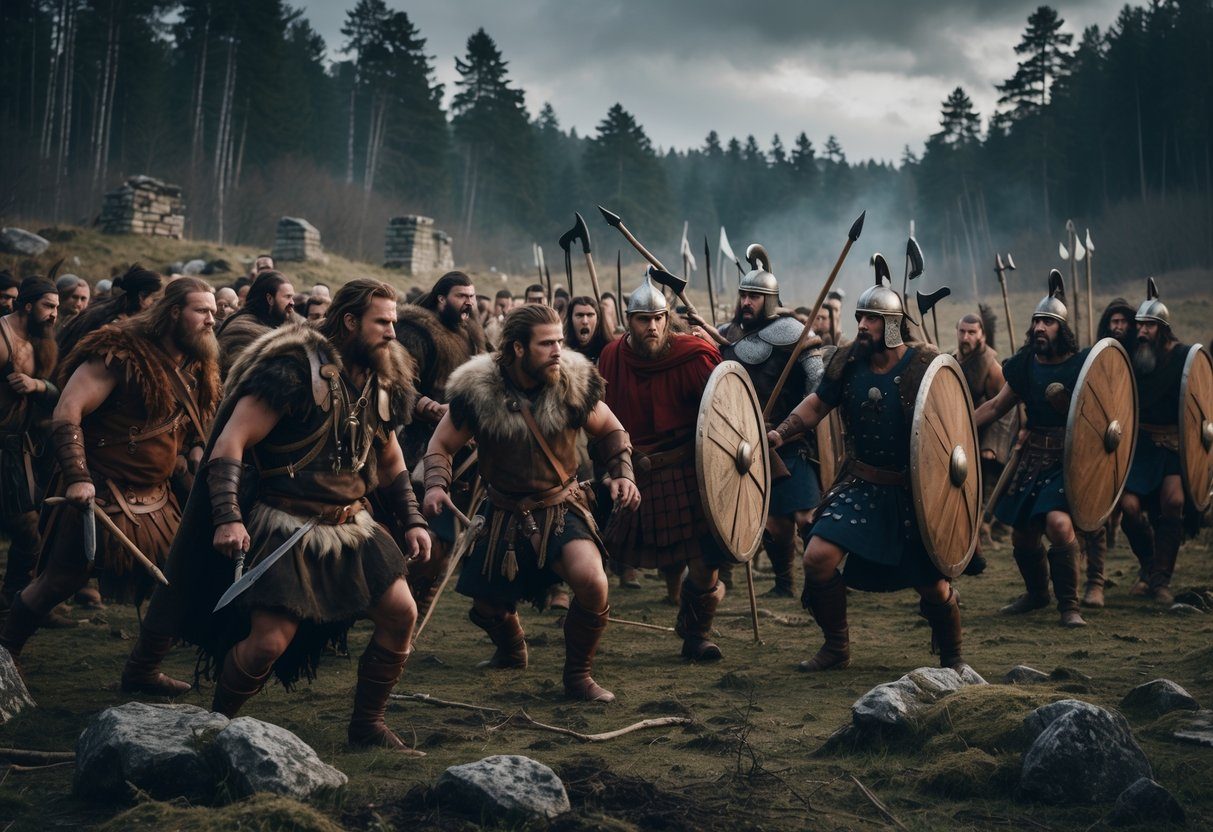
Germanic tribes completely changed Roman society through massive migrations, wars, and by building new kingdoms inside old Roman lands. All this upheaval helped bring down the Western Roman Empire in 476 AD.
How did the Germanic tribes impact the Roman Empire’s political and social structures during the Migration Period?
Germanic tribes set up new kingdoms inside Roman territory, pushing out traditional Roman administration. The Visigoths took over Spain and southern France. The Ostrogoths grabbed Italy after 476 AD.
They brought their own laws and customs. Over time, Roman law got mixed with Germanic traditions. Romans started following Germanic chiefs instead of Roman officials.
These tribes usually kept Roman administrative systems but put their own leaders in charge. That led to hybrid governments—part Roman, part Germanic.
What were the main causes of the Migration Period that led to the movement of Germanic tribes into Roman territories?
War and natural disasters pushed Germanic tribes out of their homelands starting in the 3rd century AD. They moved south, looking for food and safer places to live.
Climate shifts made farming tough in the north. Tribal conflicts forced groups to seek new territory. The Roman Empire’s weaker borders made it easier to move in.
Population growth in Germanic regions created pressure to expand. Roman lands offered better farmland and infrastructure. The empire’s shrinking military made invasions more likely to succeed.
Which specific Germanic tribes were instrumental in the sack of Rome in A.D. 410, and what were their motivations?
The Visigoths under King Alaric I sacked Rome in 410 AD. Alaric wanted payment and land grants Rome had promised but never delivered.
The Visigoths had served as Roman allies before turning on the empire. When Rome refused to honor its deals for food and territory, Alaric decided to attack the capital.
The sack lasted three days, but the Visigoths didn’t go wild. They avoided destroying churches and spared civilians. Really, they were after treasure and political recognition, not total destruction.
How did Roman military tactics evolve in response to the Germanic tribes’ strategies and warfare during the Migration Period?
Romans built huge border defenses called the Limes along the Rhine and Danube rivers—950 kilometers of walls and watchtowers marking the empire’s edge.
They started recruiting Germanic warriors into Roman armies. This brought in tough fighters but also taught the tribes Roman tactics. Many Germanic leaders learned the Roman way of war by serving in their armies.
Romans switched from going on the offensive to playing defense. They focused on holding what they had, not expanding. The empire also made treaties and granted settlements to avoid direct fights.
What role did the Germanic tribes play in the eventual decline and fall of the Western Roman Empire?
Germanic migrations chipped away at Roman control over vast regions. Tribes set up their own kingdoms in former Roman provinces. The Western Empire lost tax money and soldiers from these areas.
The Battle of Teutoburg Forest in 9 AD showed just how dangerous Germanic fighters could be. Three Roman legions were wiped out. That victory encouraged other tribes to resist Rome.
By the 5th century, Germanic peoples ruled most of Western Europe. The last Western Roman Emperor got the boot in 476 AD, thanks to the Germanic leader Odoacer. That’s the moment historians usually call the real end of the empire.
Can you trace the lineage and origins of notable Germanic tribes that clashed with the Roman Empire?
The Goths started out in Scandinavia. Later, they moved down toward the Black Sea region.
They eventually split into two groups: the Visigoths and the Ostrogoths. Each group carved out its own kingdom in lands that used to belong to Rome.
The Franks hailed from the banks of the Rhine River, in what’s now Germany. They didn’t just stick to their own patch; they conquered a bunch of neighboring tribes.
Over time, the Frankish kingdom grew and ended up laying the groundwork for what we know as France. Not bad for a tribe that started out as just one among many.
The Vandals began up in northern Europe. They wandered through Gaul and Spain, and then made a bold move into North Africa.
There, they set up their own kingdom. The Saxons and Angles, meanwhile, came from northern Germany and Denmark and eventually crossed over to settle in Britain.
References and literature
Der große Bildatlas zur Weltgeschichte (Christian Zentner)
dtv-Atlas Weltgeschichte (Band 1 – Von den Anfängen bis zur Französischen Revolution)
Rome’s Enemies: Germanics and Dacians (Peter Wilcox)