
History and army of the Armenians in ancient times.
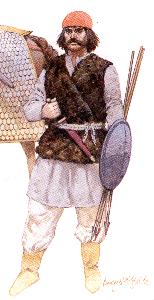
Armenia managed to remain independent until 386 AD. This was achieved through skilful politics, which involved supporting whichever of its later powerful neighbours, Rome and the Parthian Empire, was weaker at the time against the other. Ultimately, the overconfidence of the last Armenian ruler and the anger of both powerful neighbours led to the country being divided between Rome and the Parthians.

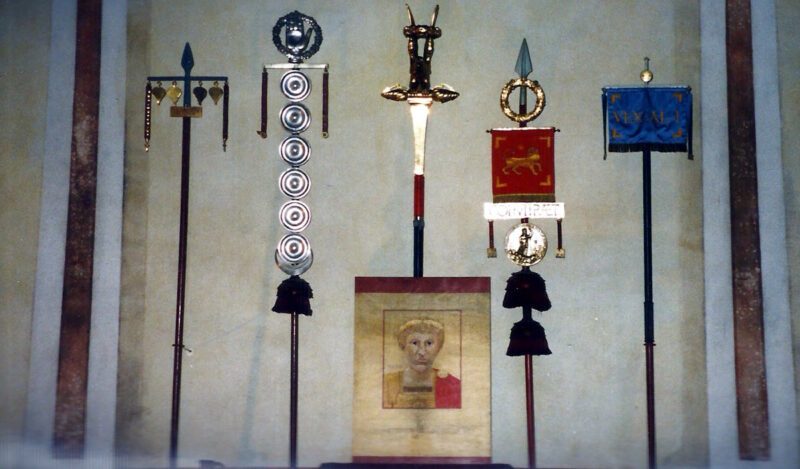
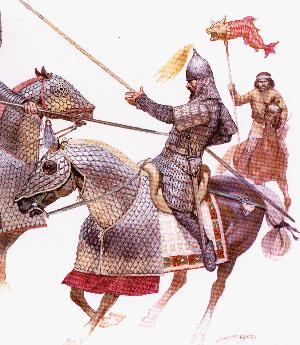
Due to constantly changing alliances, the fierce Armenian army adopted some elements and equipment from the Roman legions and the Parthian cavalry.
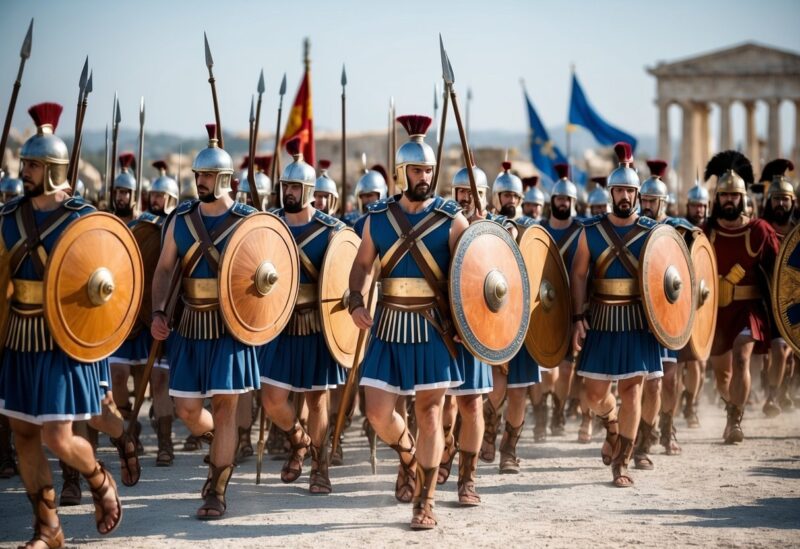
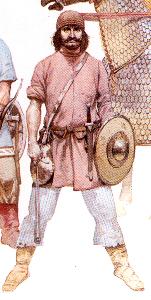
Thus, heavy armoured horsemen, cataphracts, were also widespread here. The fierce mountain peoples provided the light foot soldiers, while the formation of heavy infantry based on the Roman model was largely unsuccessful due to a lack of ability to manufacture the extensive equipment and discipline required for the necessary drill.
Historical Overview
190 BC – Rise of Armenian Power
After Rome’s victory over the Seleucid Empire at the Battle of Magnesia (190 BC), the Seleucids lost control over much of Asia Minor. This power vacuum allowed local rulers in Armenia—Artaxias I and Zariadres—to establish independent kingdoms in Greater Armenia and Sophene, laying the groundwork for the Artaxiad dynasty.
1st century BC – Tigranes the Great (95–55 BC)

Under Tigranes II “the Great”, Armenia became a major empire stretching from the Caspian Sea to the Mediterranean. However, his expansionism brought him into conflict with Rome.
– In 69 BC, Roman general Lucullus invaded Armenia and defeated Tigranes near Tigranocerta.
– Later, Pompey forced Tigranes to accept Armenia as a Roman client kingdom (66 BC).
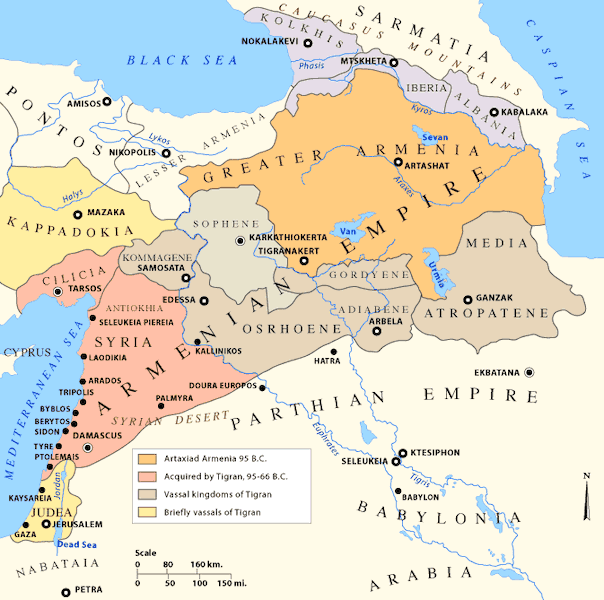
1st century AD – The Arsacid Dynasty and Roman Rivalry
Rome and Parthia (later the Sassanian Empire) competed for influence over Armenia. The Arsacid dynasty of Armenia (a branch of the Parthian royal family) ruled from 12 AD to 428 AD, often switching allegiance between Rome and Persia.
– Nero installed Tiridates I (brother of the Parthian king) as king of Armenia in 66 AD, symbolizing a diplomatic compromise: Tiridates was crowned in Rome by Nero himself.
2nd–3rd centuries AD – Buffer State and Roman Campaigns
Armenia remained a buffer state between Rome and Persia.
– Emperor Trajan briefly annexed Armenia as a Roman province (114–117 AD), but Hadrian restored it as a client kingdom.
– Frequent wars between Rome and the Parthians/Sassanians (e.g., under Caracalla, Severus, and Diocletian) made Armenia a key military frontier.
4th century AD – Christianization and Division
– In 301 AD, under King Tiridates III, Armenia became the first nation to adopt Christianity as a state religion—an event that aligned it culturally with Rome and against Persia.
– However, after centuries of conflict, the Peace of Acilisene (387 AD) divided Armenia between the Eastern Roman (Byzantine) Empire and Sassanian Persia.
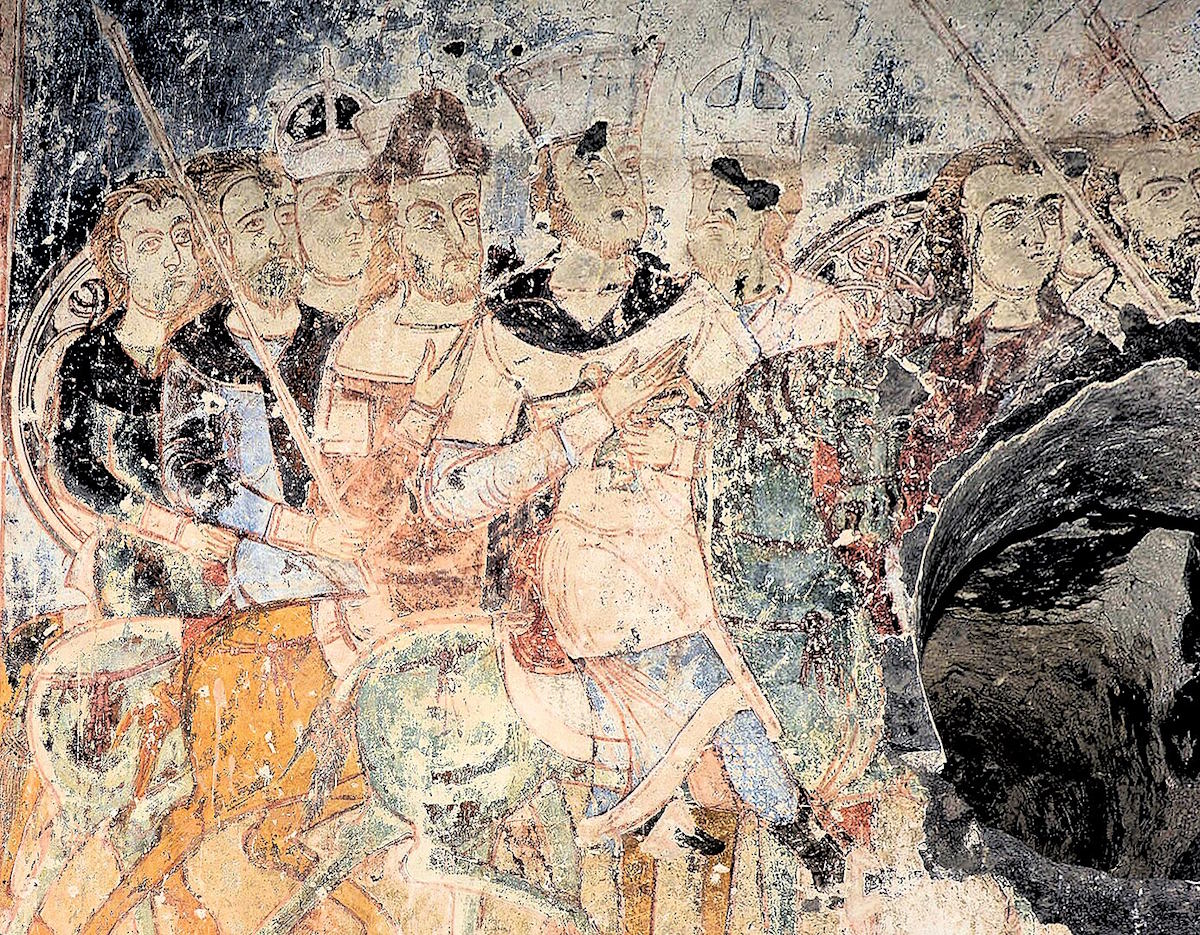
⚔️ The Armenian Army under Roman Influence
Structure and Composition
– The Armenian army** during this era evolved from tribal levies to a more organized force influenced by both Roman and Parthian military systems.
– Under Tigranes II, Armenia fielded large armies (reportedly up to 100,000 men) including cataphracts (heavy cavalry), archers, and infantry modeled on Hellenistic and Eastern traditions.
– During the Arsacid period, noble houses (nakharars) provided troops, similar to feudal levies.
Armenians in the Roman Army
– Many Armenians served as auxiliaries in Roman legions, especially along the eastern frontier.
– Roman sources mention Armenian cohorts stationed in Syria and Cappadocia.
– Over time, Armenian officers gained prominence in the Roman military, and Armenian fortresses became crucial outposts in Rome’s eastern defenses.
Military Role in Regional Conflicts
– Armenia often acted as a launching ground for Roman campaigns against Parthia and Persia.
– Conversely, when aligned with Persia, Armenian forces fought against Roman incursions, reflecting the kingdom’s shifting alliances.
Summary Timeline
– 190 BC: Rome defeats Seleucids; Armenia gains independence under Artaxias I.
– 95–55 BC: Reign of Tigranes II; Armenian Empire at its peak; war with Rome.
– 66 BC: Armenia becomes a Roman client kingdom.
– 66 AD: Tiridates I crowned by Nero in Rome.
– 114–117 AD: Trajan annexes Armenia; Hadrian restores autonomy.
– 301 AD: Armenia adopts Christianity as a state religion.
– 387 AD: Armenia divided between Rome and Persia.
In summary:
From 190 BC to 387 AD, Armenia’s history was defined by its strategic position between two superpowers—Rome and Persia. Its army blended Eastern cavalry traditions with Roman organization, and its political flexibility allowed it to survive as a semi-independent kingdom for centuries until its eventual partition.
References and literature
Rome’s Enemies (3): Parthians and Sassanid Persoans (Peter Wilcox)
Ancient Armenia (Mark Cartwright)
Armenian Legions In Roman Army