
Film Review Nuremberg (2025): Exploring Justice and Evil.
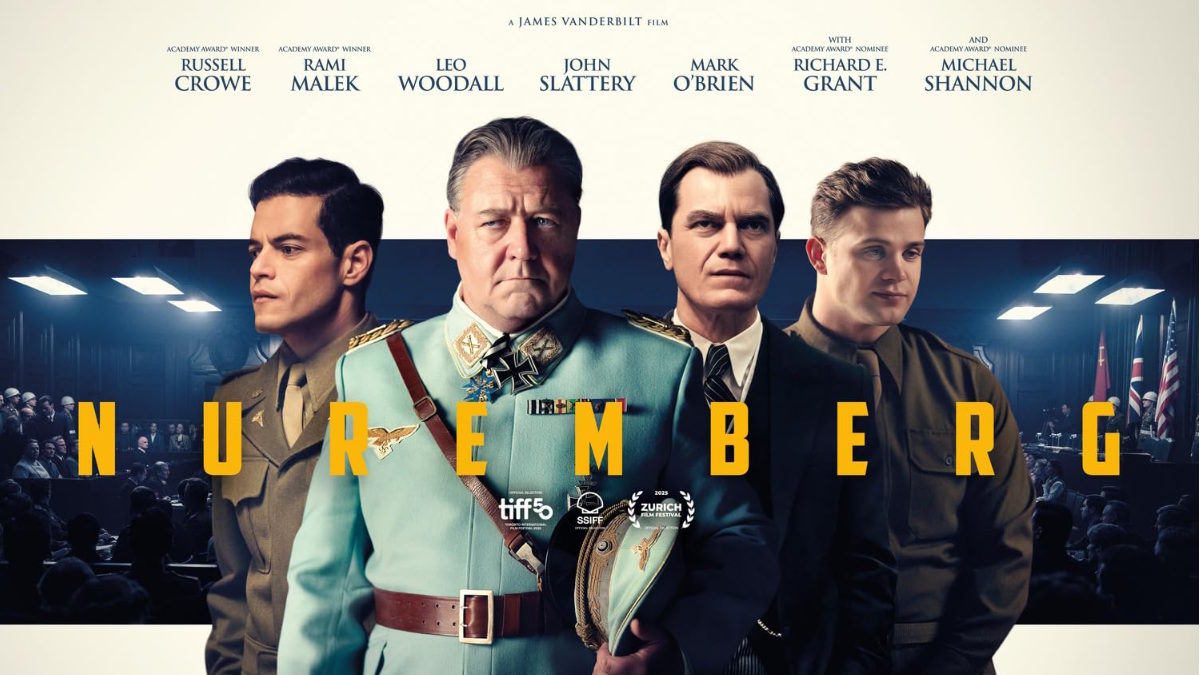
“Nuremberg” drags one of history’s most significant trials back to the big screen, but from an angle you might not expect. The 2025 film zeroes in on the psychological battle between Hermann Göring, Hitler’s right-hand man, and American psychiatrist Jack Kelley during the infamous war crimes trials.

Russell Crowe, Rami Malek, and Michael Shannon give performances that really keep this historical drama grounded.
The movie digs into how evil leaders twist even those who are supposed to understand human behavior. Director James Vanderbilt weaves a story that feels relevant now, even as it sticks to the post-World War II period.

It looks at the birth of international law and crimes against humanity, but through tense personal interactions.
You’ll get a courtroom drama that pokes at questions about accountability, morality, and how charismatic people can talk their way around terrible deeds. The film tries to balance historical education with storytelling that doesn’t feel like a lecture.
At two hours and twenty minutes, it really lets the personal dynamics breathe and doesn’t rush the bigger questions about bringing war criminals to justice.
Film Review Nuremberg (2025): Production Overview
Nuremberg is a 2025 psychological thriller and historical drama directed by James Vanderbilt. It dives into the psychological games between Nazi leaders and their American interrogators during the war crimes trials.
Rami Malek plays psychiatrist Douglas Kelley, and Russell Crowe takes on Hermann Göring. Together, they pull a lesser-known chapter of postwar history into the spotlight.
Synopsis and Setting
The film opens on May 7, 1945. Hermann Göring surrenders to U.S. forces in Austria, his family in tow.
Army psychiatrist Douglas Kelley gets the job of evaluating 22 Nazi leaders in Allied custody, with Göring at the top of the list.
Kelley works at Nuremberg prison, joined by interpreter Sergeant Howard Triest. He starts to form a strange rapport with Göring while collecting material for a possible book.
As the International Military Tribunal charges the prisoners with a laundry list of crimes, Kelley gets tangled in Göring’s psychological traps.
The story unfolds right in the thick of the historic Nuremberg trials. Associate Justice Robert H. Jackson heads up the prosecution.
The film leans into the tension between duty and personal obsession as Kelley tries to get inside the minds of those responsible for Nazi atrocities.

Historical Background of the Nuremberg Trials
The Nuremberg Trials marked the first time an international tribunal prosecuted war crimes on such a scale. Jackson pushed hard to set this legal precedent, even as the U.S. initially leaned toward summary executions.

The trials ran from 1945 to 1946 and laid the groundwork for modern international criminal law.
Twenty-two high-ranking Nazis went on trial. The proceedings happened in Nuremberg, a city loaded with Nazi symbolism.
British barrister David Maxwell Fyfe joined Jackson on the prosecution. Fyfe played a big role in breaking down the Nazi defense strategies.
The trials brought out horrifying evidence of the Holocaust, using documentary footage. This forced both defendants and the world to face the truth about concentration camps.
Source Material and Adaptation
James Vanderbilt adapted the screenplay from Jack El-Hai’s 2013 book The Nazi and the Psychiatrist. The book traces the real relationship between Douglas Kelley and Hermann Göring during the pretrial period.
El-Hai’s research shows how Kelley became almost obsessed with Göring’s personality, convinced he could crack the code of Nazi evil through interviews.
Vanderbilt spins this into a psychological thriller that digs into evil and complicity. The film doesn’t shy away from Kelley’s eventual breakdown and tragic end.
He died by suicide in 1958 using cyanide—the same way Göring dodged execution in 1946.
Key Characters and Performances
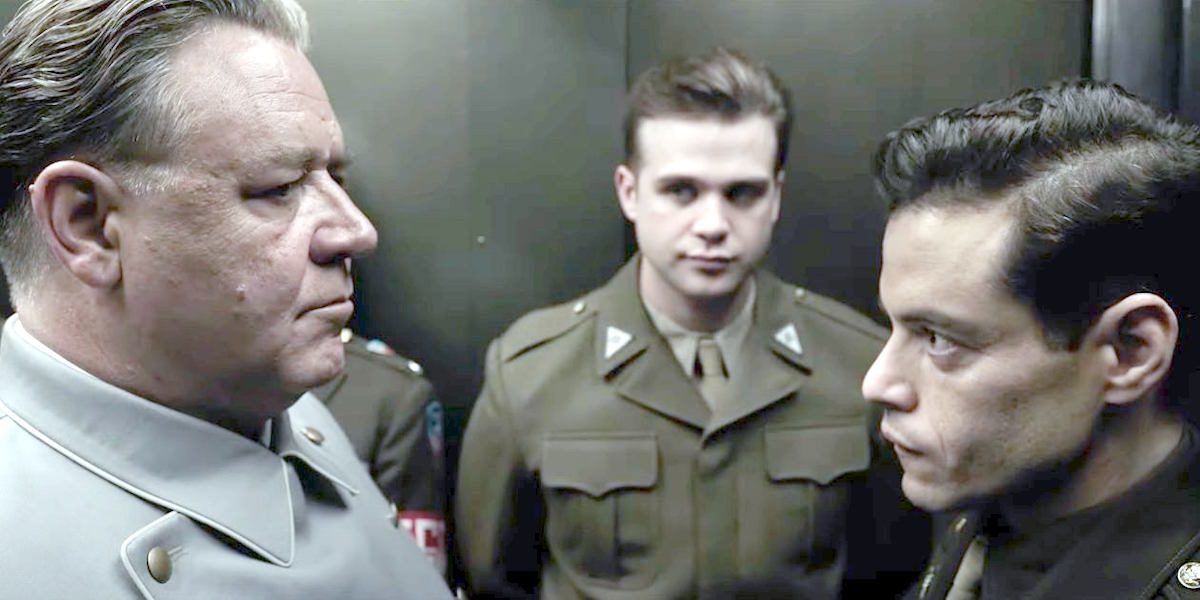
The heart of the movie is the psychological fight between an American psychiatrist and a Nazi war criminal. The legal team gets strong support from the cast, though not every character gets the same attention.
Douglas Kelley and His Role
Rami Malek steps into the shoes of U.S. Lieutenant Colonel Douglas Kelley. He’s tasked with figuring out if the Nazi prisoners are mentally fit for trial.
But Kelley can’t help himself—he wants to understand evil on a deeper level.
Malek brings a kind of restless energy to the role. His Kelley gets pulled further into the minds of the Nazi prisoners, almost losing sight of his original mission.
His relationship with Göring, as the film shows, turns into a disturbing intellectual connection.
Hermann Göring: Portrayal and Impact
Russell Crowe really disappears into Hermann Göring, Hitler’s second in command. He shows up looking the part, with slicked-back hair and a German accent dripping with arrogance.
The film doesn’t hide Göring’s drug addiction—he pops 40 opiate pills a day, and Crowe works that into the character.
Crowe’s performance stands out. He plays Göring as eerily calm, even while facing trial for unthinkable crimes.
Göring pretends not to speak English at first, and Crowe even learned some German for those moments.
Göring lies about knowing anything about concentration camps and keeps up his loyalty to Hitler, even after watching Holocaust footage.
Crowe never lets the audience get too close, always keeping some part of Göring’s motivation hidden.
Prosecutors and Supporting Cast
Michael Shannon portrays Supreme Court Justice Robert H. Jackson, the lead prosecutor. Shannon brings his usual intensity, showing the pressure of convincing the Truman administration to hold the trials.
His character stumbles during cross-examination, letting Göring spin false stories about Jewish emigration.
Richard E. Grant steps in as David Maxwell Fyfe, the British prosecutor. Fyfe takes over the questioning after Jackson’s mistakes.
He finally cracks Göring by asking if he’d still pledge loyalty to Hitler after seeing the camp footage.
John Slattery and Leo Woodall round out the supporting cast. Woodall, especially, adds a younger perspective to the military side of the story.
Female Characters and Their Significance
Wrenn Schmidt, Lydia Peckham, and Lotte Verbeek play the film’s female characters. Their roles nod to the women present at the time, but the story stays focused on the male-dominated legal and psychological drama.
These characters don’t get much screen time, which fits the film’s focus on Kelley and Göring.
Central Themes and Concepts
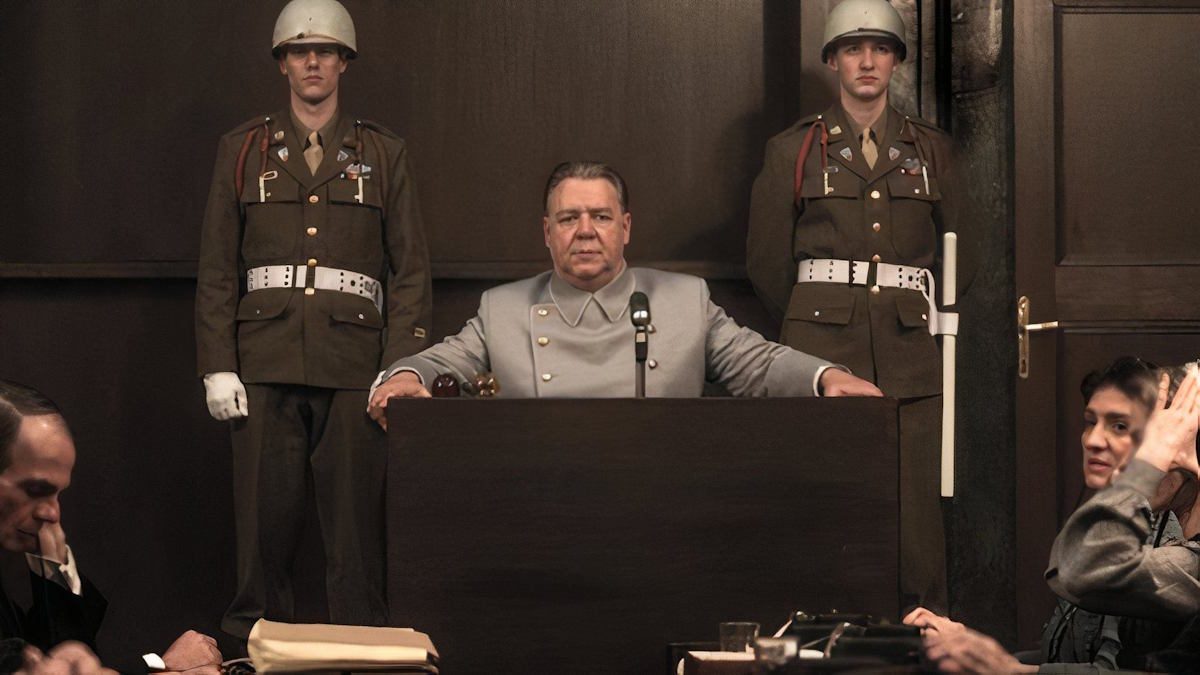
The film pokes at how evil works through psychological manipulation and systems of power. It asks if monsters are born or made, and it doesn’t let anyone off the hook easily.
The Nature and Psychology of Evil
The heart of the film is Göring’s relationship with psychiatrist Jack Kelley. Kelley arrives at Nuremberg hoping to pin the Holocaust and other horrors on some shared psychiatric condition.
He thinks he can “dissect evil” like a scientist, but things get more complicated.
Göring comes off as funny, smart, and even likable. He jokes and charms his way through interviews, manipulating everyone—including the man who’s supposed to analyze him.
Russell Crowe plays Göring as almost ordinary, which makes his violent side even more chilling.
The movie suggests evil doesn’t always wave a red flag. Sometimes it looks normal, maybe even friendly, and that’s the scary part.
The Banality of Evil
The film digs into how regular people ended up part of genocide—not just cartoon villains.
Göring and the others have families and hobbies, and they seem normal in plenty of scenes.
This ties back to Hannah Arendt’s famous idea about the “banality of evil.” The film shows how a state can slowly dehumanize people through little steps.
They start with propaganda, then laws, then social pressure—and before you know it, the unthinkable becomes routine.
The Nazis didn’t launch death camps overnight. Citizens went along bit by bit, and by the time anyone realized how bad it was, it was too late.
One character even says, “it happened here” because people let it happen, waiting too long to push back.
Moral Ambiguity and Responsibility
The film doesn’t hand you a simple good-versus-evil story. Kelley himself isn’t always on solid moral ground.
He wants to make history and maybe even get a bestseller out of the experience, not just serve justice.
Kelley drops his doctor-patient confidentiality when prosecutors ask for Göring’s secrets. He passes letters between Göring and his family, crossing lines he knows he shouldn’t.
Göring spots this weakness and plays into it, flattering Kelley into thinking he’s special, when really Göring is just manipulating the situation.
The movie doesn’t dodge tough questions about Allied actions, either. Göring points out that America dropped atomic bombs and carpet-bombed cities.
The film isn’t excusing Nazi crimes by mentioning these things. It just shows how leaders use whataboutism to blur the lines and avoid responsibility.
Science Versus Justice
The push-pull between psychiatric evaluation and legal prosecution drives the story. Kelley’s scientific mission keeps bumping up against the need to hold Nazis accountable in court.
Should a psychiatrist keep findings confidential, even when the “patient” masterminded genocide?
The international tribunal at Nuremberg had to invent new legal ideas on the fly.
“Crimes against humanity” wasn’t even a formal legal term before this. The idea that nations could be held to international law without signing treaties was pretty radical.
Some Allied leaders wanted to skip the trial and just execute Nazi leaders. But a trial gave them a platform to spread their ideology, thanks to radio and media.
Still, the architects of Nuremberg believed setting a legal precedent was worth the risk.
Dramatic Structure and Storytelling
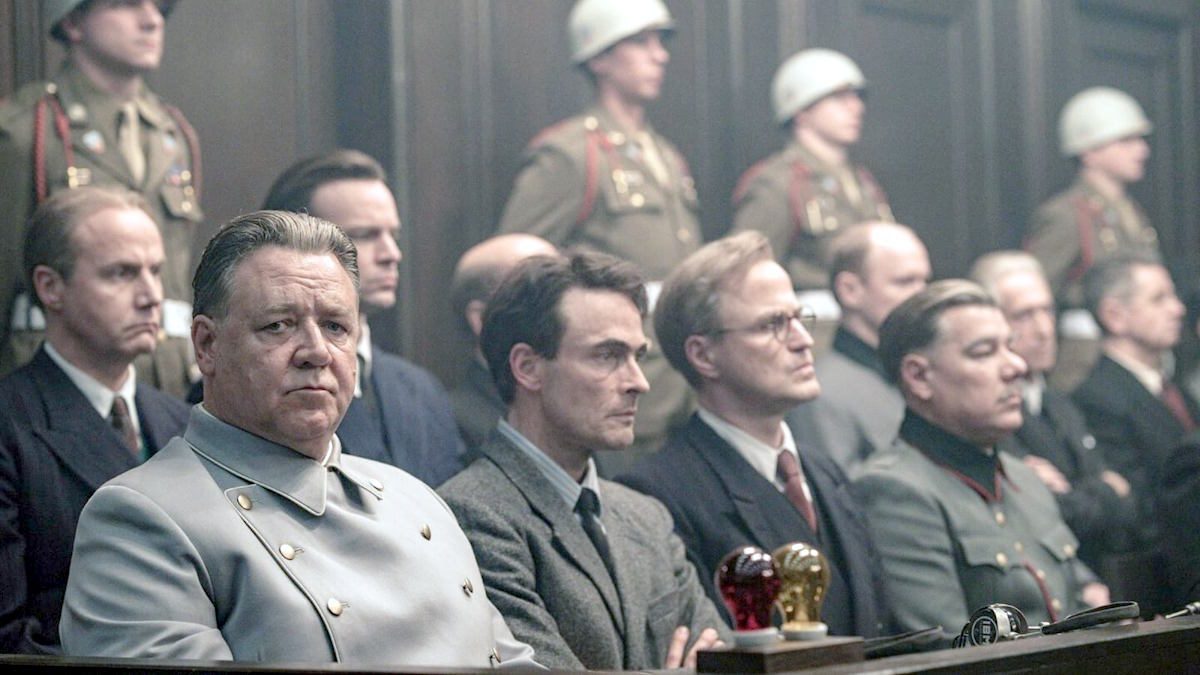
The film builds itself around two clashing frameworks: the formal trial scenes and the up-close psychological sparring between captor and captive.
That tension keeps things interesting, even if the balance between the two can feel a little lopsided at times.
Courtroom Drama Elements
The trial sequences actually take up less space than you’d expect after all the buildup. James Vanderbilt sets the Nuremberg proceedings as a backdrop, not the main event.
In the courtroom, Robert H. Jackson presents evidence and cross-examines defendants, but these scenes feel kind of rushed. The movie spends more time on the legal and ethical arguments swirling around the trial’s creation.
Characters debate whether to execute Nazi leaders right away or create an international legal precedent. These conversations dig into ideas like “crimes against humanity” and whether nations have to sign treaties to be held accountable.
The witness testimony and cross-examinations get only brief attention. David Maxwell Fyfe, the British counsel, pops up in a few key scenes, but most of the 22 defendants—except for Hermann Göring—fade into the background.
This keeps the story tight, but it means the courtroom drama doesn’t hit as hard as it could have.
Psychological Interactions
The real heart of the film sits in Douglas Kelley’s sessions with Hermann Göring inside the prison. These scenes are like verbal chess matches—Göring keeps up the act of being cooperative while staying several moves ahead.
Kelley thinks he’s getting inside Göring’s head through empathy, but Göring never really lets him in. Göring’s cunning shows up in small moments, like pretending not to know English before dropping a sly comment.
He dodges blame by pointing to Allied war crimes, like the atomic bombings and carpet bombing of German cities. These back-and-forths show how someone charismatic can twist moral arguments to their advantage.
Kelley’s ethics slip as he shares confidential session details with prosecutors and even delivers letters between Göring and his family. He wants to “dissect evil”—for science, sure, but also for his own ego—and it clouds his judgment from the start.
Tone and Pacing
Vanderbilt works some dark humor into the story without crossing the line. Early on, Göring sizes up Kelley like a butcher eyeing livestock—tense, but a little absurd too.
This approach helps make the heavier themes easier to sit with. At two hours and twenty minutes, the runtime stretches the material a bit thin.
Some characters get only a quick sketch, while others are fleshed out in detail. The movie spends a lot of time on setup and character, but then rushes through the actual trial.
Historical Accuracy and Cinematic Approach
Director James Vanderbilt grounds the film in real trial transcripts and research, picking what to show with a clear point of view. He draws from Douglas Kelley’s “22 Cells in Nuremberg” and Jack El-Hai’s “The Nazi and the Psychiatrist” to reconstruct the relationships and events around the trials.
Portrayal of Historical Figures
The film recreates actual conversations between Army psychiatrist Douglas Kelley and Hermann Göring—these really happened, according to historians. Kelley did get close to Göring and his family, even delivering letters to Göring’s wife.
Vanderbilt uses actual trial transcripts for the courtroom dialogue. The cross-examination between Supreme Court Justice Robert H. Jackson and Göring played out much like it does here—Jackson struggled, and then British prosecutor David Maxwell-Fyfe stepped in to press Göring about the Nazi high command’s knowledge of the Holocaust.
This moment marked a turning point in the trial, taken straight from history. Russell Crowe plays Göring as clever, not just evil. The film explores how Kelley tried to figure out what led the Nazi war criminals to do what they did by evaluating all 22 officials.
Inclusion of Archival Footage
The trial scene uses about six minutes from John Ford’s original 52-minute film made for the Nuremberg trials. That footage shocked the world, showing corpses and survivors from the camps for the first time.
Vanderbilt projected the real footage on set so the actors could react in the moment. He specifically told the cast not to watch it beforehand.
The raw concentration camp film remains some of the most damning evidence against the Nazi high command. It’s still hard to watch, even now.
Depiction of Concentration Camps
The film doesn’t try to recreate the camps with new footage. Instead, it sticks with the actual documentary evidence shown at the 1945-46 trials.
This keeps the focus on how everyone in the courtroom—judges, defendants, witnesses—reacted to undeniable proof. The movie shows how this evidence changed the trial’s momentum, forcing the Nazi leaders to face what really happened under their watch.
Göring’s story about “work camps” falls apart when confronted with Maxwell Fyfe’s questioning and the grim images on film.
Direction, Production, and Creative Vision
James Vanderbilt brings a steady directorial hand, focusing on the psychological tension between Göring and Kelley. He keeps things accessible for a wide audience.
The film’s look supports the character study—careful framing, moody production design, and a sense of intimacy in the prison scenes.
James Vanderbilt’s Directorial Perspective
Vanderbilt, who wrote “Zodiac,” makes deliberate choices to balance the weight of history with audience engagement. He uses sardonic humor to cut through the darkness, but never makes light of the real events.
It’s a move that feels similar to what Spielberg or Kubrick might do in their historical dramas. Instead of trying to cover every detail of the trials, Vanderbilt zeroes in on the psychiatrist-patient dynamic.
This tight focus lets him dig deeper into the themes of manipulation and moral decay. He sneaks in pointed observations about accountability and evil, using the period setting as a kind of Trojan Horse for modern ideas.
The story highlights the personal stakes and ethical compromises at play. The script draws quiet parallels to today’s atrocities, giving viewers space to make their own connections.
Visuals, Score, and Cinematography
The production nails the 1945 vibe, with careful recreations of the Nuremberg prison and courtroom. The visuals add to the claustrophobia of Kelley’s conversations with Göring—lots of close shots, lots of tension.
The cinematography captures both the grand scale of the trial and the small, loaded moments between the main characters. Lighting choices reinforce the moral ambiguity, with shadows and tight spaces mirroring Kelley’s ethical slide.
The film keeps things visually interesting across its long runtime, mixing up camera work between courtroom drama and private encounters.
Cultural Legacy and Contemporary Relevance
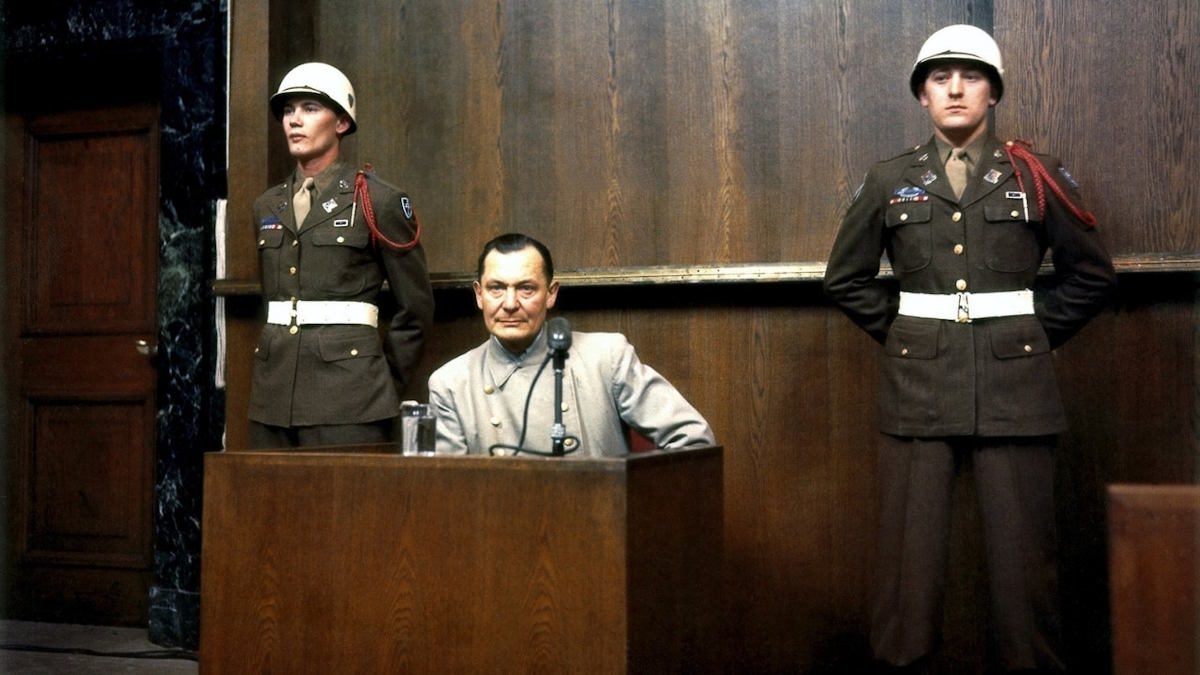
The film draws clear lines between the Nazi rise to power and political movements today. It shows how the Nuremberg trials shaped international justice systems, which still struggle with new challenges.
Modern Parallels and Warnings
The movie pushes the disturbing similarities between 1930s Germany and modern politics right up front. Russell Crowe’s Göring says, “made us feel German again,” and you can’t miss the echo of present-day nationalist slogans.
Director James Vanderbilt points to Douglas Kelley’s 1947 book, which warned, “there is little in America today which could prevent the establishment of a Nazi-like state.” The film circles back to this warning more than once.
Kelley’s psychiatric notes showed that Nazi psychology wasn’t something unique to Germany—it could take root anywhere if the conditions were right. The film suggests these warnings are still uncomfortably relevant.
It’s a reminder that fascist ideas can grow in any society, not just post-WWI Germany.
International Law and Human Rights Impact
The Nuremberg trials set new standards for prosecuting war crimes and genocide under international law. The film shows how prosecutors put together a case to hold the Nazi leadership responsible for the Holocaust and other crimes.
Vanderbilt doesn’t shy away from the fact that the Nuremberg framework hasn’t prevented new atrocities—he even brings up Gaza. The movie points out that creating courts and laws only matters if there’s real political will to enforce them.
Frequently Asked Questions
The film tackles the Nuremberg trials through the eyes of psychiatrist Jack Kelley and his complex relationship with Hermann Göring. Here are some common questions about its accuracy, performances, pacing, and whether it’s worth seeing in theaters.
What is the movie’s main story, and is it based on real events?
The movie centers on the relationship between American psychiatrist Jack Kelley and Hermann Göring, the top Nazi official at the Nuremberg trials. Kelley was sent to Germany to evaluate the imprisoned Nazi leaders and see if they were fit for trial.
It’s based on Jack El-Hai’s nonfiction book “The Nazi and the Psychiatrist.” Kelley tries to figure out if the Nazi leaders share a psychiatric condition that led them to commit mass atrocities.
The story also follows Supreme Court Justice Robert H. Jackson’s push to convince Truman’s administration to hold formal trials instead of just executing the Nazi leaders. This set the stage for “crimes against humanity” to become part of international law.
Who are the main cast members, and how strong are their performances?
Russell Crowe plays Hermann Göring and, honestly, critics say it’s one of his best performances. He brings a regular-guy energy that makes Göring’s violence all the more unsettling when it surfaces.
Rami Malek plays Jack Kelley and might just deliver his best feature film work here. He communicates Kelley’s inner conflict with subtle reactions and really shines in his scenes with Crowe.
Michael Shannon plays Justice Robert H. Jackson with a grounded, familiar presence. Richard E. Grant is British counsel David Maxwell Fife, and John Slattery takes on Nuremberg commandant Burton C. Andrus.
How does the film handle its historical themes and moral questions?
The movie looks at how charming but brutal men rise to power by manipulating others—even trained psychiatrists. Göring flatters Kelley, making him think he’s getting real secrets, but Göring is always in control.
Vanderbilt uses sardonic humor to lighten things up without disrespect. The film talks about war crimes, human rights, and how states can dehumanize groups, leading to dictatorship and genocide.
It even calls out Allied war crimes, like the bombing of German cities. The whole thing acts as a kind of rhetorical device, sneaking in observations about today’s evils through a historical lens.
Is the pacing engaging throughout, or does it feel slow in parts?
At two hours and twenty minutes, the film can’t cover everything it brings up. The actual trial feels short after all the focus on Kelley and Göring’s relationship.
Most of the other Nazi defendants, including Rudolph Hess, don’t get much screen time or development. Still, the psychological cat-and-mouse between Kelley and Göring keeps things moving and provides the film’s strongest moments.
What are the standout elements of the direction, cinematography, and production design?
Vanderbilt brings his “Zodiac” sensibility to the drama. He balances straightforward storytelling with sharp observations about power and accountability.
The movie recreates the Nuremberg prison and courtroom with attention to detail. The production design sets the post-war German atmosphere without drawing too much attention to itself.
It follows the style of classic Oscar-bait films—educational, inspiring, but still entertaining. The approach stays unpretentious, focusing on accessibility over art-house complexity.
Is this film worth watching in theaters, or is it better to wait for streaming?
The film offers a solid theatrical experience for anyone who likes historical dramas with a modern edge. Crowe and Malek both deliver strong performances that really pop on the big screen.
If you’re into earnest, mainstream period pieces, you’ll probably get more out of seeing it in a theater. Watching those courtroom scenes and tense character moments on a huge screen just feels different—more immersive, honestly.
But if historical dramas or long courtroom stories aren’t really your thing, waiting for streaming makes sense. The movie still works at home, though some of the performances might not hit as hard on a smaller screen.