

“The Tiger” (German title, in English: ‘The Tank’) has been available on Amazon Prime Video since January 2026 and is causing quite a stir in the German film scene. In this review, we take a look at how director Dennis Gansel brings the Eastern Front of 1943 and its horrors to the screen.
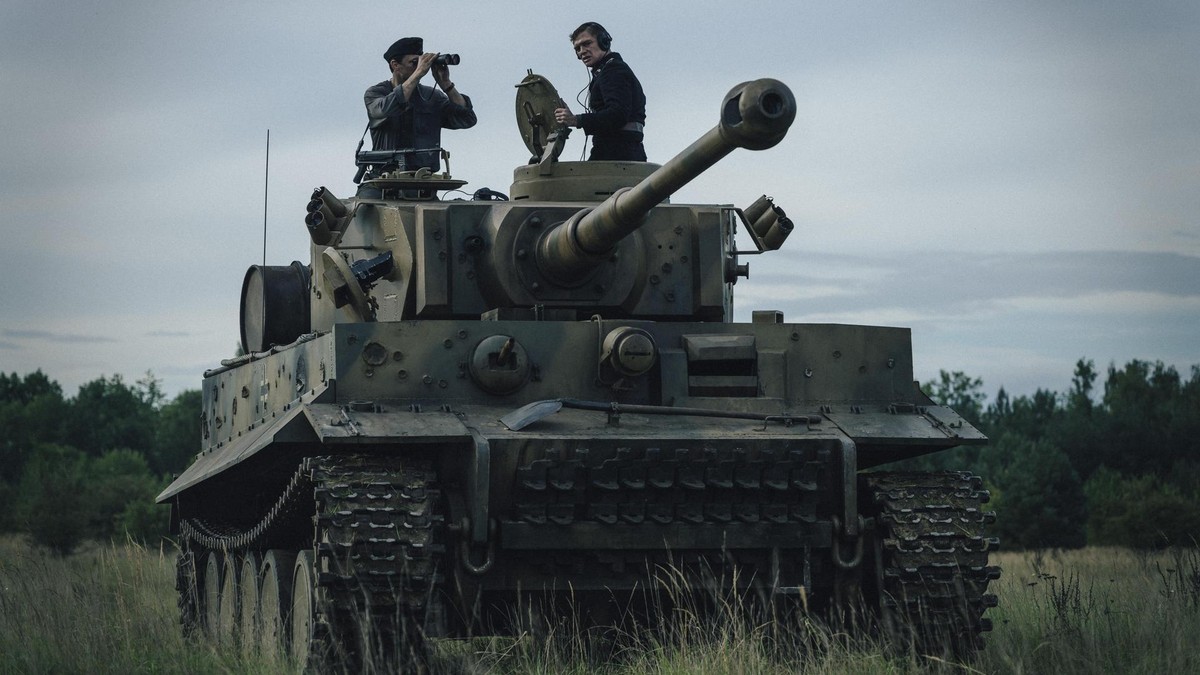
The film is a depressing anti-war movie that deals with moral abysses and personal responsibility.

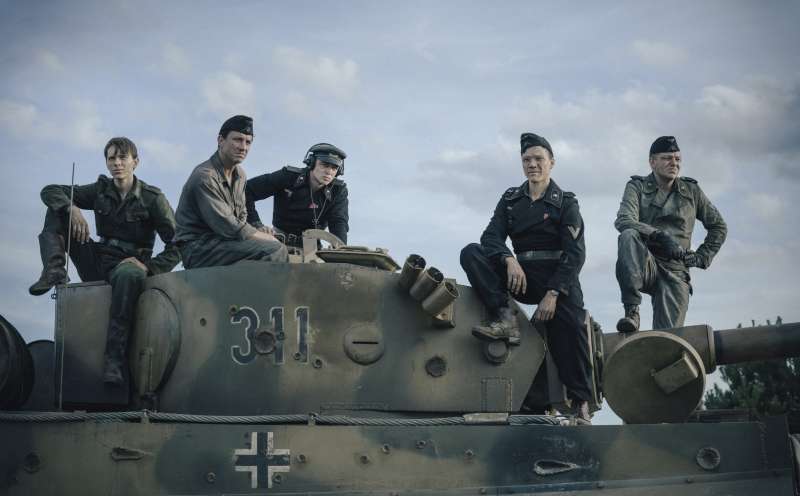
The story revolves around five soldiers in a Tiger tank who are sent deep into enemy territory. What initially seems like a routine mission quickly turns into an intense odyssey through the madness of war.
The claustrophobic atmosphere is somewhat reminiscent of “The Boat,” only in a tank.

Gansel relies on powerful images and convincing actors, above all David Schütter. War is anything but glorious here—the film asks uncomfortable questions about obedience and guilt.
Instead of huge battles, there are rather short, intense skirmishes.
‘The Tiger’: Overview and background
The German war film went straight from the big screen to Amazon Prime Video. It quickly became a topic of conversation.
Dennis Gansel directed the film. It was produced by Amazon MGM Studios and Pantaleon Films and premiered in fall 2025.
How the film came about
Dennis Gansel not only directed the film, but also co-wrote the screenplay. Colin Teevan also contributed to the script.
Amazon MGM Studios and Pantaleon Films worked closely together on this project.
The focus: a five-man tank crew on the Eastern Front in 1943. Almost the entire story takes place inside the Tiger tank.
Gansel wanted to shoot more than just another battle scene.
He planned a psychological drama that illuminates the moral abysses of war. The confined space inside the tank was to play a major role from the outset.
The theatrical release and streaming premiere
The Tiger was released in selected German cinemas on September 18, 2025. The theatrical release remained limited.
Amazon pursued a clear strategy: first cinema, then streaming. The film will be available on Prime Video from January 2, 2026.
Many were already waiting for the streaming release. The film was one of the highlights of January 2026 and strengthened the range of high-quality German productions.

The team behind the film
Dennis Gansel is known for “The Wave.” He brings a wealth of experience in psychological dramas.
The leading roles are played by David Schütter, Laurence Rupp, Leonard Kunz, Sebastian Urzendowsky, and Yoran Leicher. Schütter plays the lieutenant who leads the mission.
These five had to convey the confinement and tension in the tank in a believable way.
Amazon MGM Studios produced the film together with Pantaleon Films as its German partner.
Plot and setting
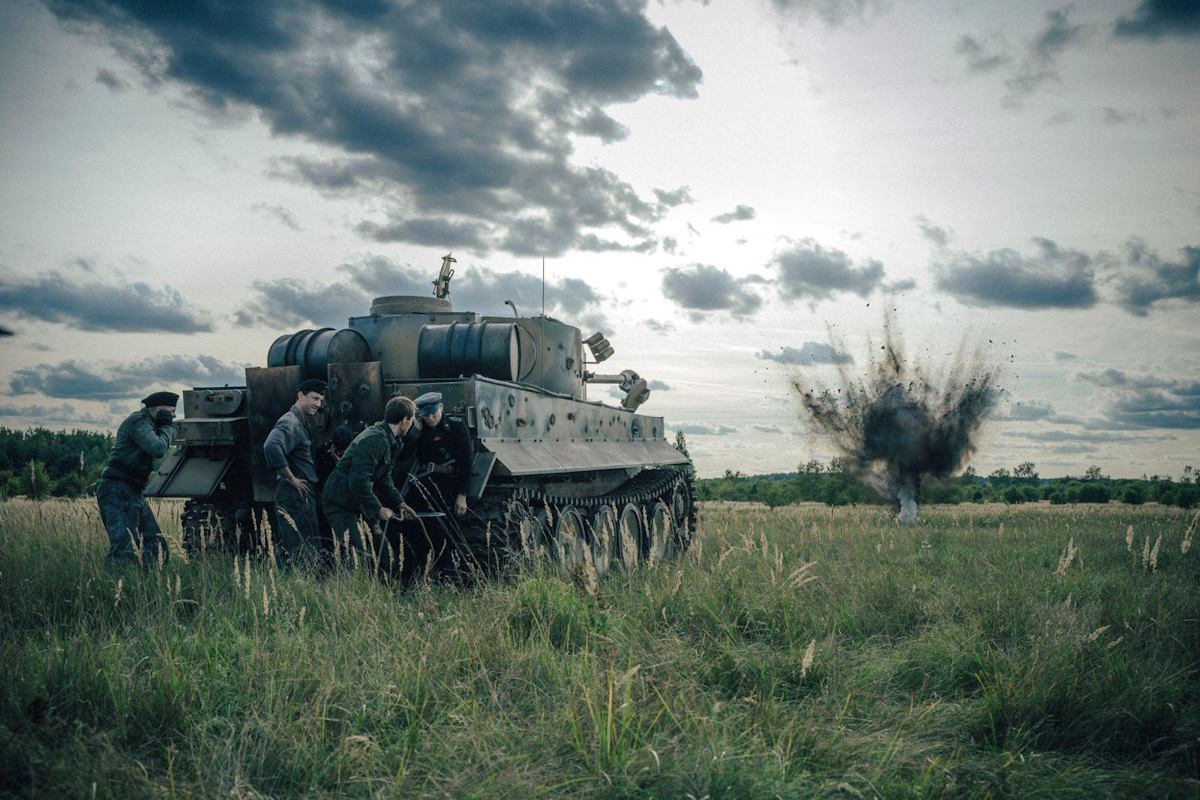
The story takes place in 1943 on the Eastern Front. A Tiger tank crew is given a risky assignment deep behind Soviet lines.
A military mission quickly turns into a psychological nightmare. The five soldiers are not only fighting the enemy.
Mission behind enemy lines
The Tiger tank is supposed to advance deep into enemy territory. Officially, the mission is to rescue survivors, but the secret mission turns out to be much more complex.
The further the men roll into no man’s land, the more the boundaries between their mission and something sinister become blurred.
The tank feels like a moving prison. Inside, there is cramped space, heat, and psychological pressure, while outside, Soviet troops lie in wait.
The crew fights its way through destroyed landscapes. Mistrust and exhaustion gnaw at them.
A side note: the Wehrmacht used methamphetamine (“tank chocolate”) to keep the soldiers awake. The film plays with this element to distort the perception of reality.
Eastern Front 1943: Historical Context
1943 was the turning point on the Eastern Front. After Stalingrad, the Wehrmacht was in retreat.
The film does not portray this period as a heroic battle, but as a grueling struggle for survival.
The Soviet Union had long since taken control. German troops fought defensively, often cut off from supplies.
This reality shapes the film’s somber mood.
The Tiger tank was considered technically superior, but strategically, everything was already lost. The crew drives through a landscape of destruction and death.
The war scenes focus less on action and more on the brutal, exhausting side of the conflict.
Special mission and suicide mission
The special mission literally cries out for a suicide mission. The chances of survival? Minimal.
Five men in a tank against an entire war zone – it sounds absurd. What starts as a clear mission becomes increasingly puzzling.
The crew experiences things that can hardly be explained rationally. Is it due to drugs, trauma, or simply the madness of war? The film leaves this open.
Lieutenant Gerkens must keep his troops together as old memories and moral conflicts come to the surface.
Each individual is forced to confront guilt and repression. The tank rolls not only through enemy territory, but also directly into the abyss of its crew.
The main characters and cast
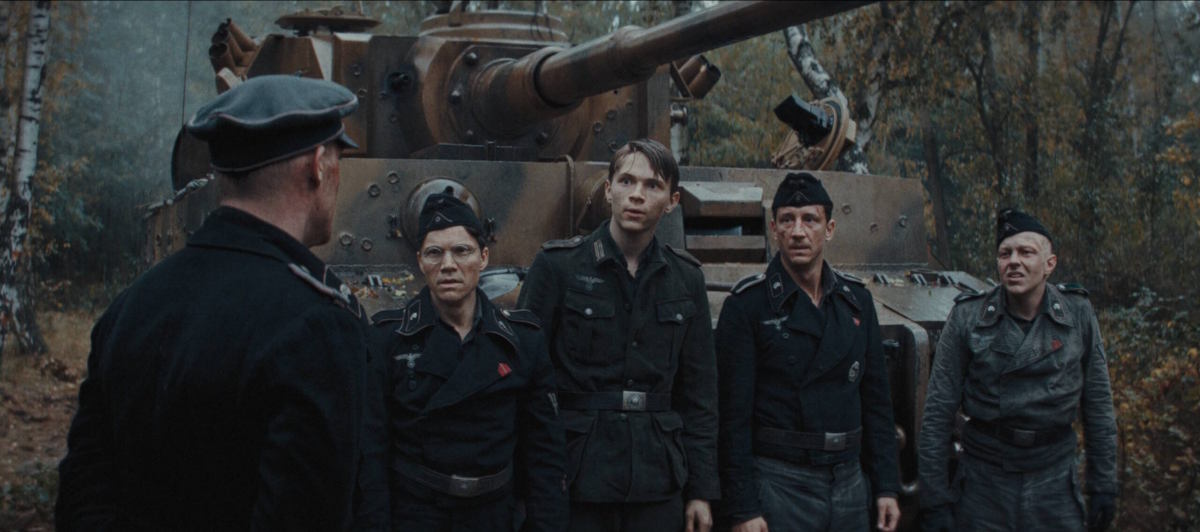
The focus is on the five-man tank crew on their dangerous mission. David Schütter takes on the lead role as lieutenant.
Lieutenant Philip Gerkens takes centre stage
David Schütter plays Lieutenant Philip Gerkens, the commander of the tank. Gerkens lives by the principle that orders must be carried out, no matter what.
This relieves him of responsibility for his actions. During the mission, memories of a previous incident catch up with him.
These thoughts haunt him throughout the film. At some point, he has to come to terms with his own guilt – and that shakes his convictions.
The character shows how soldiers survive the madness of war. The mantra ‘orders are to be obeyed’ seems frightening today, but it was typical at the time.
The tank crew: team and characters
Alongside Schütter, Laurence Rupp, Leonard Kunz, Sebastian Urzendowsky and Yoran Leicher play the tank crew. The five spend almost the entire film in the cramped cockpit of their Tiger tank.
The claustrophobic atmosphere inside the tank takes centre stage. Their world shrinks to this tiny space, which only appears to offer protection.
The crew fights not only against the enemy, but also against their own fears. Although the characters are clichés, they are nevertheless well developed. The focus remains clearly on Gerkens.
Significant supporting roles
The film shows encounters with other soldiers. One scene in particular sticks in the mind: a squad of Waffen-SS soldiers lock people in a barn and set it on fire – this is only hinted at, not shown explicitly.
Tilman Strauss also stars in the film. The supporting characters reinforce the image of the moral abyss of war and show what was possible on the Eastern Front in 1943.
Visual implementation: atmosphere and aesthetics
The film uses sombre images and a lot of silence to make the constant threat tangible. The camera often stays close to the tank crew, but also switches to the vastness of the Eastern Front.
The confines of the Tiger tank
The camera delves deep into the lives of the tank crew. Five soldiers crouch in the Tiger tank, with barely enough room to breathe.
The tank feels like a prison on tracks. The film cleverly plays with this spatial confinement.
Many close-ups express the hopelessness of the situation. You can see the exhaustion in the men’s faces – both physical and mental.
Inside, the light remains mostly dim. Small lamps cast harsh shadows on their faces.
This visual language is reminiscent of war films that use claustrophobia as a stylistic device. At times, it seems almost too dense, but that is probably the intention.
Combat scenes and Hollywood standards
Amazon MGM Studios has allocated a substantial budget for ‘The Tiger’. This is particularly noticeable in the fight scenes.
The action feels technically polished and quite powerful. Explosions, impacts – it all comes across as intense.
Director Dennis Gansel refrains from exaggerated heroic poses. Instead, everything remains fairly grounded.
CineStar is bringing the film exclusively to the cinema. The production can easily compete with international standards.
The images make full use of the big screen. You really get a sense of the dimensions of war.
Comparison with “Das Boot” and other classics
‘Der Tiger’ follows in the tradition of German war films. Das Boot set new standards for claustrophobia at the time.
There are also parallels with All Quiet on the Western Front on Netflix. Both films show war as total destruction.
The tank crew’s journey is almost reminiscent of Heart of Darkness. It delves deep into moral darkness.
The aesthetics remain close to reality. While ‘Das Boot’ took the submarine, here it is the tank – confined spaces, constant danger, psychological pressure.
Gansel nevertheless finds his own visual language. He does not simply copy his role models.
Themes and motifs in the film
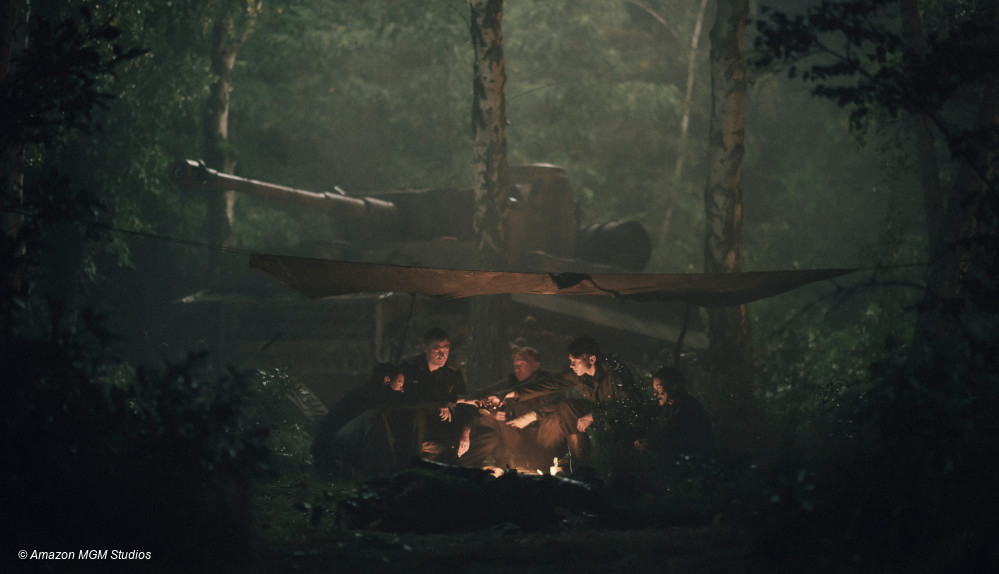
‘The Tiger’ deals with the psychological abyss of war. It also deals with how soldiers deal with inhumane orders.
The film looks at guilt and the role of drugs as a coping strategy. That is what makes it interesting.
Guilt, responsibility and obedience
The lieutenant in ‘The Tiger’ is caught in the dilemma of obedience. For him, orders are a shield against his own responsibility.
The film repeatedly questions this attitude. Dennis Gansel shows how blind obedience leads to moral abysses.
A key scene is the one with the burning barn. Gansel does not show the horror directly, but lets it arise in the viewer’s mind.
It is precisely this restraint that makes the scene so powerful. One is forced to confront guilt.
Anxiety and drug use in war
‘The Tiger’ addresses the use of Pervitin – a methamphetamine that German soldiers were given during the Second World War.
The drug was intended to dampen anxiety and increase performance. In the film, you can see how much it alters perception.
The tank crew resorts to Pervitin to endure the constant fear of death. This is not dramatised, but shown as part of everyday life.
Pervitin helps them to carry on, but obscures the horror of their actions. A rather bitter aspect.
Psychological war drama
‘The Tiger’ is not a classic war film with endless tank battles. Rather, it is about the inner conflicts of the characters.
The claustrophobia in the tank reinforces this psychological level. Flashbacks show the lieutenant’s past and hint at trauma.
These flashbacks make us unsure how reliable what we are seeing is. They show how war destroys the psyche.
Reception, reviews and comparisons
The film received mixed reviews. Many praised the technical execution, but the jury rejected ‘The Tiger’ for the Oscar shortlist.
Reviewers draw comparisons to classics such as ‘The Boat’. ‘The Tiger’ is indeed very reminiscent of it – especially due to the claustrophobic atmosphere in the tank.
The crew experiences similar confinement and pressure as the submarine crew in the 1981 classic. Dennis Gansel remains true to his style, as he did in ‘Napola’ and ‘The Wave’.
Unlike ‘All Quiet on the Western Front’, he dispenses with large battles. Instead, there are short, intense skirmishes.
The horror is mostly implied. The scene with the burning barn takes place outside the direct field of vision.
This is reminiscent of ‘Heart of Darkness’, where evil is more felt than seen. Opinions on the film are divided.
Cinema fans find it ‘more than just a war film’. They praise the moral abysses that Gansel shows.
The Süddeutsche Zeitung sees it differently and calls ‘The Tiger’ a ‘carbon copy of a war film’.
Positive aspects:
- Strong camera work and haunting images
- David Schütter is convincing in the lead role
- The frame story surprises at the end
Criticisms:
- Sometimes it lacks subtlety
- The ending comes very abruptly
- The Oscar jury did not find it original enough
Filmstarts calls the film ‘very interesting’ with surprising twists. However, the mixture of mysticism, heroism and cruelty divides viewers.
Historical and technical fact checks
The Tiger tank was actually used in 1943 and was considered one of the most powerful tanks of its time.
The portrayal of the crew and their hierarchy is consistent with historical facts. The scene with the burning barn is based on documented war crimes.
Such attacks by the Waffen-SS on civilians did indeed occur during the Wehrmacht’s retreat. The technical details in the film also appear to be accurate.
The cramped conditions, the communication and the operation of the gun – it all feels authentic. Amazon Studios has really invested in this.
The enemy tank seen in the film, the SU-100, did not see frontline action until January 1945 and therefore does not fit the time frame of the film.
The film used a replica of a Tiger tank based on the chassis of the post-war Soviet T-55 tank, which was modified and fitted with props to give it the authentic appearance of a Tiger tank.
Could the Tiger actually dive?
The Tiger I could not actually dive, at least not in the traditional sense.
However, it had a fording capability of up to four metres. It had special seals and a snorkel for this purpose.
This allowed the tank to cross rivers when there was no bridge. The engine continued to run underwater while the crew remained inside.
In practice, however, this was hardly ever used. In the film, this technique is probably used more for dramatic effect.
Is the scene really realistic? Critics are divided on this.
Frequently asked questions
’The Tiger” raises many questions. It’s about historical accuracy, but also about the cinematic adaptation.
The film combines intense images of war with psychological themes. This appeals to quite a diverse audience.
How realistic is the portrayal of war in “The Tiger”?
The film shows the war in a rather restrained manner. Gansel does not focus on large battles, but on short, intense encounters.
The scenes in the tank seem real. It is reminiscent of ‘The Boat’.
The horror often arises in the minds of the audience. The scene with the burning barn shows this particularly well – you don’t see the horror directly.
Which actors gave particularly impressive performances?
David Schütter plays the lieutenant and is truly convincing. His character leads the mission and follows orders without asking too many questions.
Schütter portrays a man who shirks responsibility by following orders. The tank crew is well portrayed overall, but the focus is clearly on Schütter’s character and his moral conflicts.
Can young people watch “The Tiger” or is it too violent?
The film shows violence, but in a rather restrained way. Gansel mostly presents the horror indirectly.
Nevertheless, “The Tiger” remains an intense anti-war film with some pretty heavy themes. The psychological abysses and moral questions are not without significance.
Parents should decide for themselves whether their teenagers are ready for such content. The depiction is less explicit than in many other war films, but it is not harmless either.
How does “The Tiger” compare to other war films?
‘The Tiger’ feels more like a psychological drama than a classic war film. It is somewhat reminiscent of ‘The Boat’ because of the claustrophobic atmosphere in the tank.
The film does not seek to emulate Netflix’s ‘All Quiet on the Western Front’. Instead, it focuses more on action and suspense.
‘The Tiger’ is an entertaining film that nevertheless raises moral questions. The visual images linger in the mind, and cinematographically, the whole thing is really well done.
What message is the film trying to convey?
The film examines what happens when people simply follow orders blindly. The main character believes that every order must be obeyed, no matter what.
However, the film clearly questions this attitude. ‘The Tiger’ is a moral lesson about responsibility.
It shows how dangerous it is to hide behind orders. In the end, the main character has to deal with the consequences of his own decisions.
The film asks who is really responsible for the horrors of war. And honestly, there are no easy answers.
How were the visual effects and film music implemented in “The Tiger”?
The visual images are gripping and stick in your mind. Gansel’s depiction of the tank battles is truly impressive.
The camera work inside the cramped tank creates a rather oppressive atmosphere. The images appear authentic and intense.
The film is a feast for the eyes. Most viewers also appreciate the technical execution.
Where can you watch the film “The Tiger”?
‘The Tiger’ has been available on Amazon Prime Video since 2 January 2026. It is an original German film from Amazon Prime Video.
Before streaming, there was an exclusive cinema window. Now subscribers worldwide can stream the film at the same time.
However, you need a Prime subscription to watch this anti-war film.
Click here to watch the Movie (‘The Tank’ is the English title):