
British heavy Infantry Tank Mark I of World War One and first tank in history.
History, development, service, specifications, pictures and 3D model.
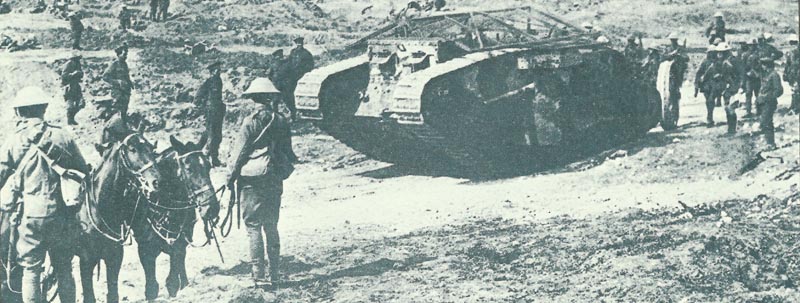
The first tank in action: Mark I
Tank Mk I
Type: Heavy Infantry Tank.
The Tank Mark I holds a special place in military history — it was the world’s first-ever operational tank, developed and deployed by the British Army during World War I. Its introduction in 1916 marked a revolutionary step in modern warfare, combining mobility, armor, and firepower in a single vehicle designed to break the stalemate of trench warfare.
Overview
Origins and Development
The idea for the Mark I emerged from the brutal conditions of the Western Front, where soldiers faced barbed wire, machine guns, and deep trenches that made offensive operations nearly impossible. In 1915, the British formed the ‘Landships Committee’, led by Winston Churchill (then First Lord of the Admiralty), to explore the development of a new armored fighting vehicle.
After several prototypes — including the experimental “Little Willie” and “Big Willie” (later called ‘Mother’) — the Mark I was finalized in early 1916. It was built by Fosters of Lincoln and Metropolitan Carriage, Wagon & Finance Company.
Design and Specifications
– Weight: Approximately 28 tons
– Crew: 8 men (driver, commander, gunners, and gearsmen)
– Armor: 6–12 mm thick steel plating
– Armament:
“Male” version: Two 6-pounder naval guns + four .303 Vickers machine guns
“Female” version: Five .303 Lewis machine guns
– Engine: 105-hp Daimler engine
– Speed: About 3–4 mph (6 km/h) on flat ground
– Range: Roughly 23 miles (37 km)
The Mark I’s rhomboid shape allowed it to climb over trenches and rough terrain — a key advantage in the muddy, cratered battlefields of the First World War.
Combat Debut — Battle of the Somme (1916)
The Mark I first saw combat on September 15, 1916, during the Battle of Flers-Courcelette, part of the larger Somme Offensive. Out of 49 tanks deployed, only 32 reached the front lines due to mechanical failures. However, those that did fight caused panic among German troops, proving the tank’s psychological and tactical potential.
Despite their limited success, these early tanks demonstrated that armored warfare could change the dynamics of battle — paving the way for future tank designs and mechanized warfare.
Legacy
The Tank Mark I was far from perfect — it was slow, noisy, and mechanically unreliable — but it changed warfare forever. It inspired rapid improvements, leading to later models such as the Mark IV and Mark V, and ultimately shaped the development of tanks throughout the 20th century.
Today, the Mark I stands as a symbol of innovation born from necessity — a machine that turned the tide toward modern, mechanized combat.
Fun Fact:
The word “tank” was originally used as a code name to disguise the project’s purpose. The British referred to the vehicles as “water tanks” to keep their true nature secret from enemy spies.
History
The thought of the armored ‘landship’ had been quite nicely well-known in fiction prior to 1914, and suggestions to develop this type of machine had been intended to practically every significant military in Europe, along with the British War Office. Not any of these plans had been adopted for the easy cause that there appeared to be simply no necessity for this type of machine, however right after 1914 that become different. Some far-sighted military and other people pointed out that the circumstances established on the Western Front could only be beaten by the employment of mobile armored machines.
One of these first prophets was Colonel E.D. Swinton, who made use of his position of influence to focus authorities in the idea. Consequently, a War Office committee had been created to check out a few suggestions, nevertheless its attempts came to practically nothing. Certainly not discouraged, the Royal Navy took assist since it’s Royal Naval Air Service armored car squadrons had at least had some expertise of armored warfare in 1914. From their experience emerged several suggestions that included the use of a ‘big wheel’ vehicle with huge wheels that could cross trenches. At this time Winston Churchill grew to become more than fascinated and established what was to become called the Landship Committee to analyze methods for crossing the French battlefields.
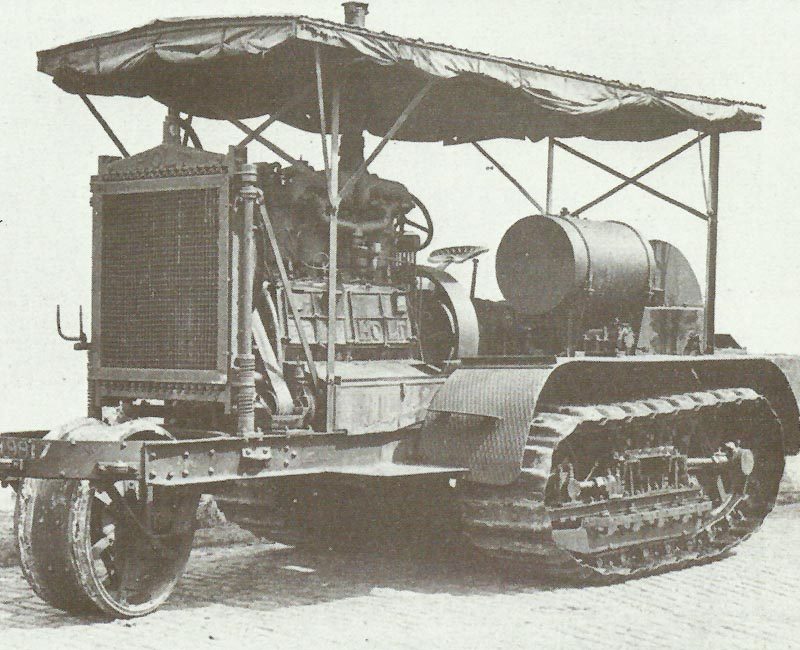
The ‘big wheel’ vehicle received the development go-ahead, and also the focus of the committee had been attracted to one more machine called the Pedrail which utilized a large central track transporting any kind of load or power plant above it. That as well had been directed for tests, plus more devices of the caterpillar track type were purchased for experimental work. There were a number of these like the Killen-Strait tractor, a Bullock Creep Grip tractor along with a peculiar purpose-built device that embodied the wheels of a Daimler-Foster tractor and was called the Tritton Trench-crossing Machine. Not any of these devices had been considered suitable for the task, the identical judgement end up being the Pedrail, which turned out to be much too complicated a vehicle to cross rough terrain.
The Bullock tractor appeared to provide far more hope, a pair of this kind of vehicles being particularly purchased from the United States. Being mainly an agricultural device, the Bullock couldn’t be categorized as fundamentally acceptable, nevertheless its tracks did provide a method through mud and wire. Consequently, Mr William Tritton (later knighted for his assistance) of Foster’s of Lincoln had been instructed to overhaul the tractor. This guy had been the individual that had been active in the developing of the Tritton Trench-crossing Machine following the ‘big wheel’ design had been discarded.
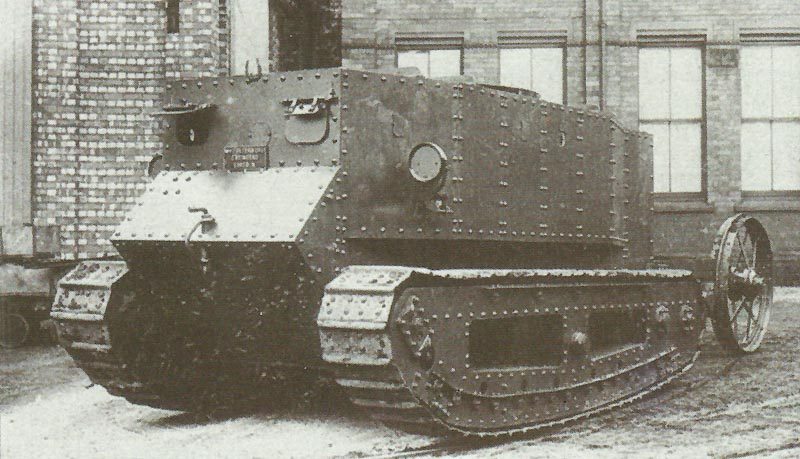
Tritton consequently made use of the Bullock track and suspension and created the ‘No.1 Lincoln Machine’. This creation was much more offering, however the track had been too small and gave continuous issues. A fresh track and a few additional improvements resulted in the vehicle afterwards called ‘Little Willie’ in December 1915.
‘Little Willie’ had been the original British tank, despite the fact that in those days the word wasn’t created. Even though it seemed to satisfy the Landship Committee requirements, ‘Little Willie’ remained too unreliable together with almost no obstacle-crossing functionality, so a Lieutenant Wilson, who had previously been working with Tritton at the behest of the Landship Committee, developed the concept of significantly enlarging the tanks into an ‘all-round’ kind that came to look like the lozenge shape that epitomized the tanks of World War One. The box shape of ‘Little Willie’ was consequently modified to match the new track outline and the vehicle became ‘Mother’.
With ‘Mother’ the War Office once again started to be attracted, and after demonstrations held in Hatfield Park in January 1916 the design was authorized. The Landship Committee was then improved to turn into the Tank Supply Committee, for in an effort to disguise the supposed function of the new device the code-name ‘water carrier’ and finally ‘tank’ was used; the second name was the one that stuck.
‘Mother’ was adopted as the prototype for the vehicles that afterwards became the Tank Mk I. An order for One hundred had been placed in February 1916 and the tank had appeared.
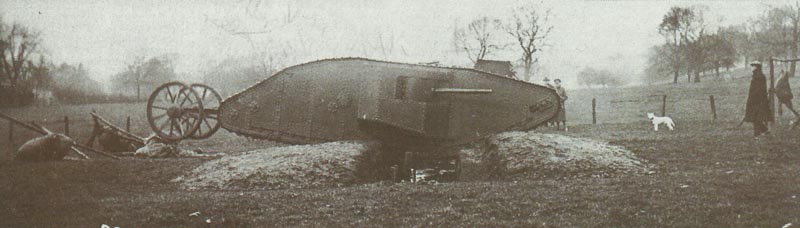
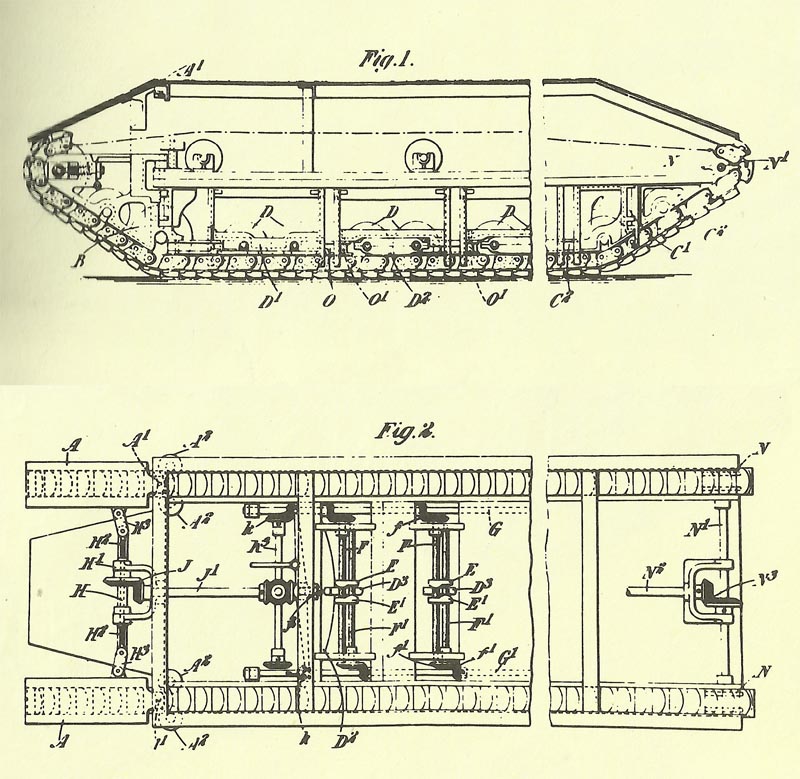
The Mk I was the fabrication and operation version to the prototype vehicle called ‘Mother’, which was the final outcome of a number of development models that were initially in line with the use of a Holt tractor chassis. The moment ‘Mother’ was manufactured, the initial Holt type had been absorbed by operational specifications that required enormous trench-crossing capabilities that the Holt design could in no way accomplish. Lieutenant W. G. Wilson was the key responsible for the ultimate type of ‘Mother’ following a lot of committees and experimental work, and it was he who created the concept of utilizing the huge and large track outline having its typical appearance that to be the classic tank shape of World War One.
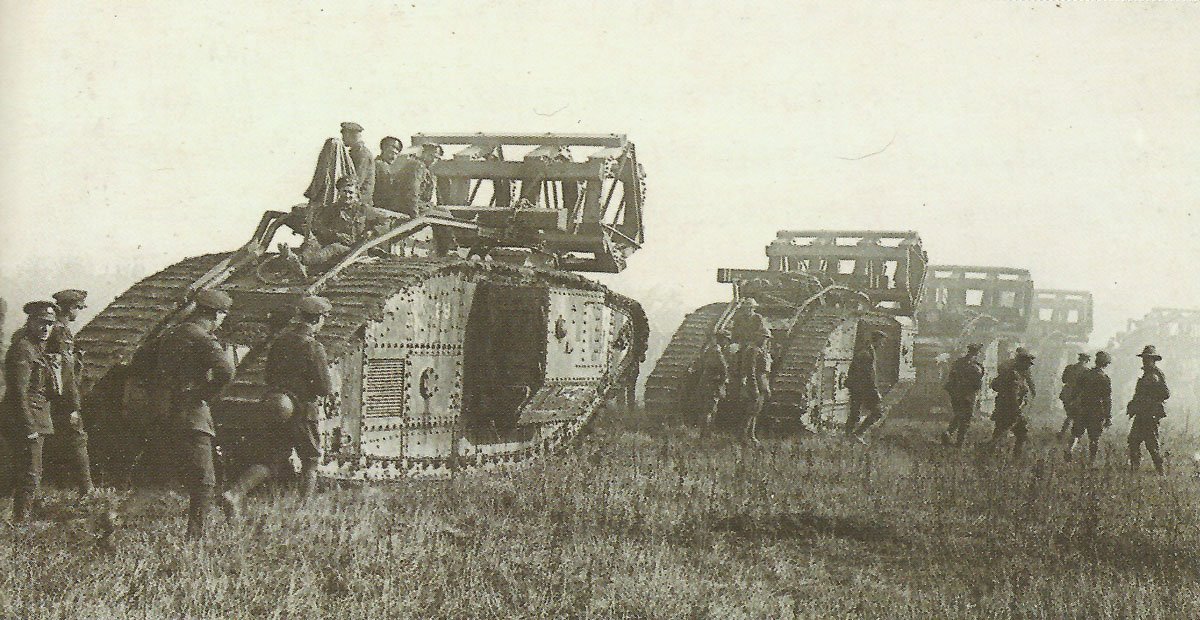
‘Mother’ had been displayed in January and February 1916, and shortly following this the first manufacturing request was submitted. An individual arm was established in March 1916 to operate the revolutionary vehicle, which was known as the ‘tank’, simply as a cover, however the term stuck and is still in use. The initial production tanks were supplied to the Heavy Section, Machine-Gun Corps in mid-1916, and the first crews were assembled and trained. The Tank Mk I was a huge and heavy monster operated by just one Daimler 105-hp (78,3-kW) petrol engine held in an armored box slung between the pair of enormous lozenge-shaped continuous tracks. Initially it had been designed to install a turret on the top however this would have made the design unstable so instead the main armament of a pair of 6-pdr (57-mm) guns was installed in one sponson on each side. The sponsons each had a single Lewis or Hotchkiss machine-gun, along with a third such gun had been equipped for additional defense. The 6-pdr (57-mm) guns had been ex-Admiralty cannons as the army wouldn’t provide an armament when demanded. The vehicle was protected by armor plate (varying in thickness from 6 mm/0.24 in to 12 mm/0.47 in) riveted to metal joists, however in battle this turned out frustrating as bullet ‘splash’ found its way through the armor seams and resulted in casualties in order that the crews adopted to carrying chain mail facial armor. The Mk I could cross trenches up to 2.44 m/8 ft wide, and steering was at first achieved by employing exterior twin-wheel ‘steering tails’ that turned out to be pointless: in battle they were commonly destroyed, however the vehicle could continue to be steered.
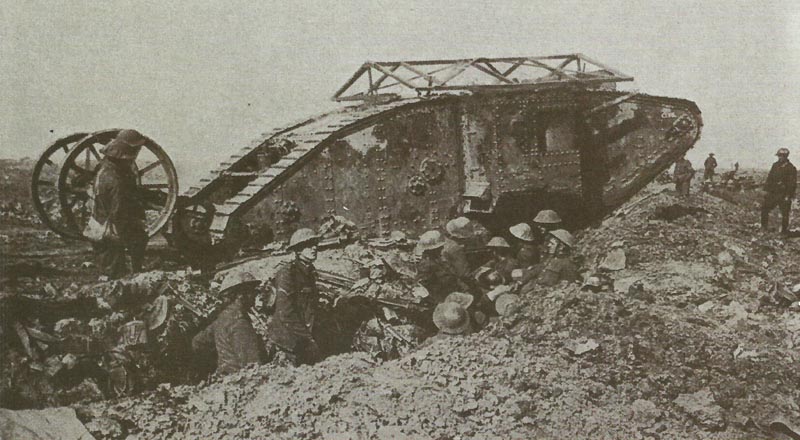
Nearly as soon as the first tanks arrived in France in mid-1916 they were directed into battle, even though the tanks continued to be full of mechanical ‘bugs’ as well as their crews were merely skilled. Thus, the first Mk Is moved into action on the morning of 15 September 1916 at Flers-Courcelette in a useless effort to provide a bit of energy to the flagging Somme Offensive that had been under way since July.
Despite the fact that were utilized locally in ones and twos, the vehicles did manage to make some local breakthroughs and created panic when they appeared. However, the miserable reality was that too few in fact got into action. A lot of the projected 50 that were intended to make the assault purely broke down en route to the front, while others were promptly bogged down in the mud that prevailed in all places. Single tanks did make deep Impressions into the German line however they were too few to create any kind of significant effect.
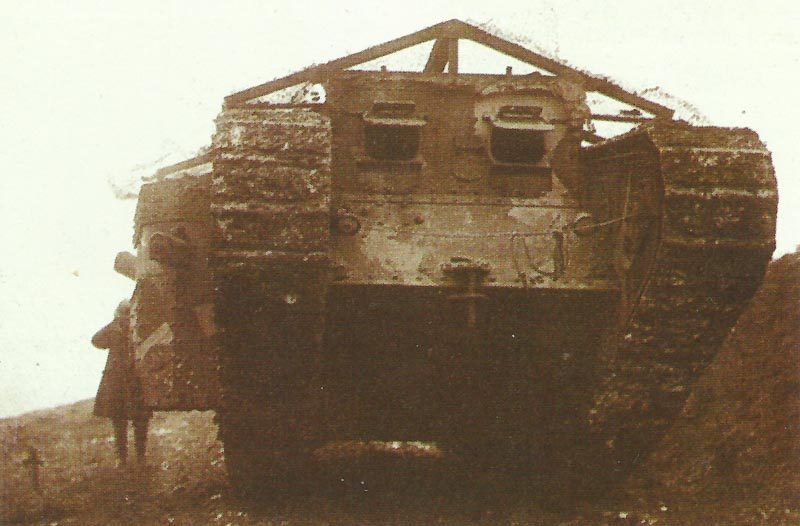
The Mk I was manufactured in 2 versions:
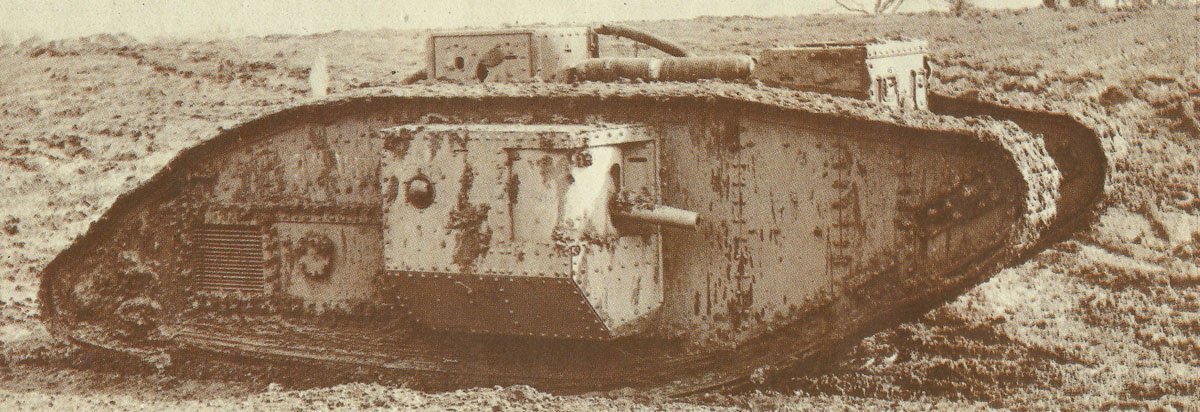
the Tank Mk I (Male) mentioned above, and designed for the main offensive mission;
and the Tank Mk I (Female) with bigger sponsons and an armament of 4 Vickers and 2 Lewis machine-guns and created for the anti-infantry support of the Tank Mk I (Male).
Other models were the Mk I Tender with mild steel boxes instead of the sponsons, and the Mk I Wireless Tank without having sponsons but with a high aerial mast.
Consequently, the Mk I made history by being the first tank to be used in combat, however it had been something of a disaster as far as the battle was troubled. What the type did acquire ultimately was to attract on the British military hierarchy the point that the tank did have potential, more resources and facilities being afterwards redirected towards the ‘Tank Corps’ which was properly established in July 1917.
When the first Mk I tanks had been sent into battle along the Somme in the autumn of 1916 they were not really prepared in relation to exercise and as to the mechanical performance of their vehicles. As if this weren’t sufficient, the tanks were asked to accomplish marvels. They were spread in ones and twos across the front but remained supposed to deliver the magical strike that would crack the German lines. To perform this they were expected to cross their way throughout shell-torn terrain which was so wet that it swallowed artillery trains without trace, and to best it all in certain places the tanks were forced to cross swollen rivers or streams. The tank officers pleaded useless for some kind of logic to be drilled into their orders, however the military brain at the time was such that attrition took over as regular tactic, and the tanks were simply another helpful tool for this system.
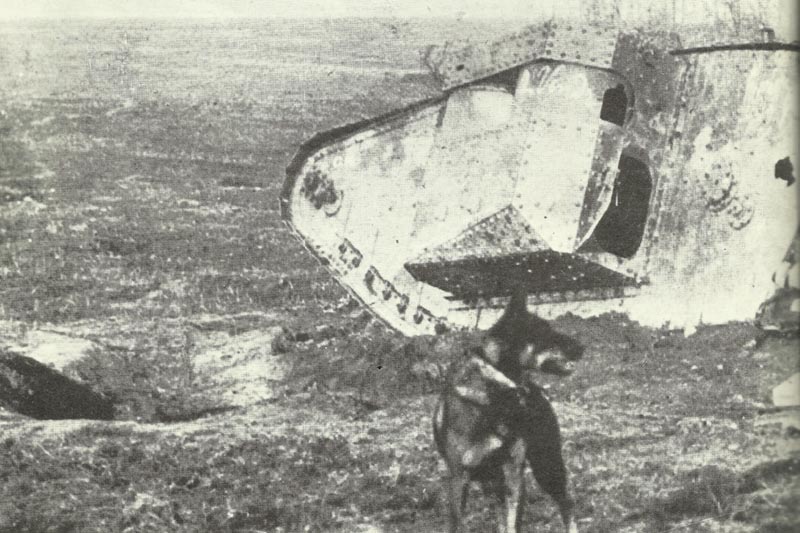
The Somme offensive shuddered to a bloody hilt during the last days of 1916. An excellent chance to make use of the tank to get affordable result had been sacrificed along the Somme, and currently the Germans had been checking out the handful of tanks taken across the Somme and making a specific armor-piercing bullet to penetrate the armor. The moment the Mk I and the handful of new Mk IIs entered battle once again at Bullecourt in the snowfall of 11 April 1917, these fresh armor-piercing rounds were active, demonstrating successful to the extent that a few tanks were lost. Afterwards every German soldier stocked a minimum of 5 rounds of the new ‘K’ bullets as well as machine-gunners received far more.
Animated 3D model Mk I (Male)
Specifications Mk I
Specifications:
Mk I | Specification |
|---|---|
Type | heavy infantry tank |
Crew | 8 |
Main Armament | 2 x 6-Pounder (57mm) guns in Male |
Secondary Armament | 4 x Hotchkiss machine guns (Male) or 4 x Vickers plus 2 x Lewis machine guns (Female) |
Length | 32 ft 6 in (9.91 m) with tail; 26 ft 5 in (8.05 m) hull only |
Width | 13 ft 9 in (4.19 m) |
Height | 8 ft 0.5 in (2.45 m) |
Armour | 0.24-0.47 in (6-12 mm) |
Battle weight | 28 tons (28,450 kg) |
Ground pressure | 1.8 kg/cm² |
Power to weight ratio | 3.75 hp/t |
Engine | one 108-hp (78.3-kW) Daimler petrol engine with 1,000 rev/min. |
Maximum speed | 3.7 mph (6 km/hr) |
Road range | 23 miles (38 km) |
Vertical obstacle | 4 ft 43 in (1.35 m) |
Trench crossing | 8 ft (2.44 m) |
Climbing power | 24° |
Combat delivery | 1916 |
Total production figure | 150 |
British WWI Tanks: The Mark IV and Mark V – Revolutionary Weapons That Changed Warfare Forever
The development of the tank during World War I represented one of the most significant technological breakthroughs in military history. Among the most iconic and influential designs were the Mark IV and Mark V tanks—British innovations that fundamentally altered the nature of trench warfare and demonstrated the potential of armored mechanized combat.
The Mark IV: The Tank That Proved Its Worth
Introduced in 1917, the Mark IV became the most widely produced tank of WWI, with over 1,220 units manufactured. This medium tank emerged from lessons learned in earlier campaigns and would play a pivotal role in some of the war’s most significant offensives.
Key Features and Specifications
* Dimensions: 26 feet long, 13.5 feet wide, and 8 feet tall
* Armor: Mild steel plates ranging from 6mm to 12mm thick
* Crew: Eight personnel (commander, driver, two gunners, and four machine gunners)
* Engine: Daimler 6-cylinder petrol engine producing 105 horsepower
* Speed: A maximum speed of 4 mph—slow by modern standards, but revolutionary for its time
* Armament: Two 6-pounder guns mounted in side sponsons and up to four Hotchkiss machine guns
Combat Performance
The Mark IV first saw action during the Battle of the Somme in 1916, where it demonstrated impressive capability against entrenched German positions. However, it was during the Battle of Cambrai in November 1917 that the Mark IV truly showcased its potential, spearheading a massed tank assault that broke through German defenses with unprecedented success.
Advantages:
* Superior ability to cross trenches and broken terrain
* Reduced vulnerability to anti-tank rifle fire compared to earlier models
* Psychological impact on enemy infantry
* Multiple points of armament provided excellent firepower
Limitations:
* Slow speed made tactical maneuvers difficult
* Cramped, uncomfortable interior conditions
* Poor visibility for the crew
* Unreliable mechanical systems prone to overheating
* Vulnerable to direct hits from artillery
The Mark V: The Natural Evolution
By 1918, the British had learned valuable lessons from the Mark IV’s performance and introduced the Mark V, a significantly improved variant. This tank incorporated numerous enhancements that made it a more formidable weapon than its predecessor.
Technological Improvements
* More Powerful Engine: The new Ricardo engine produced 150 horsepower, increasing reliability and reducing mechanical failures
* Direct Drive Transmission: Eliminated the complex gearbox system that plagued the Mark IV, making the tank easier to operate and maintain
* Increased Armor Protection: Thicker plates provided better protection against anti-tank weapons
* Better Visibility: Improved observation ports enhanced crew awareness
* Crew Comfort: Slightly larger interior reduced cramping during long operations
* Speed: Capable of reaching 4.75 mph—a marginal but meaningful improvement
Combat Deployment
The Mark V entered service in May 1918 and saw action during the Hundred Days Offensive, the final British offensive of WWI. Approximately 400 Mark V tanks were produced, and they proved instrumental in breaking the final German defensive lines.
Legacy and Historical Significance
Both the Mark IV and Mark V demonstrated that armor, firepower, and mobility could overcome the stalemate of trench warfare. These tanks influenced military thinking for decades to come and established principles of armored warfare that remain relevant today.
Key Contributions:
* Proved that mechanical innovation could overcome traditional defensive fortifications
* Established the concept of combined arms warfare (tanks, infantry, and artillery working together)
* Influenced tank design and doctrine for the next generation of armor development
* Demonstrated the psychological and tactical value of armored vehicles in combat
Surviving Examples
Several Mark IV and Mark V tanks have been preserved in museums across Britain and Europe, allowing modern visitors to appreciate the engineering and historical significance of these remarkable machines. Notable examples can be seen at:
* The Tank Museum, Bovington, Dorset
* The Imperial War Museum, London
* Various military museums throughout Europe
Conclusion
The Mark IV and Mark V tanks represent a pivotal moment when innovation in warfare offered hope of breaking the grueling deadlock of the Western Front. While they were not magic solutions to the complexities of modern warfare, they proved that technological advancement could provide tactical advantages—a lesson that would shape military doctrine for generations to come.
These British tanks stand as monuments to engineering ingenuity and the human determination to overcome seemingly insurmountable obstacles.
References and literature
Illustrierte Geschichte des Ersten Weltkriegs (Christian Zentner)
History of World War I (AJP Taylos, S.L. Mayer)
The Illustrated Encyclopedia of Weapons of World War I (Chris Bishop)
An Illustrated History of the Weapons of World War One (Ian Westwell)
Panzer und andere Kampffahrzeuge von 1916 bis heute (Christopher F. Foss, John F. Milsom, Colonel John Stafford Weeks, Captain Georffrey Tillotson, Richard M. Ogorkiewicz)
Panzerkampfwagen des 1. und 2. Weltkrieges (Andrew Kershaw)