
The Battle of Britain in 1940-1941.
Operation Sea lion, strengths of the German Navy and Luftwaffe vs RAF, the air battle and the ‘Blitz’.

Operation Sealion
The Battle of Britain was fought in the air to prevent a seaborne invasion of the British Isles. The German invasion plan, code-named Operation ‘Seelöwe’ (Sea lion), took shape when Britain failed to sue for peace, as Hitler had expected, after the fall of France.
On 16 July 1940, German Armed Forces were advised that the Luftwaffe must defeat the RAF, so that Royal Navy ships would be unprotected if they tried to prevent a cross-Channel invasion.
It was an ambitious project for the relatively small German Navy, but success would hinge upon air power, not sea power.
German Navy in August 1940
- Battlecruiser Scharnhorst under repair after torpedo hit until October 1940.
- Battlecruiser Gneisenau under repair after torpedo hit until November 1940.
- Pocket-battleship Admiral Scheer under repair until September 1940.
- Pocket-battleship Lützow under repair until April 1941.
- Heavy cruiser Prinz Eugen ready.
- Heavy cruiser Admiral Hipper under repair until September 1940.
- Light cruiser Nürnberg ready.
- Light cruiser Leipzig under repair until November 1940.
- Light cruiser Köln (Cologne) ready.
- Light cruiser Emden used as training ship.
- 7 destroyers ready, 3 under repair.
- 19 torpedo boats ready, 1 refitting.
- 23 S-Boats (E-Boats, MTB) ready, 12 under repair.
- 28 U-Boats operational.

 More about Operation Sea Lion
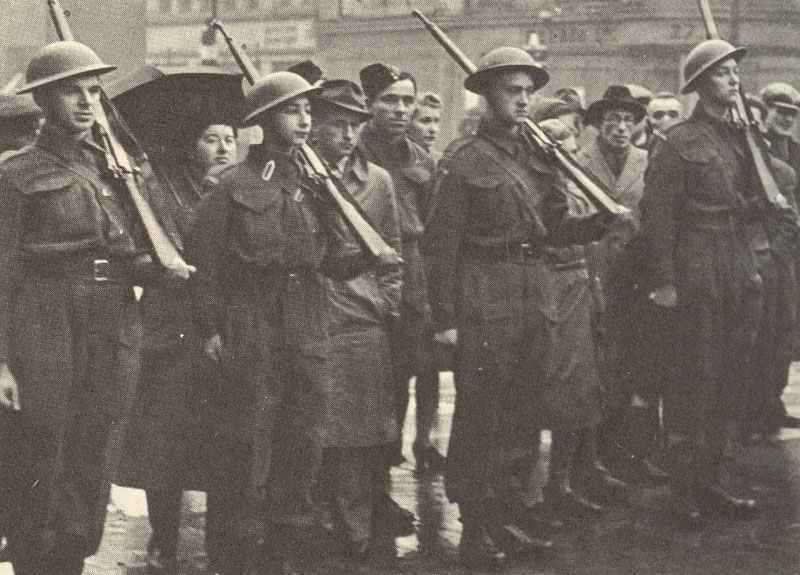
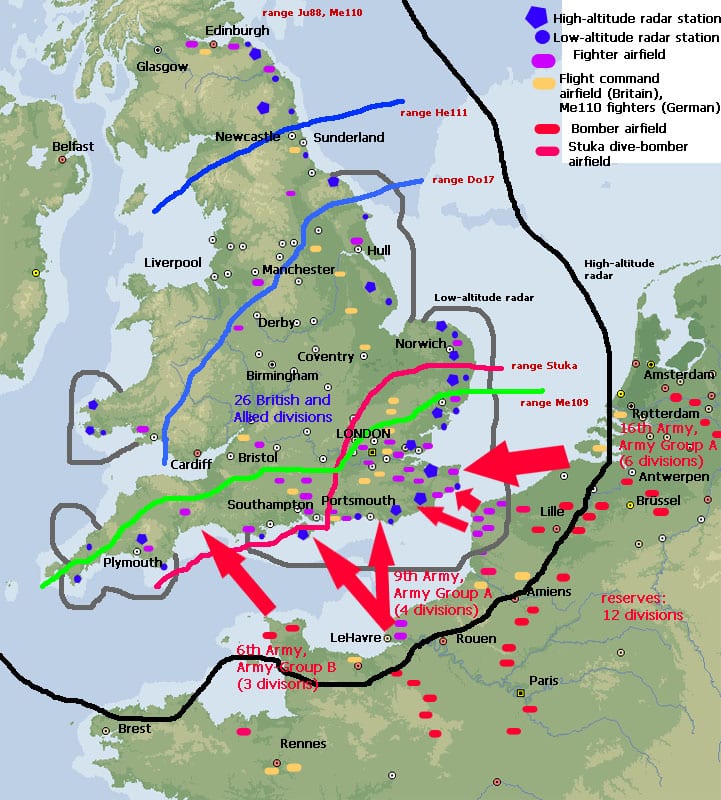
There were only some 26 divisions on British home ground, widely scattered and ill-supplied with equipment and transport. The RAF alone could gain the time necessary for the army to re-equip after Dunkirk, and hold off the 25 experienced, well-trained and good equipped German divisions (including two airborne divisions) until stormy fall weather made it impossible to launch Operation Sea lion.
see: British Army and Home Guard in Western Europe and Britain.
The Battle of Britain 1940
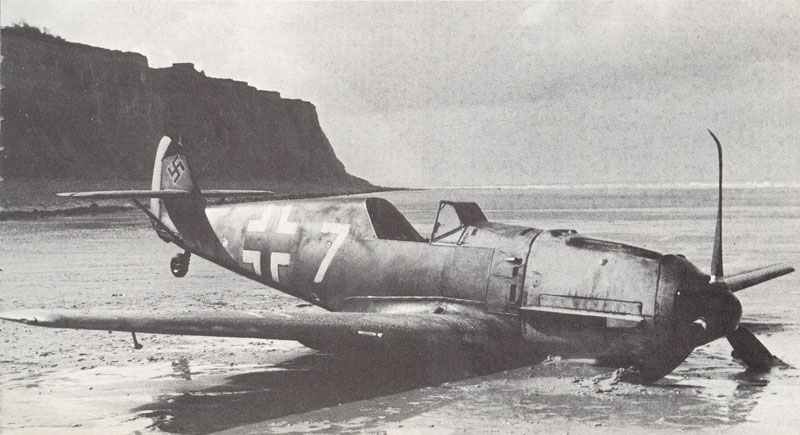
The Battle of Britain (July–October 1940) was a crucial conflict during World War II, marking the first major military campaign fought entirely by air forces. It took place over the skies of southern England and the English Channel, as Nazi Germany’s Luftwaffe attempted to gain air superiority over the Royal Air Force (RAF) in preparation for a planned invasion of Britain (Operation Sea Lion).
Overview
Background
After the fall of France in June 1940, Britain stood alone against Hitler’s expanding empire. To invade successfully, Germany needed control of the skies to protect its forces crossing the Channel. Thus, the Luftwaffe launched a massive air offensive aimed at destroying the RAF and breaking British morale.
Phases of the Battle
1) July 1940 – Attacks on Shipping and Coastal Targets:
The Luftwaffe began by targeting British shipping in the Channel and coastal radar stations to weaken early warning systems.
2) August 1940 – The Airfields Under Fire:
German bombers and fighters focused on RAF airfields and aircraft factories. The RAF’s Fighter Command, led by Air Chief Marshal Sir Hugh Dowding, faced severe pressure but managed to stay operational thanks to radar coordination and rapid aircraft production.
3) September 1940 – The Blitz Begins:
After failing to destroy the RAF, Germany shifted tactics to bombing London and other major cities. This campaign, known as the Blitz, aimed to crush civilian morale but instead strengthened British resolve.
4) October 1940 – German Withdrawal:
By late October, the Luftwaffe had suffered unsustainable losses. Hitler postponed the invasion indefinitely, marking Britain’s first major victory of the war.
Key Factors in British Victory
– Radar Technology: Britain’s innovative radar network provided early warnings of incoming raids.
– Aircraft Superiority: The Supermarine Spitfire and Hawker Hurricane proved highly effective against German bombers.
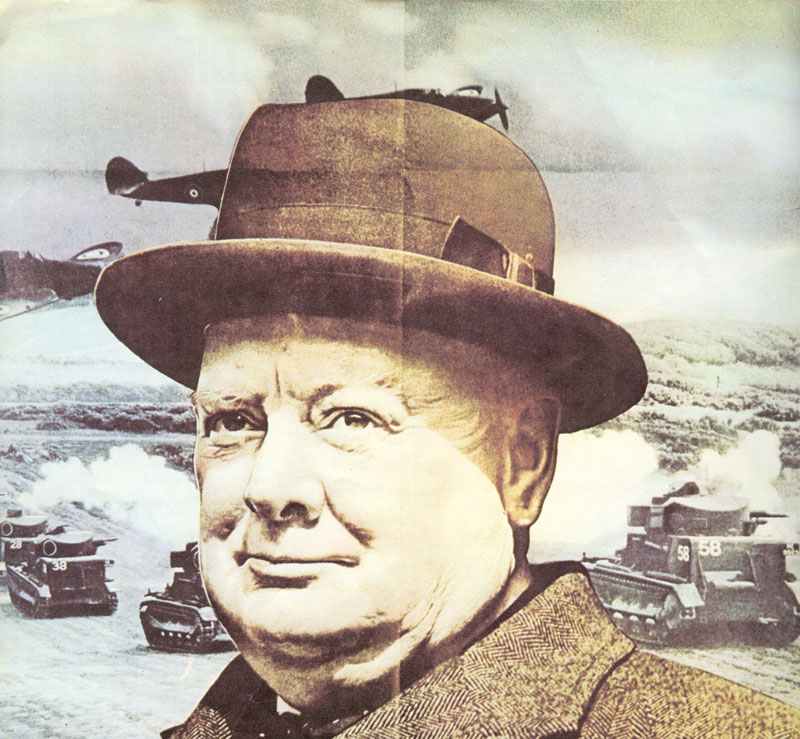
– Leadership and Morale: Dowding’s defensive strategy and Prime Minister Winston Churchill’s stirring speeches inspired national unity.
– German Miscalculations: The Luftwaffe underestimated the RAF’s resilience and overextended its forces.
Legacy
The Battle of Britain was more than a military victory — it was a symbol of defiance and determination. Churchill famously honored the RAF pilots with the words: “Never in the field of human conflict was so much owed by so many to so few.”
The outcome ensured that Britain remained free, providing a base for Allied operations that would later lead to the liberation of Western Europe.
Air battle sequence
In July 1940, when the German Luftwaffe stood poised to attack the British Royal Air Force from its recently acquired Channel and North Sea bases, the concept of air power was barely out of its infancy. No full-scale set-piece battle, fought entirely in the air between roughly equal opponents, had taken place before the so-called Battle of Britain (Churchill’s phrase) began over Southern England and South Wales on July 10, 1940. During the next 15 weeks almost every aspect of the philosophy and mechanics of air power and military aircraft design was put to the test.
The strength of the Luftwaffe before Eagle Day (Adlertag, 13 August 1940)
Luftwaffe: 14 Kampfgeschwader (bomber groups), 8 Jagdgeschwader (fighter groups), 4 Stukageschwader (dive-bomber groups), 3 Zerstorergeschwader (heavy twin-engined fighter groups) in Luftflotte 3 (air fleet 3 commanded by Sperrle from Paris), Luftflotte 2 (air fleet 2 commanded by Kesselring from Brussels) and Luftflotte 5 (air fleet 5 commanded by Stumpff from Norway and Denmark).
1,700 planes serviceable (600 medium bombers; 200 Ju 87 Stuka dive-bombers; 700 Me 109E fighters; 200 heavy Me 110 twin-engined fighters).
Total in the West were 2,287 combat planes: 734 Me 109; 268 Me 110; 336 Ju 87; 949 medium bombers.
Total strength: 3,000 planes (800 Me 109 fighters; 300 heavy Me 110 fighters; 400 Ju 87 Stuka dive-bombers; 1,500 He 111, Do 17 and Ju 88 bombers).
The strength of the RAF before Eagle Day (Adlertag, 13 August 1940)
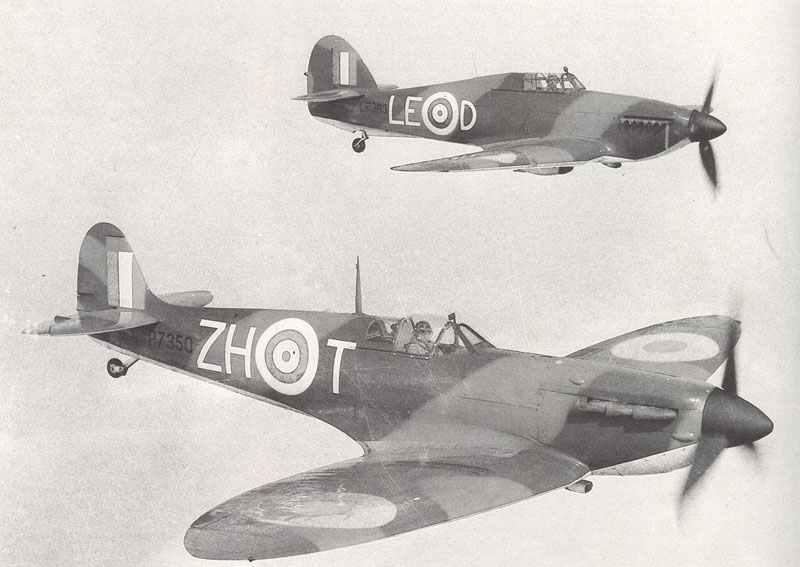
RAF: 52 fighter squadrons in Fighter Commands 11 (London and Southeast England), 10 (Cornwall and South Wales), 12 (Central England and North Wales), 13 (North England and Scotland) commanded by Air Marshall Hugh Dowding.
960 fighter planes. 704 were Hawker Hurricanes and Supermarine Spitfires (plus 289 reserve planes), the others were the weak Blenheim or Defiant fighters.
Exactly numbers from 8 August: 527 Hawker Hurricanes, 306 Supermarine Spitfires, 82 Bristol Blenheims, 26 Boulton-Paul Defiants (total 941).
350 bombers (including 100 Bristol Blenheims), later 470.
2,000 anti-aircraft guns in 7 anti-aircraft divisions.
21 operational radar stations (in October 1940 there were 40 radar stations operational).
see: Aircrafts and bases of the RAF squadrons in August 1940.
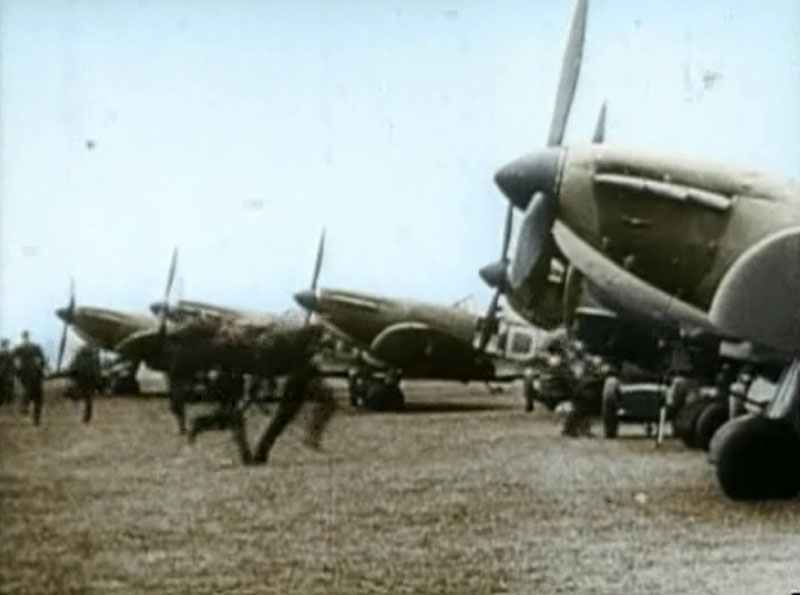
Unfortunately for Hitler and his corpulent air force commander, Reichsmarschall Göring, the Luftwaffe was found to be lacking, both in terms of leadership and tactics and of its equipment – short-range Me 109 fighters and Ju87 Stukas (dive-bombers), ponderous twin-engined Me 110 ‘destroyers’ (Zerstoerer) and poorly-armed long-range medium bombers – none of which had been designed for the operations which characterized the end of the ‘Battle of Britain’ and the accompanying night ‘Blitz’.
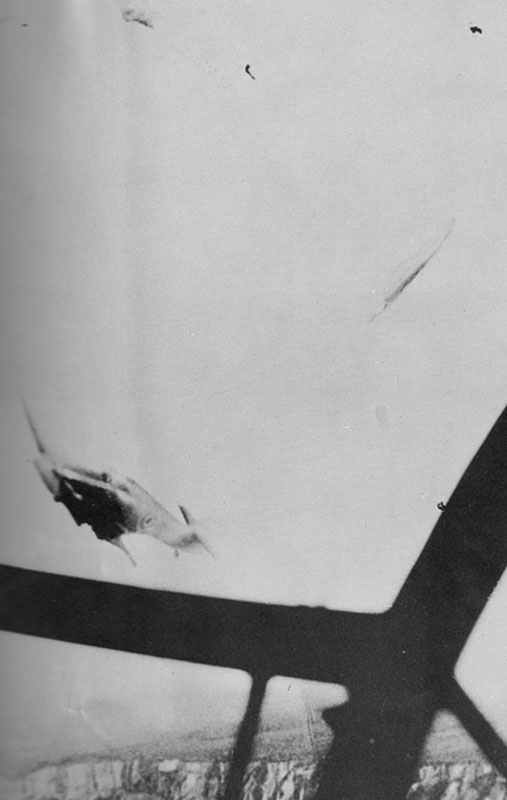
One of the most remarkable pictures of WW2 shows a Hawker Hurricane as it was shot down. At top, the pilot is opening his parachute; right, a wing shot from the plane; center, the Hurricane falling with one wing sheared; lower foreground, the black silhouette of the attacking plane’s window; lower background, the white chalk cliffs of Dover.
The results of the secret ‘electronic war’ were equally unfortunate from the German viewpoint. The radio ‘beams’ directed towards British cities form ground stations on the French coast were invariably detected and ‘jammed’ by the RAF, whereas the latter’s own radar stations gave invaluable early-warning of German bomber formations. The Hurricane and Spitfire squadrons were thus deployed to maximum advantage, eliminating wasteful ‘standing patrols’ over the English coast. The RAF also profited from information gleaned from deciphered Luftwaffe ‘Enigma’ messages.
The Battle of Britain had several phases. During July and August, the Germans engaged the RAF over the Channel in an effort to weaken it by sheer attrition. But the Luftwaffe lost twice as many planes as the British and so began instead to target radar installations and then airfields. This evened the loss ratio to four to three but still failed to clear the skies (211 Spitfires and Hurricanes were destroyed in this ten days and only 40 could be replaced by new planes).
To early, the Germans now took aim at the aircraft factories themselves, a tactic that produced some successes, as when a dozen plants in Coventry were destroyed in November. But the loss ratio climbed back to nearly two to one.
The Blitz
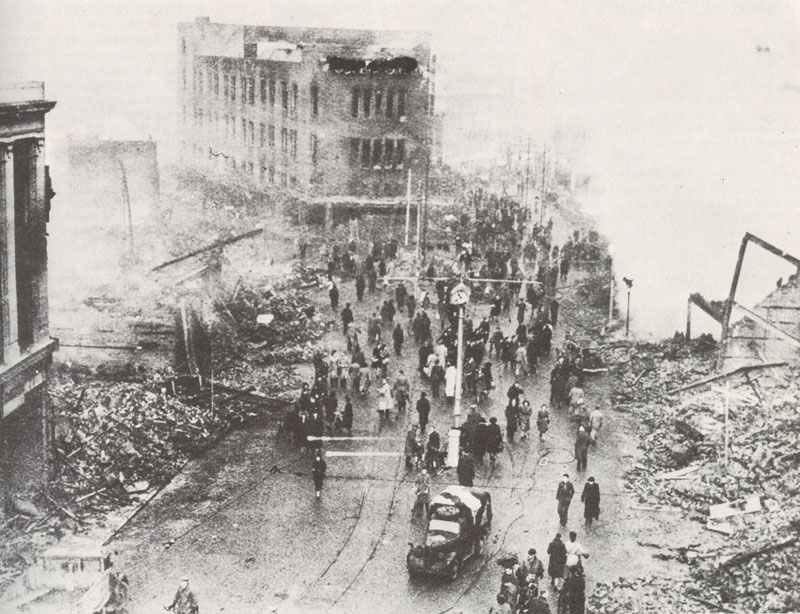
Frustrated by RAF Fighter Command, Hitler indefinitely postponed his projected invasion of Britain (Operation Sea lion) and Goring resorted to improvisation and terror tactics. By day from early October, swarms of Me 109s, many equipped as make-shift fighter-bombers, swept high over the Straits of Dover on hit-and-run raids which, although highly inconvenient and exhausting for the defenders, had no ultimate effect. By night the Luftwaffe engaged in repeated indiscriminate ‘reprisal’ raids on London and other British cities in reply to the early RAF raids on Berlin.
Although the defenses of British cities were still rudimentary, the Luftwaffe failed to exploit this golden opportunity. One reason was its lack of four-engined heavy bombers – comparable with the later British Avro Lancaster – but far more important was the misuse of the available 700 medium bombers. Instead of delivering a limited number of devastating attacks on carefully selected targets (such as aircraft factories or power stations) Goring ordered long processions of bombers to scatter bombs across wide areas of London in the course of all-night raids 10 or more hours in duration. Such tactics meant that the ARP personnel and fireman could deal with individual incidents, and were seldom in danger of being overwhelmed as often happened during the short, sharp, RAF saturation raids on German cities from July 1943.
Equally, underwhelmed was civilian morale, which the conventional wisdom of the 1930s believed incapable of withstanding prolonged aerial bombing. From mid-November 1940, Goring dissipated his efforts even further by sending his night bombers to 15 cities and ports in addition to London.
Though bad weather and muddy French airfields seriously hampered the Blitz during the winter and caused heavy German aircraft losses, the onslaught against Britain was resumed with a vengeance in March 1941 – Glasgow and Clydeside, Plymouth, Belfast, Liverpool and London came in for a series of raids noticeably more concentrated and accurate than previous efforts.
Many feared that this onslaught was the preliminary to the long-feared invasion of Britain. But we now know that it was merely an elaborate diversion to conceal Hitler’s preparations for the invasion of Russia. During the entire Blitz (September 1940 – May 1941), more than 40,000 British civilians were killed (half of them in London), 46,000 seriously injured and well over 1,000,000 houses destroyed or damaged; approximately 2,500 German airmen died in the wrecks of some 600 bombers. In all since July 1940, the Luftwaffe had lost roughly 2,400 aircraft but had failed either to gain air superiority – the vital precondition for a successful German invasion – or to terrorize the British people into submission.
References and literature
Der Grosse Atlas zum II. Weltkrieg (Peter Young)
Chronology of World War II (Christopher Argyle)
Das große Buch der Luftkämpfe (Ian Parsons)
Luftkrieg (Piekalkiewicz)
Die Schlacht um England (Bernard Fitzsimons, Christy Campbell)
World War II – A Statistical Survey (John Ellis)