
Contents and book review of ‘The War That Had Many Fathers’ – analysis and evaluation.
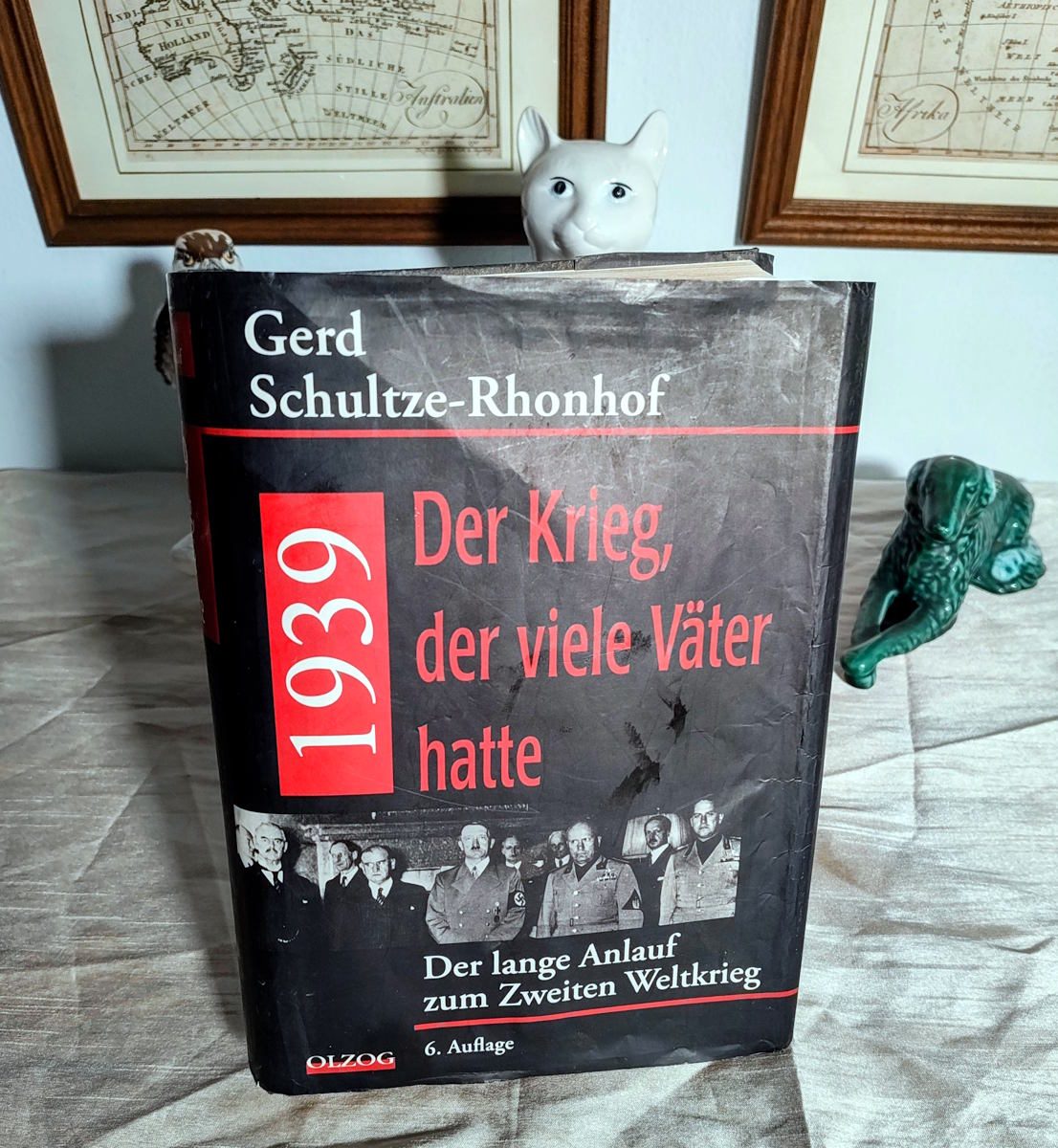
Gerd Schultze-Rhonhof’s book “The War That Had Many Fathers” takes a different look at the events leading up to World War II. It openly questions the well-known thesis of Germany’s sole responsibility for the war.
The work of the former major general, first published in 2003, examines European politics from 1919 to 1939. Schultze-Rhonhof believes that various nations contributed to the outbreak of war.
He asserts that Germany may have triggered World War II, but it was not solely to blame. He particularly emphasizes the roles of other European powers and their failures in the Treaty of Versailles.
The publication attracted attention and controversy. Schultze-Rhonhof dissects historical documents and questions the conventional positions of historical scholarship.
He embeds his account in a pan-European context, looking at the interests and actions of England, France, Poland, and the USA during the interwar period.
The book asks uncomfortable questions about historiography. It provides a detailed look at the political developments of the era.
Here is an analysis of the content, argumentation, and reactions from academia and the public.
Overview of the book and the author

Gerd Schultze-Rhonhof first published his controversial book on the events leading up to World War II in 2003. It was released by Kopp Verlag and sparked heated debate in historical circles.
Gerd Schultze-Rhonhof: Biography and background
Schultze-Rhonhof was born in 1939. He served as a major general in the German Armed Forces.
His career included several leadership positions before he retired in 1996. He then turned his attention to historical topics, especially the causes of World War II.
Schultze-Rhonhof is not a trained historian. His military career shapes his view of sources and files.
He looks at history from a strategic-military perspective. This distinguishes him from classical historians.
Publication history and publishers
The book was published by Kopp Verlag, based in Rottenburg a. N. The publisher often releases works with controversial theses.
The first edition was published in 2003. Several further editions and a special edition followed later.
The original German version forms the basis for all further editions. The publisher markets the book as an alternative view of the causes of the war.
Traditional publishers did not want to publish the book. This brought the author and Kopp Verlag even closer together.
Positioning in the historical context
The work stands outside the historical mainstream. Schultze-Rhonhof puts forward theories that are rejected by established academia.
He believes that the question of guilt must be viewed in a more differentiated manner. Experts are harsh in their criticism of his choice of sources and interpretation.
In my opinion, the author substantiates the unpopular thesis that the German Reich did not unilaterally seek the First and also Second World Wars, but that other states and great powers also aided and abetted or even harbored a desire for war.
Unfortunately, however, he himself undermines this view, which is too rarely expressed, by portraying Hitler almost as an “apostle of peace” – which is somewhat disturbing for an objective and educated reader.
Academic research rejects his core theses.
Nevertheless, the book has an audience that is looking for alternative perspectives.
It is often discussed in connection with revisionist historiography. Schultze-Rhonhof himself rejects this classification.
The debate surrounding the book shows how wide the gap between academic research and popular publications can be.
Central theses and contents of the book
“1939 – The War That Had Many Fathers” examines the period from 1919 to 1939. In doing so, the author questions Germany’s sole responsibility for the war.
He analyzes how various European states and their interests contributed to the outbreak of World War II.
The complexity of the causes of war
Schultze-Rhonhof believes that there was not just one cause of the war. He describes a complicated situation in which many countries contributed to the escalation with their policies.
Nationalism was already on the rise in Europe before the First World War. These tendencies did not stop in the interwar period.
Each state pursued its own goals. No one really wanted to take on a supraregional leadership role.
Schultze-Rhonhof never views German history in isolation. His pan-European perspective paints a different picture of events.
European powers and their interests
England continued to rely on the balance of power and its world power politics. France remained fixated on its rivalry with Germany, mainly because of Alsace-Lorraine.
Relations between Germany and Russia remained tense. Poland sought greater influence with promises of assistance.
Despite its neutrality under Roosevelt, the US was slowly moving toward a confrontation with Germany. Each of these states wanted to strengthen its own position—no wonder that conflicts arose time and again.
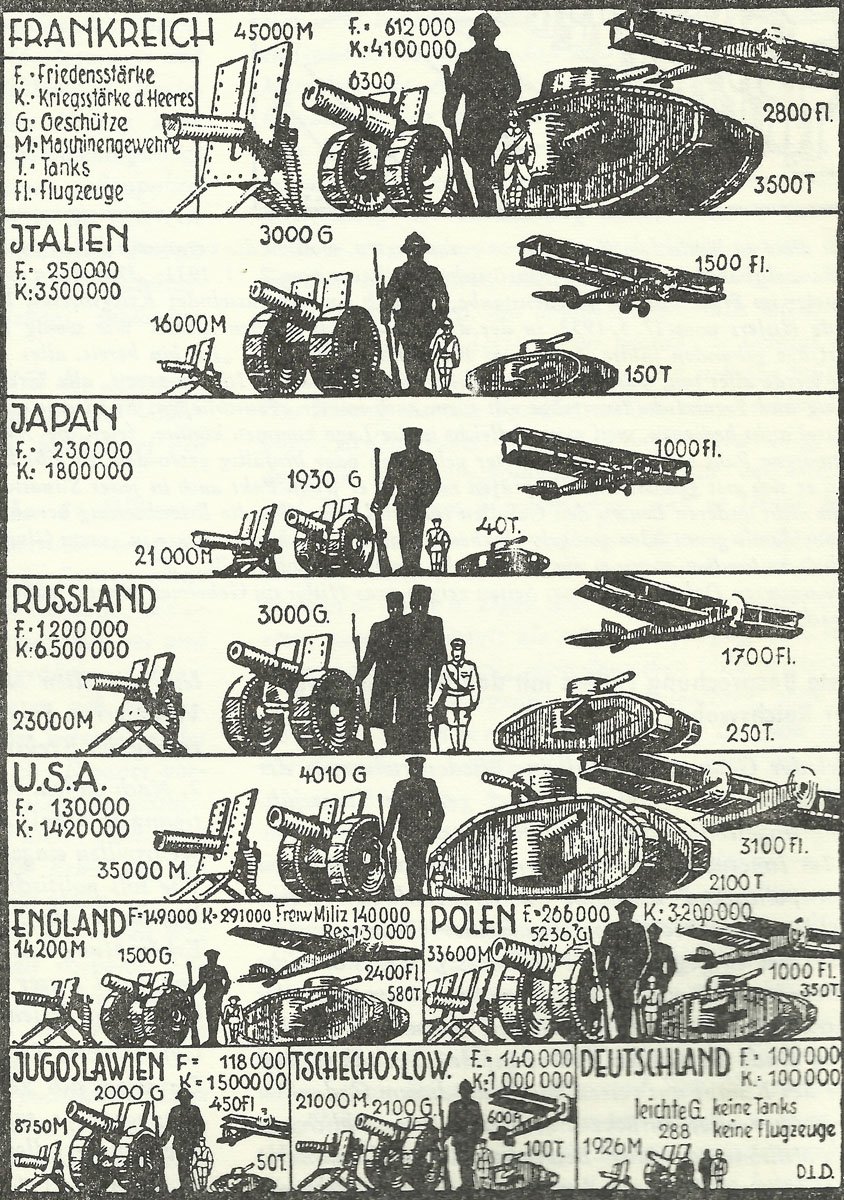
The book shows how England armed its fleet and France its army and air force.
Role of the Treaty of Versailles in the course of history
The Treaty of Versailles is at the heart of Schultze-Rhonhof’s argument. He sees it as an important trigger for World War II.
The treaty placed sole blame for World War I on Germany and demanded high reparations payments. Germany showed itself willing to comply with the agreements.
The other signatory states also wanted to reduce their troop strength, but ultimately did not do so. Germany no longer felt bound by the upper limits.
Schultze-Rhonhof claims that Germany was the only nation state that initially complied with the treaty. The fact that other states ignored the terms led to growing unrest.
These contradictions in European politics contributed to the escalation. The situation became increasingly tense.
Analysis of the historical argument
Schultze-Rhonhof’s book differs greatly from traditional historiography. It draws on many international sources and archives.
The central thesis: Germany is not solely to blame for the outbreak of war. This challenges the traditional view.
Comparison with established historical narratives
The original German version of “Der Krieg, der viele Väter hatte” (The War That Had Many Fathers) differs significantly from conventional historical narratives. While many historians see Germany and Hitler as primarily responsible, Schultze-Rhonhof offers a multipolar perspective.
He argues that Germany may have triggered the war, but it did not cause it alone. He traces developments back to the year 1900.
This account contradicts the usual historiography in Germany. Schultze-Rhonhof believes that it ignores important contexts.
To explain the complexity, he uses the image of painted glass panes. The top pane shows Germany’s first act of war, beneath which lie the interests of other powers.
Evaluation of sources and evidence
Schultze-Rhonhof uses international sources that are often neglected in German research. He focuses on cross-connections between events rather than a strict chronology.
The book contains 35 maps and 14 illustrations. His analysis of key documents from the Nuremberg trials is particularly important.
He takes a critical view of these documents, even though they were originally considered evidence of the Reich leadership’s war planning. His selection and interpretation of sources are controversial.
Critics accuse him of historical revisionism. They criticize the way he reads and evaluates historical facts.
Debate about Germany’s sole responsibility
At the heart of “Der Krieg, der viele Väter hatte” (The War That Had Many Fathers) is the questioning of Germany’s sole responsibility. Gerd Schultze-Rhonhof believes that other Western powers were also involved in the outbreak of the war.
He speaks openly of “government criminality” on all sides. No one fought for Danzig, to save Poland, or for humanitarian reasons—according to Schultze-Rhonhof, it was all about national interests.
He does not ignore the German government’s complicity, but rather substantiates it with examples. His view regularly triggers heated debates in historical scholarship.
Critics accuse the book of downplaying Germany’s responsibility. The question of the causes of and responsibility for World War II remains controversial.
Reception and controversies
Since its publication in 2003, Schultze-Rhonhof’s book has been the subject of much debate. Many classify it as revisionist, ultra-conservative or even right-wing extremist.
Criticism of the scientific approach
Historians criticize the book for its one-sided and selective use of sources. Schultze-Rhonhof places a strong focus on topics such as armament policy after 1918 and the situation of German minorities.
He frequently refers to Hitler’s speeches, which portray Hitler as a peace-loving statesman. The dark side of Hitler as a dictator and mass murderer is largely ignored.
Many believe that the book does not meet academic standards. Important connections are simply ignored.
The thesis that Hitler started the war but was not solely responsible for it is not accepted by the majority of experts.
Debate on historical revisionism
Revisionism is a term that fits Schultze-Rhonhof’s approach. With his interpretation of documents from the Nuremberg trials, he challenges the established consensus.
The book touches on topics that have long been considered taboo in research. Schultze-Rhonhof claims that Germany complied with the Treaty of Versailles, but other nations did not.
He cites figures: in 1923, France had around 724,000 soldiers, Poland 275,000, while Germany was only allowed to have 115,000. His account of Polish minority policy is based on historical sources, such as statements made before the British House of Lords.
Critics warn that this line of argument relativizes German guilt.
Resonance with readers and experts
By 2012, the book had gone through seven editions and was published by Kopp Verlag. It clearly has a loyal readership.
Experts largely reject the work. Some reviewers see it as an attempt to address blind spots in research.
Others warn that such works can be misleading. The facts remain clear: the Third Reich started World War II and committed mass murder of Jews, Sinti, and Roma.
Evaluation and conclusion
The book presents a controversial view of the events leading up to World War II. Professional historians have responded critically across the board.
Strengths and weaknesses of the book
The greatest weakness of “1939 – Der Krieg, der viele Väter hatte” (1939 – The War That Had Many Fathers) lies in its selective choice of sources. Schultze-Rhonhof often quotes incompletely or takes documents out of context.
An important part of Hitler’s directive of May 20, 1938, which makes his war intentions clear, is missing. He also casts doubt on the Hoßbach Protocol, even though research has long since clarified this.
He ignores key evidence of Hitler’s expansion plans. Documents relating to “Case Green” are presented in such an abbreviated form that Hitler’s role in the destruction of Czechoslovakia is barely recognizable.
Specialist historians such as Christian Harmann (FAZ) and Die Welt have clearly criticized this approach.
The book propagates the long-disproved thesis of preventive war. Research has not adopted this view.
Recommendation for target groups
“Der Krieg, der viele Väter hatte” is not suitable as specialist literature. The theses contradict the current state of scientific knowledge too much.
Anyone who wants to seriously study the history leading up to the war would be better advised to consult recognized works. These use sources completely and in the correct context.
Nevertheless, the book shows how myths arise through the selective choice of sources. Anyone who wants to understand how revisionist views of history work can use it as an example—but please only with critical accompanying reading and scientifically sound sources.
Information about the book
The book is available in various editions and through several channels. It is mainly distributed by Kopp Verlag, which offers a wide selection and flexible ordering options.
Available editions and special editions
“The War That Had Many Fathers” has been published in several versions since its first edition. The fourth, revised and expanded edition was published by Olzog Verlag.
Later, Kopp Verlag took over distribution. The book is available as a hardcover edition with detailed documentation and references.
The various editions differ in terms of scope and the topics covered. Newer editions contain additional analyses of pre-war history.
Sources and customer service
The main distributor is Kopp Verlag e.K.>, Bertha-Benz-Str. 10 in Rottenburg a. N. A total of 15 million items are available in the entire range.
Customers can add the book to their wish list or place it directly in their shopping cart. The publisher provides consumer information and data usage information as required by Google Ireland Limited.
If technical problems occur during the ordering process, the message Error occurred appears. Customer service is available to help with any queries.
Order options and shipping conditions
At Kopp Verlag, you can purchase on account. There is no minimum order value.
Delivery is free of charge in Europe for normal orders. This makes the book easily accessible in many countries.
The range also includes certified organic products. The shipping conditions are clearly stated on the publisher’s website.
Frequently asked questions
Schultze-Rhonhof’s book raises many questions about the events leading up to World War II. The debate centers on his choice of sources, his methodology, and the assessment by professional historians.
What are the main arguments presented by Gerd Schultze-Rhonhof in his book “The War That Had Many Fathers”?
Schultze-Rhonhof claims that the Second World War cannot be attributed solely to Hitler’s aggression. He emphasizes the role of other European states in the emergence of the conflict.
The book focuses on armament policy after 1918. Germany complied with the limits set out in the Treaty of Versailles: 100,000 men in the army, 15,000 in the navy.
According to Schultze-Rhonhof, the victorious powers were the first to break these agreements. He cites the following figures for 1923: France 724,000 soldiers, Poland 275,000, Czechoslovakia 140,000, Belgium 113,000.
These states continued to expand their reserves.
Another key argument concerns the treatment of German minorities in Poland after 1918.
Schultze-Rhonhof quotes Lord Noel-Buxton, who stated in the House of Lords in 1932 that one million Germans had emigrated from the Corridor and Posen. The number of German schools in Poland fell from 564 in 1919 to 83 in 1930.
He uses Hitler’s speeches to prove his allegedly peaceful intentions. It is precisely this portrayal that is at the center of the criticism.
How is Schultze-Rhonhof’s historical methodology in ‘Der Krieg, der viele Väter hatte’ (The War That Had Many Fathers) evaluated by professional historians?
Many professional historians accuse Schultze-Rhonhof of being rather selective in his choice of sources. He picks out certain aspects of history and simply ignores important contexts.
In historical scholarship, his approach is considered revisionist. He quotes conspicuously often from Hitler’s speeches, which make the dictator appear almost peace-loving.
The other side, namely Hitler as a megalomaniacal mass murderer, is largely neglected. Critics believe that Schultze-Rhonhof thus paints a distorted picture.
His methodology ultimately leads to questionable conclusions about the causes of the war. Historians such as Götz Aly and Ian Kershaw, on the other hand, work with much broader source material and classify their findings more carefully.
Schultze-Rhonhof’s approach is met with skepticism in the academic community because it provides a biased representation of history. Most therefore do not consider him part of the academic discourse.
What sources does Gerd Schultze-Rhonhof use in his account of the events leading up to World War II?
Schultze-Rhonhof draws on various contemporary statements by British politicians and newspapers. For example, he takes Lord Noel-Buxton’s speech of June 15, 1932, in the House of Lords and quotes the Manchester Guardian of December 14, 1931, on the situation of minorities in Poland.
In the book, he analyzes so-called key documents from the Nuremberg Trials. These documents were actually intended to prove the Reich leadership’s long-term planning for world war, but Schultze-Rhonhof reads them differently than the prosecutors did at the time.
He also draws on provisions of the Treaty of Versailles, especially Articles 8 and 160. These articles concern disarmament and the size of the German armed forces.
He uses reports from the Inter-Allied Control Commission as evidence of Germany’s compliance with the treaty. Hitler’s speeches play a central role in his work.
However, he mostly uses this propaganda material without critical analysis, which remains methodologically questionable.
To what extent does ‘Der Krieg, der viele Väter hatte’ offer an alternative view of the causes of World War II?
The book claims that Germany did not start the war alone. Schultze-Rhonhof sees the responsibility lying with several European states.
He criticizes the armament policy of the victorious powers, calling it a violation of the treaty. Poland, France, and other countries expanded their armies, while Germany remained officially limited to 100,000 soldiers.
Schultze-Rhonhof believes that this military superiority put pressure on Germany and forced it to rearm.
He also addresses the treatment of German minorities in Poland.