
Book review: Hitler’s Table Talk by Henry Picker – analysis, context, and impact.
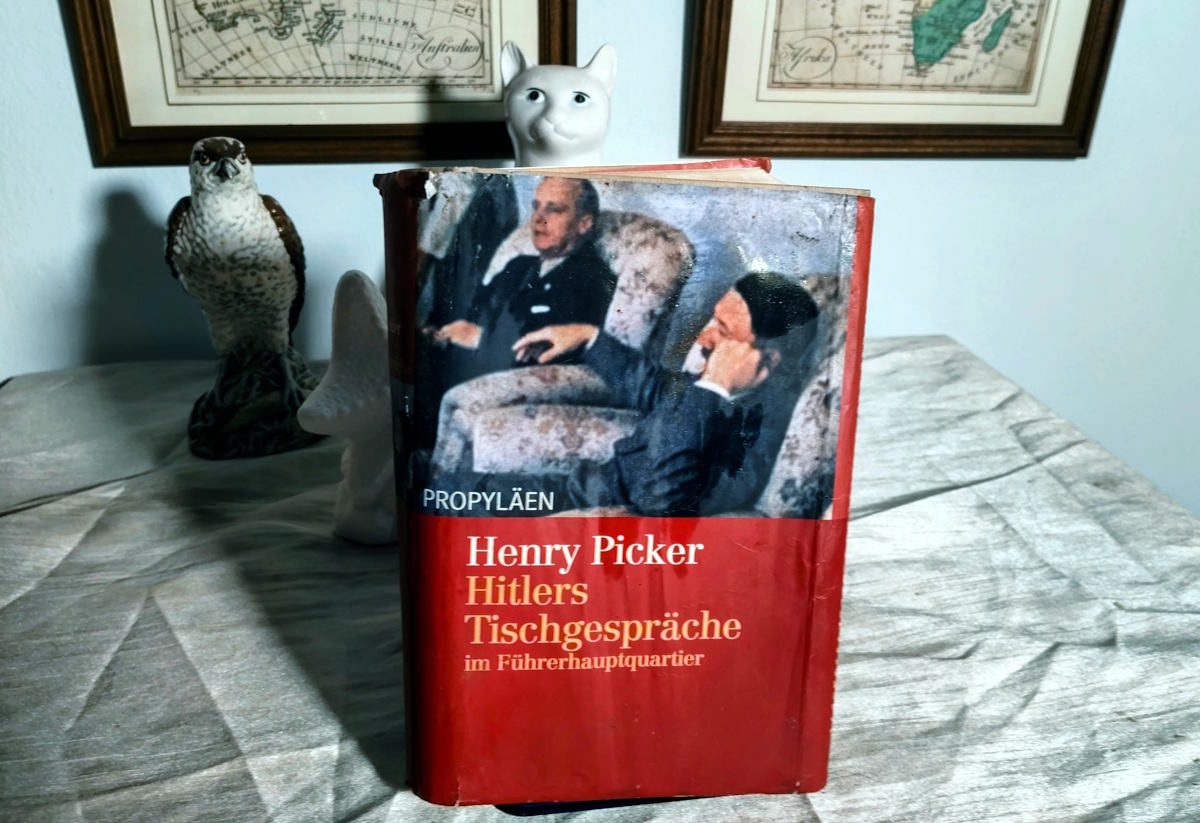
Henry Picker’s “Hitler’s Table Talk at the Führer’s Headquarters” records private conversations Adolf Hitler had in 1941 and 1942. The young lawyer, who was not a party member, gained unusually direct access to Hitler’s inner circle and noted down the dictator’s monologues during meals.
The book provides a rare insight into Hitler’s thoughts on politics, ideology, religion, and warfare—and from close quarters.
When the work was first published in 1951, it was considered a real sensation. The records remain an important historical testimony to this day.

Hitler himself read three of the longer transcripts and confirmed that they accurately reflected his thoughts.
This review takes a closer look at the content and historical significance of Picker’s documentation. The text highlights central themes of the conversations, places them in their historical context, and evaluates their academic value for understanding National Socialism.
Overview of Hitler’s Table Talk by Henry Picker
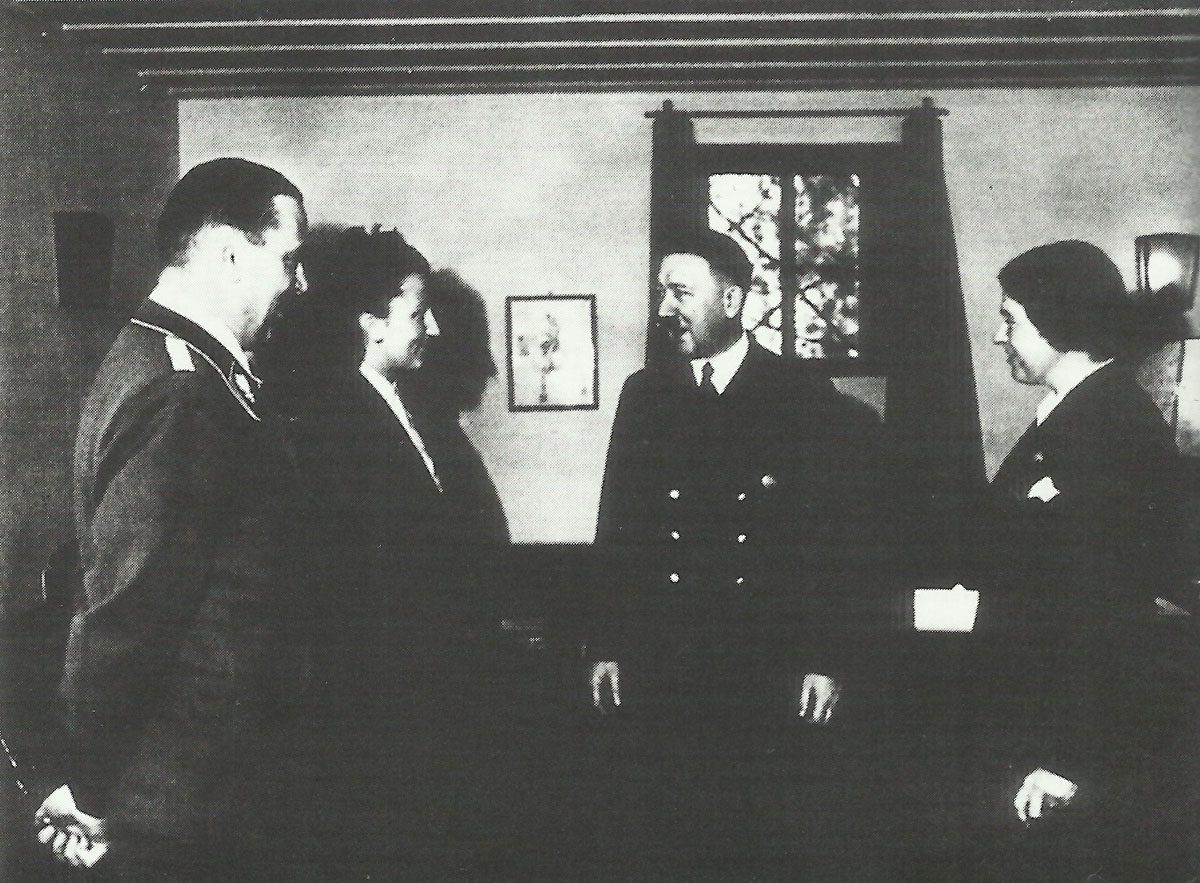
Picker’s work records Hitler’s monologues during meals at military headquarters from 1941 to 1944. The recordings provide insights into Hitler’s views on politics, religion, and warfare, although historians dispute their authenticity.
History and background
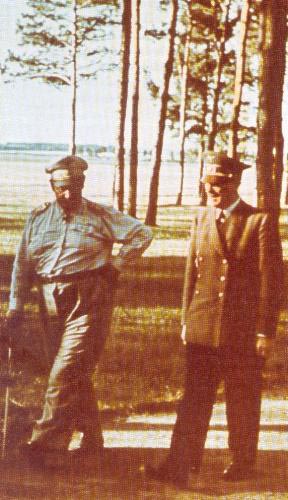
The table talks took place mainly between the summer of 1941 and early fall of 1942 in headquarters such as the Wolf’s Lair in East Prussia and Werwolf in Ukraine. Martin Bormann had the idea of preserving Hitler’s statements for posterity.
Henry Picker worked as Bormann’s assistant and recorded the conversations during his time as a lawyer at the Führer’s headquarters. His predecessor, Heinrich Heim, had already collected individual shorthand notes.
The recordings were not taken directly in shorthand, but reconstructed from memory and notes taken by listeners. Picker published his version in 1951 with the support of the Institute for Contemporary History in Munich.
Gerhard Ritter took over as editor and wrote the introduction. Later editions followed in 1963, 1976, and 1983, each with additions.
Main contents and topics
Hitler spoke in long monologues about many topics that he repeatedly described to his close circle. These included, among others:
- Cultural, economic, military, and foreign policy
- Personal memories and his affection for Linz
- Plans for the destruction of Bolshevism
- The establishment of a new order in Europe under German leadership
- Colonization of living space in the East
- The role of women and views on the USA
The conversations often combined historical-philosophical considerations with the current war situation. Hitler expressed social Darwinist views and equated the laws of nature with the will of God.
His anti-clerical attitude and clear rejection of Christianity were clearly expressed, even if he never said so publicly in such strong terms.
Special features of the edition
Picker’s edition differs from other versions of the table talks in its source base. His edition is based on his own notes and partly on Heim’s notes, while other versions, such as those by François Genoud, use material from Bormann and Hans Müller.
The authenticity of the texts remains controversial among historians. In 2019, Mikael Nilsson showed that the texts had been edited and were not verbatim transcripts.
In fact, they reflect Picker’s edited memories. Nevertheless, they correspond with other contemporary records in many topics and contents.
One difficult point is the authors’ proximity to Hitler. Heim remained a supporter and absolved Hitler of blame for the Holocaust.
The table talks largely omit Hitler’s complicity, which Hannah Arendt criticized as “propaganda for Hitler” shortly after publication.
Historical and political context
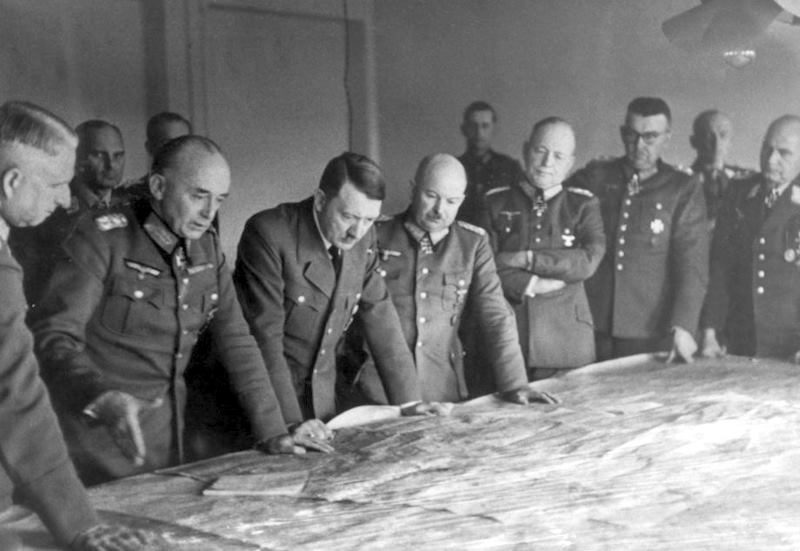
The table talks took place at a time of massive political upheaval in Germany. The NSDAP destroyed the democratic structures of the Weimar Republic and established a totalitarian system.
The Führer’s headquarters and its significance
The Führer’s headquarters was the military command center during World War II. The most famous facility was the Wolf’s Lair in East Prussia, where Hitler spent most of his time from 1941 onwards.
From there, Hitler directed military operations. The facility was heavily guarded and completely off-limits to outsiders.
Only selected people from the military, government, and party were allowed to enter. In this isolated environment, daily meals took place, during which Hitler gave his monologues.
Henry Picker was brought to the Wolf’s Lair as a lawyer in 1942 and was allowed to participate in these conversations. He took notes, which were later published.
The role of the NSDAP and the Führer state
After 1933, the NSDAP was the only legal party in the German Reich. The political system followed the Führer principle, with Hitler as the supreme ruler.
The Führer state was based on absolute authority without democratic control. All state institutions were subordinate to the NSDAP.
The government did not work collectively, but followed Hitler’s personal orders. The party intervened in every area of everyday life.
It controlled the administration, the judiciary, the economy, and culture. Anyone who disagreed faced harsh persecution.
Contemporary history: Weimar Republic to the Third Reich
The Weimar Republic existed from 1918 to 1933 as Germany’s first democracy. It struggled with economic crises, political instability, and extremist movements.
The NSDAP skillfully exploited the global economic crisis that began in 1929 to rise to power. The right wing considered the Treaty of Versailles a shameful dictate.
Mass unemployment led to dissatisfaction with the government. Hitler was appointed Reich Chancellor in January 1933.
After seizing power, the NSDAP completely destroyed democracy in a short period of time. Germany went from being a republic to a dictatorship.
According to Nazi propaganda, the so-called Third Reich was supposed to last a thousand years.
Gleichschaltung and the Volksgemeinschaft
Gleichschaltung refers to the subjugation of all areas of society to Nazi control. Between 1933 and 1934, trade unions, associations, and organizations were dissolved or transferred to Nazi structures.
The government eliminated the states and centralized power. The media, education, and culture were subject to strict censorship.
Every concentration camp served to oppress opponents and was a tool of terror. The Volksgemeinschaft (people’s community) was a central Nazi concept.
It propagated a supposedly natural community of all “Germans” – Jews, political opponents, and other groups were excluded. This ideology served as a pretext for persecution and murder.
The Volksgemeinschaft was supposed to overcome social differences, but in reality it created massive inequality and violence.
Key topics of the table discussions
Picker’s notes record Hitler’s monologues on many ideological and political topics. These range from his racial ideology and economic ideas to his views on religion and Christianity.
Anti-Semitism and Racism
Hitler repeatedly expressed his anti-Semitic and racist beliefs in the table talks. These views formed the ideological foundation for the Nuremberg Race Laws.
His worldview was based on social Darwinist ideas. He equated the laws of nature with the will of God.
Hitler spoke of a new order under the leadership of a Greater Germanic Reich. He even justified euthanasia as a supposed means of purifying the body of the people.
The notes contain statements on the colonization of living space in the East and the destruction of Bolshevism. On May 29, 1942, Hitler still mentioned the Madagascar Plan, even though the Wannsee Conference had already taken place in January.
This discrepancy raises questions about the editing of the texts. It remains unclear how carefully the notes were actually compiled.
Economic and social perspectives
The table talks record Hitler’s thoughts on the economic and social policy of the Third Reich. He linked his economic ideas with plans for the post-war period and a new order in Europe.
His monologues revolved around cultural and economic policy in connection with his military goals. Hitler spoke on social issues and linked them to his vision of a future German society.
He wanted to shape society according to National Socialist principles. Economic considerations always served his larger ideological goals.
War crimes and the Holocaust
The table talks largely conceal Hitler’s direct role in the Holocaust. Hannah Arendt criticized the first publication in 1951 as “propaganda for Hitler” and criticized the lack of information on the extermination of the Jews.
Gerhard Ritter defended himself by saying that the source did not deal with these topics in detail. However, industrial extermination in Auschwitz was already in full swing at that time.
Heinrich Heim, one of the recorders, remained loyal to Hitler throughout his life and absolved him of any guilt for the Holocaust. This closeness of the authors may have influenced the presentation.
The lack of documentation on the systematic extermination is a significant gap in the records. This is hard to overlook.
Religion, theology, and spirituality
The table talks clearly reveal Hitler’s rejection of Christianity. He expressed an anti-clerical attitude that he did not show publicly.
His monologues reflect his negative view of the Christian churches and their role in society. For the post-war period, Hitler planned to tighten Nazi church policy.
He wanted to break the church’s power over the spiritual life of the German people. These statements provide insight into his long-term plans for the religious landscape in the Reich.
Ideological dimensions and worldview
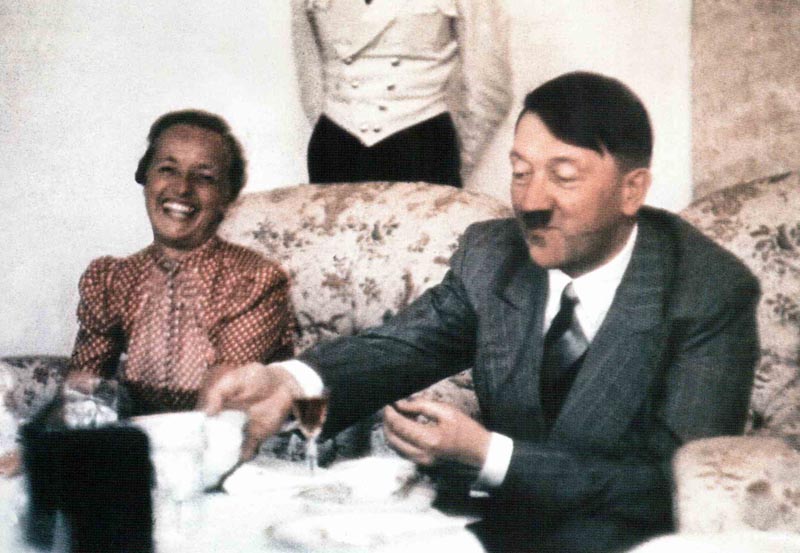
Hitler’s table talks reveal a worldview that sees struggle as the law of history. The recordings combine propaganda, the cult of the Führer, and pseudo-philosophical convictions into a coherent ideological system.
Nazi propaganda and war propaganda
The table talks document how important propaganda was to Hitler. He praised Joseph Goebbels for his concise slogans, which were easy for the masses to remember.
This war propaganda was not intended to educate, but to mobilize. Hitler compared the world to a “challenge cup” that always ends up with the stronger side.
This view permeated his entire propaganda strategy. The messages were deliberately simple and repeatedly picked up on the same enemy stereotypes.
Nazi propaganda portrayed the war as an existential struggle for living space. In the conversations, Hitler explained his plans to conquer and settle the East following the British model.
Cult of the Führer and personalization of power
Picker describes Hitler as the “pater familias” in the Führer’s headquarters, who was caring towards his staff. This self-staging was part of the cult of personality that portrayed Hitler as an infallible authority.
The table talks often consisted of long monologues. Hitler hardly tolerated any contradiction and presented his visions as without alternative.
He presented decisions as an expression of a higher will. The personalization of power was evident in his conviction that he had to determine the fate of Europe.
Hitler saw himself as a historical figure who would create a new world order. This self-image permeated many of his statements.
Philosophical, utopian, and messianic echoes
Hitler’s worldview was a counter-concept to Marxism. He mixed pseudo-philosophical approaches, racist beliefs, and mystical elements.
The “blood and soil” paganism combined biological and religious motifs. The table talks reveal messianic traits in Hitler’s self-image.
He saw Jesus Christ as an Aryan and developed a new concept of religion as the spiritual basis of society. His aversion to the Christian churches stood in contrast to this pseudo-religious transfiguration.
Hitler’s utopian ideas of a united Europe under German leadership run through the records. This utopia was based on racial ideology and the extermination of alleged enemies.
The conversations document ideas about shaping society that had little to do with reality. It remains unclear how much of this could actually have been implemented.
Critical assessment and academic reception
The scholarly evaluation of Picker’s table talks has changed over the decades. Recent research has cast doubt on the authenticity of some passages, while their significance for political education and remembrance culture continues to be debated.
Authenticity and controversies surrounding the edition
The table talks were first published in 1951 by Henry Picker and the Institute for Contemporary History in Munich. Gerhard Ritter was the editor and wrote the introduction.
Picker made his notes immediately after meals at the Führer’s headquarters. He used keyword notes and later developed them into texts.
This method raises questions about accuracy. A 2019 study shows that historians have often quoted the documents too uncritically.
The study used new sources and found problems in the two most important editions: the “Table Talks at the Führer’s Headquarters” and the “Monologues at the Führer’s Headquarters.” Researchers should treat these texts with more caution.
A comparison with files from the Reich Chancellery helps to critically examine the private speech. Without this comparison, doubts about the tradition remain.
Significance for political education
The Tischgespräche provide insights into Hitler’s thinking during the Second World War. They reveal his visions of a new world order and his racial ideology.
These statements were made during meals and evening tea sessions at the Führer’s headquarters. The texts are important for political education because they reveal Hitler’s way of thinking and his plans for shaping society.
They help to understand how totalitarian systems work and how ideology is translated into politics. Educational institutions should address the issues of authenticity and teach the texts in their historical context.
Reception in research and remembrance culture
The table talks are considered an important contemporary historical document. They have been published in various editions, including one with annotations by Andreas Hillgruber.
The records play an ambivalent role in remembrance culture. They document the thinking and crimes of the Nazi regime, but must be viewed critically.
Research has adjusted its assessment over time. Earlier historians often accepted the texts without close examination, while more recent studies call for a more differentiated approach.
Impact and resonance in the present
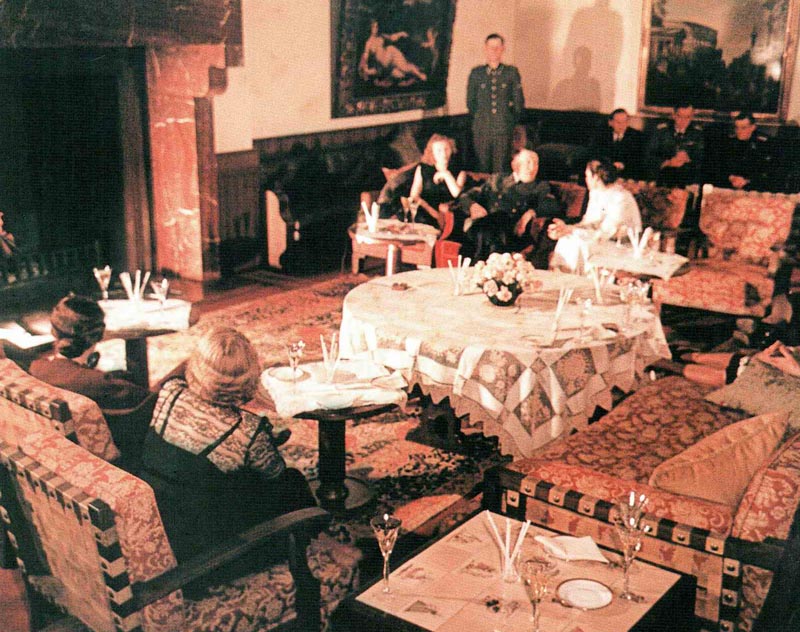
Hitler’s table talks continue to have an impact on historical research and remembrance culture to this day. The book influences the debate on resistance, Jewish history, and the persistence of right-wing extremist ideologies.
Resistance fighters, deserters, and eyewitness accounts
Pickert’s notes show quite clearly how the Nazi regime thought about resistance fighters and deserters. Hitler often talked during meals about punishing deserters and hunting down opponents of the regime.
These statements help researchers to better understand the methods of oppression. Eyewitness accounts from survivors gain weight when compared with the table talks.
Hitler’s direct words often confirm what victims and resistance fighters later described. Historians combine both types of sources to gain as comprehensive an understanding of the Nazi era as possible.
The documentary makes it clear that resistance to the regime took place under extreme conditions. Deserters risked their lives every time they did so.
Impact on German and Jewish history
In the table talks, Hitler speaks openly about his racial ideology and plans to exterminate the German Jews. During the meals, the development of the persecution policy between 1941 and 1942 can be traced.
This period marks the transition to systematic murder. For Jewish history, the book remains an important, albeit difficult to bear, source.
It shows how Hitler justified his extermination plans in small circles. Researchers refer to these records to better understand the ideology behind the Holocaust.
The conversations also influence our understanding of German post-war history. They show that the Nazi leadership consciously planned and carried out their crimes.
Exhibitions and exhibition catalogs
Museums and memorials repeatedly refer to quotes from the table talks. The exhibition catalog of the German Historical Museum uses excerpts to make Hitler’s worldview tangible.
Such presentations help visitors to understand the mindset of the Nazi leadership. However, it remains critical to treat the source with caution.
Historians have shown that the table talks were quoted uncritically for a long time. Exhibitions must explain how the recordings came about and what limitations they have as a source.
Memorial sites use the material to show the connection between ideology and crime. They place the conversations in the context of real events.
The persistence of right-wing extremism
Right-wing extremist groups still refer to the ideology documented in the table talks today. Neo-Nazis quote Hitler’s statements to support their views.
The availability of the book poses risks if readers accept its contents uncritically. Educational institutions use the table talks to explain the mechanisms of right-wing extremist propaganda.
They show how Hitler formulated and spread his ideology. This is important for recognizing today’s right-wing extremist strategies.
The relevance of the book lies primarily in its warning function. It makes it clear where racist ideology can lead.
Frequently asked questions
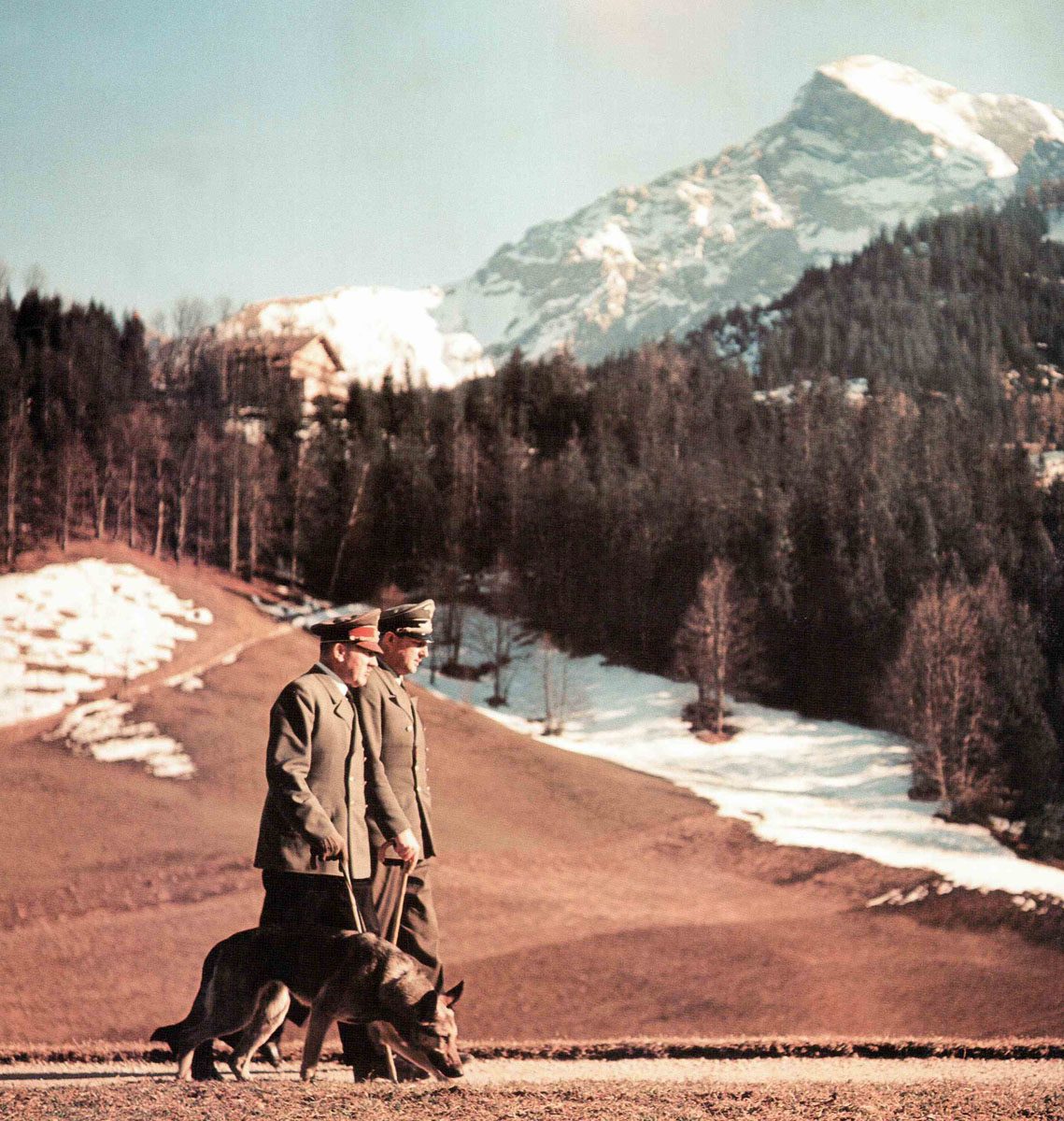
Henry Picker’s records of Hitler’s table talks raise many questions about authenticity, content, and historical classification. The following answers address the most important aspects of Picker’s work—from the thematic focus to the sources to the scholarly evaluation.
What are the main topics covered in Henry Picker’s “Hitler’s Table Talk”?
The table talks contain Hitler’s statements on politics, military strategy, and the ongoing war. Hitler spoke at length about his visions for a new European order under German domination.
The colonization of living space in the East is also discussed. The work also documents Hitler’s views on religion, culture, and philosophy.
His anti-clerical attitude and rejection of Christianity are more evident in the conversations than in public speeches. Hitler planned to tighten Nazi church policy in the postwar period.
Personal memories from Hitler’s biography also emerge. His affection for the city of Linz is mentioned several times.
The monologues combine historical-philosophical reflections with current military developments. At times, this almost seems like a leap of thought.
How do Henry Picker’s notes differ from other transcripts of Hitler’s table talks?
Picker worked at the Führer’s headquarters from March 1942 to early autumn 1942. He succeeded Heinrich Heim, who had been recording the conversations since the summer of 1941.
Picker’s notes formed the basis for the first publication of the table talks in 1951. This edition was produced in collaboration with the Institute for Contemporary History in Munich.
The historian Gerhard Ritter edited the book and wrote the introduction. The records of Bormann, Müller, and Heim were later published separately as “Monologues in the Führer’s Headquarters 1941-1944.”
Due to a legal dispute, this 1980 edition did not include any contributions from Picker. The two versions differ in terms of their compilation and the time period they cover.
What historical sources were used to compile ‘Hitler’s Table Talks’?
Picker wrote his notes from memory and based on notes he made during or after the conversations. They are not direct shorthand transcripts.
The recorders reconstructed Hitler’s statements in essence. The idea for the collection came from Martin Bormann, who wanted to preserve Hitler’s thoughts for posterity.
Hitler knew about the notes, even though Heim later claimed the opposite. In addition to Picker’s notes, there are also notes by Heim, Hans Müller, and Martin Bormann.
These various sources cover the period from 1941 to winter 1944. The conversations took place mainly in the Wolf’s Lair in East Prussia and at the Werwolf headquarters in Ukraine.
To what extent does Henry Picker’s work contribute to our understanding of Hitler’s personality?
The table talks reveal a more private side to Hitler than his public speeches do. Among his closest associates, he spoke more openly about his ideological convictions.
His social Darwinist views are documented, and he often conflates the laws of nature with the will of God. The work reveals aspects of Hitler’s thinking that he did not express so sharply in public.
His rejection of Christianity is more evident here than in official speeches. However, the texts do not reproduce Hitler’s exact words.
They are edited memoirs of the recorders. This limits their value as a direct source for Hitler’s actual formulations.
How is the authenticity of the statements recorded in ‘Hitler’s Table Talks’ assessed?
Many historians, such as Ian Kershaw, Wolfram Pyta, and Volker Ullrich, refer to the Table Talks. They generally regard the texts as an authentic record of Hitler’s views.
Mikael Nilsson, a historian, published a critical study in the Vierteljahrsheften für Zeitgeschichte (Quarterly Journal for Contemporary History) in 2019. He discovered evidence that someone had edited the texts retrospectively and that they are not verbatim transcripts.
When compared with other records from the period, similar themes and content often emerge.
Nevertheless, the table talks should not be taken as an exact reproduction of Hitler’s words.
They give more of an impression of his general thoughts and priorities. It is better not to quote them verbatim—that remains controversial.
Where can I read the book “Hitler’s Table Talks” by Hery Picker?
Unfortunately, the last edition is out of print. Currently, only used, older editions are available.