
Short answer: none. Open the buy menu in any client CS 1.6 build and you will not find a Kar98k, a Thompson or a Garand. The arsenal is made of rifles, SMGs and pistols from the 1960s through the 1990s, and not a single gun comes straight from the 1939-1945 period.
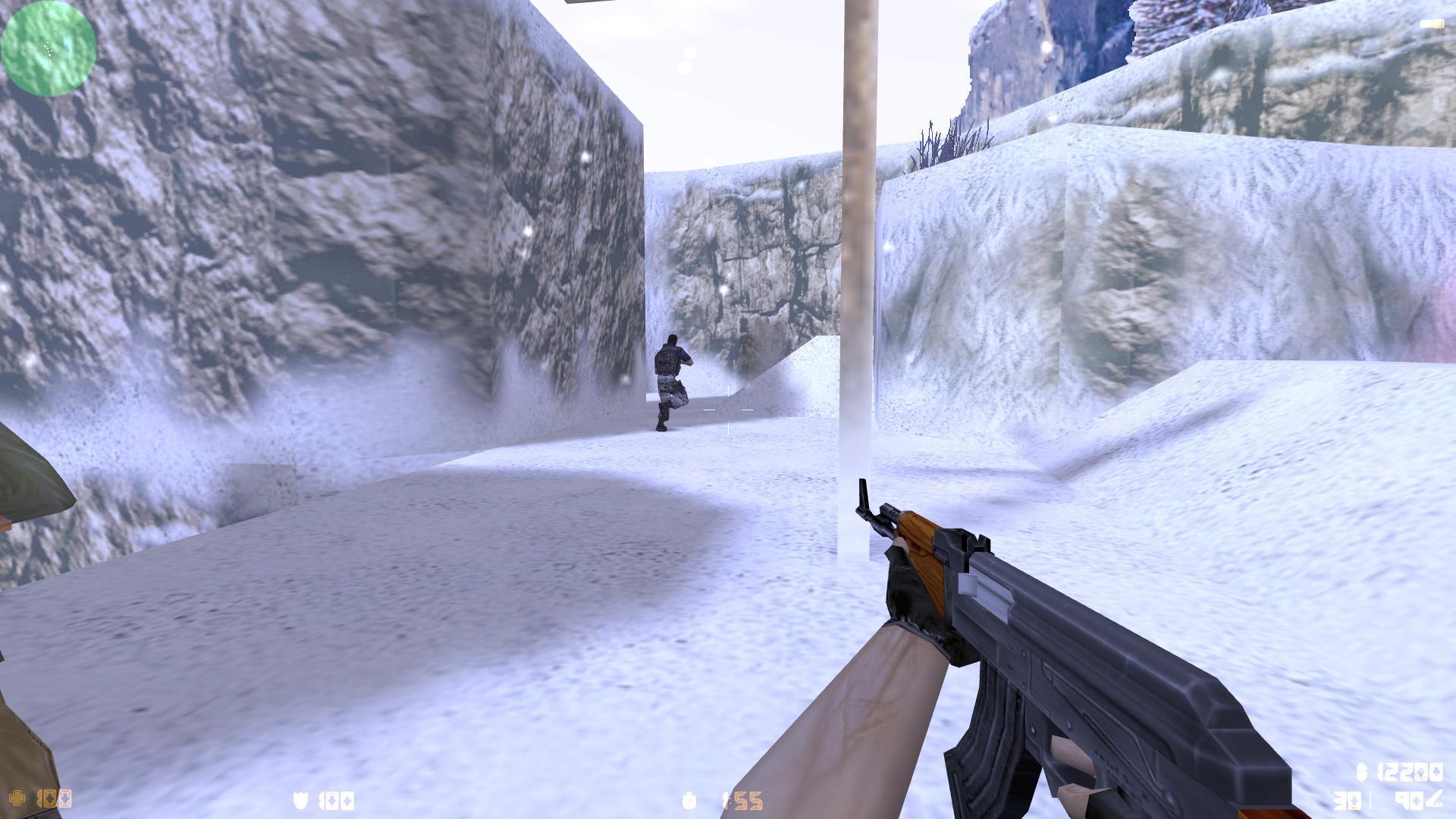
The long answer is more fun. Several weapons you buy every round carry wartime DNA, and a couple of them exist only because German engineers were busy with prototypes in the last months of the war. Below I go weapon by weapon and show where each one connects to WWII, so you have something to say while waiting for the next round.
AK-47 and the StG 44 connection
Mikhail Kalashnikov was a tank commander wounded at Bryansk in 1941, and he started sketching a rifle while recovering. Soviet designers had also seen what the German StG 44 did on the Eastern Front: an assault rifle with an intermediate cartridge that stayed controllable in full auto. The AK-47 follows that logic with the 7.62×39 mm round and was adopted in 1949.
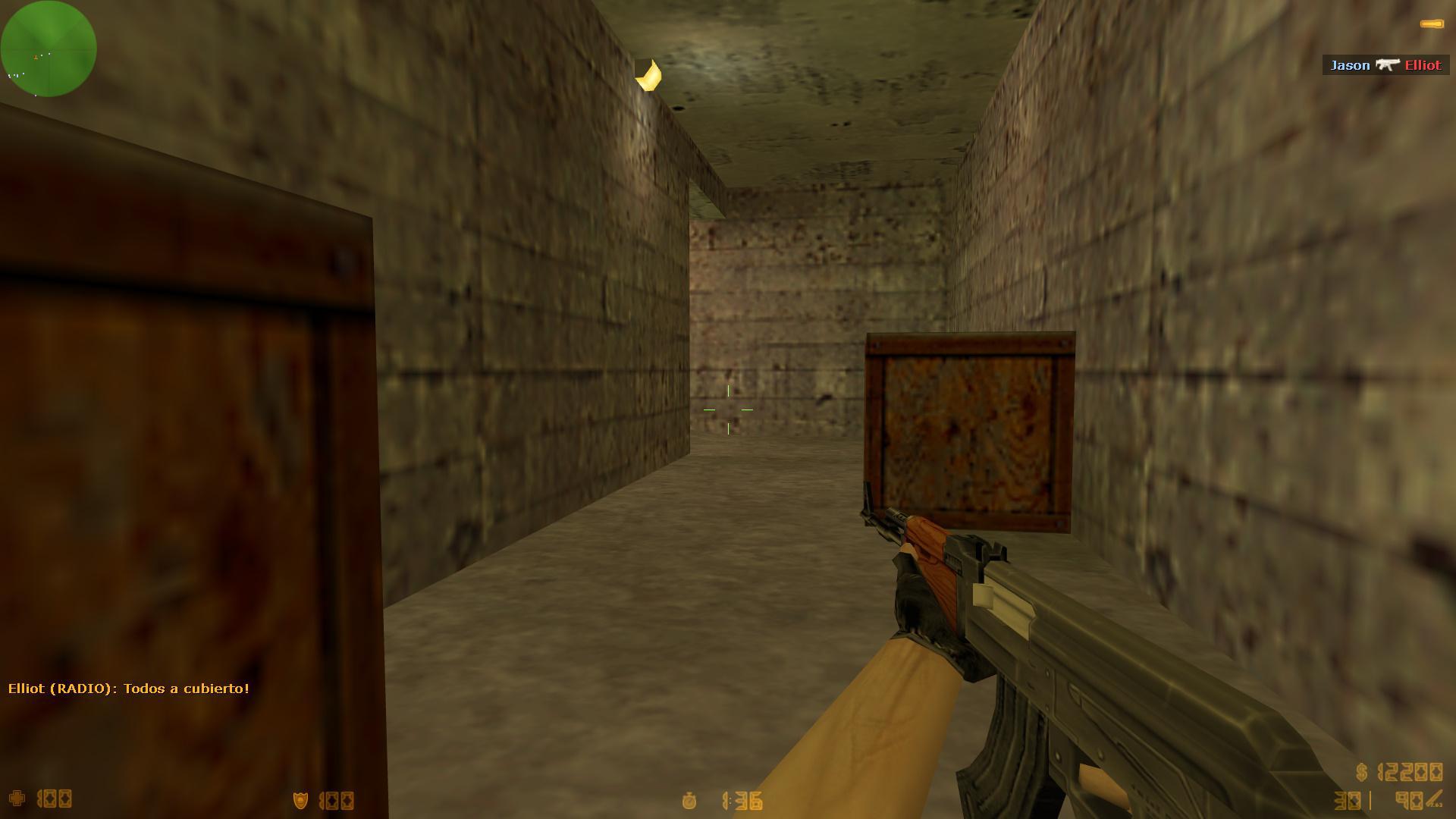
So it is a post-war gun, but without the war it would not exist. In client CS 1.6 it costs $2500, hits hard, and a headshot usually finishes the target with one bullet. The recoil climbs and then drifts sideways, which is why most players fire in short bursts after the first few shots.
G3SG1 and the roller-delayed lock
This one has the most honest WWII lineage. At the end of the war, Mauser engineers worked on the StG 45(M), a rifle with a roller-delayed blowback system. It never reached production. After 1945 one of those engineers, Ludwig Vorgrimler, moved to Spain, where the system became the CETME rifle. Heckler & Koch later refined it into the G3, adopted by West Germany in 1959.
The G3SG1 is the selected-accuracy sniper version. In the game it costs $5000, holds 20 rounds and slows you down a lot, but the semi-auto fire lets you punish a missed first shot. Keep it for long lanes where you can hold an angle, not for running around.
MP5 Navy and the same family tree
The submachine gun in your buy menu belongs to that same roller-delayed family. Heckler & Koch built the MP5 on the G3 mechanism, and German police started using it in 1966. The idea was simple: take a rifle-grade locking system and fit it to a light 9×19 mm gun that fires from a closed bolt, which makes it far more accurate than the older open-bolt SMGs of the war years.
In CS 1.6 it costs $1500 and stays accurate while moving, so it is a safe choice on eco rounds. If you ever wondered why the MP5 feels so smooth compared to the TMP or the Mac-10, the closed bolt is a big part of the answer.
Scout and the bolt-action heritage
Bolt-action rifles were the main infantry weapon of WWII. The Kar98k, the Mosin-Nagant and the Lee-Enfield all rely on the turn-bolt design that Mauser perfected back in 1898. The Steyr Scout is a 1990s rifle, shaped by Jeff Cooper’s idea of a light, fast “scout rifle”, but the action under the hood is the same old principle.
In game it costs $2750 and holds 10 rounds. It is light, so you move fast with it, and a chest shot at range leaves little time to react. If you want to practice with it exactly as the developers shipped it, a cs 1.6 original download gives you the stock models, sounds and balance without any extras bolted on.
M3 and the trench gun legacy
Here a name trap awaits. The American M3 “Grease Gun” was a real WWII submachine gun, but the M3 in CS 1.6 is the Benelli M3 Super 90 from 1989. It has nothing in common with the Grease Gun except the letters.
The real wartime link is the pump-action shotgun. US troops used Winchester Model 1897 and Model 12 “trench guns” in the Pacific, where thick jungle turned fights into point-blank brawls. The Benelli plays the same role in the game: $1700, 8 shells, deadly in corners and doorways. Pick it for Dust and Aztec corridors, and avoid open mid.
M249 and the belt-fed machine gun idea
Before the war, a machine gun was a heavy tripod weapon. Germany changed that with the MG34 and then the MG42, a belt-fed gun that one soldier could carry and fire from the hip or a bipod. It fired around 1200 rounds per minute, and Allied troops called the sound “Hitler’s buzzsaw”. Almost every light machine gun that came later borrowed from it.
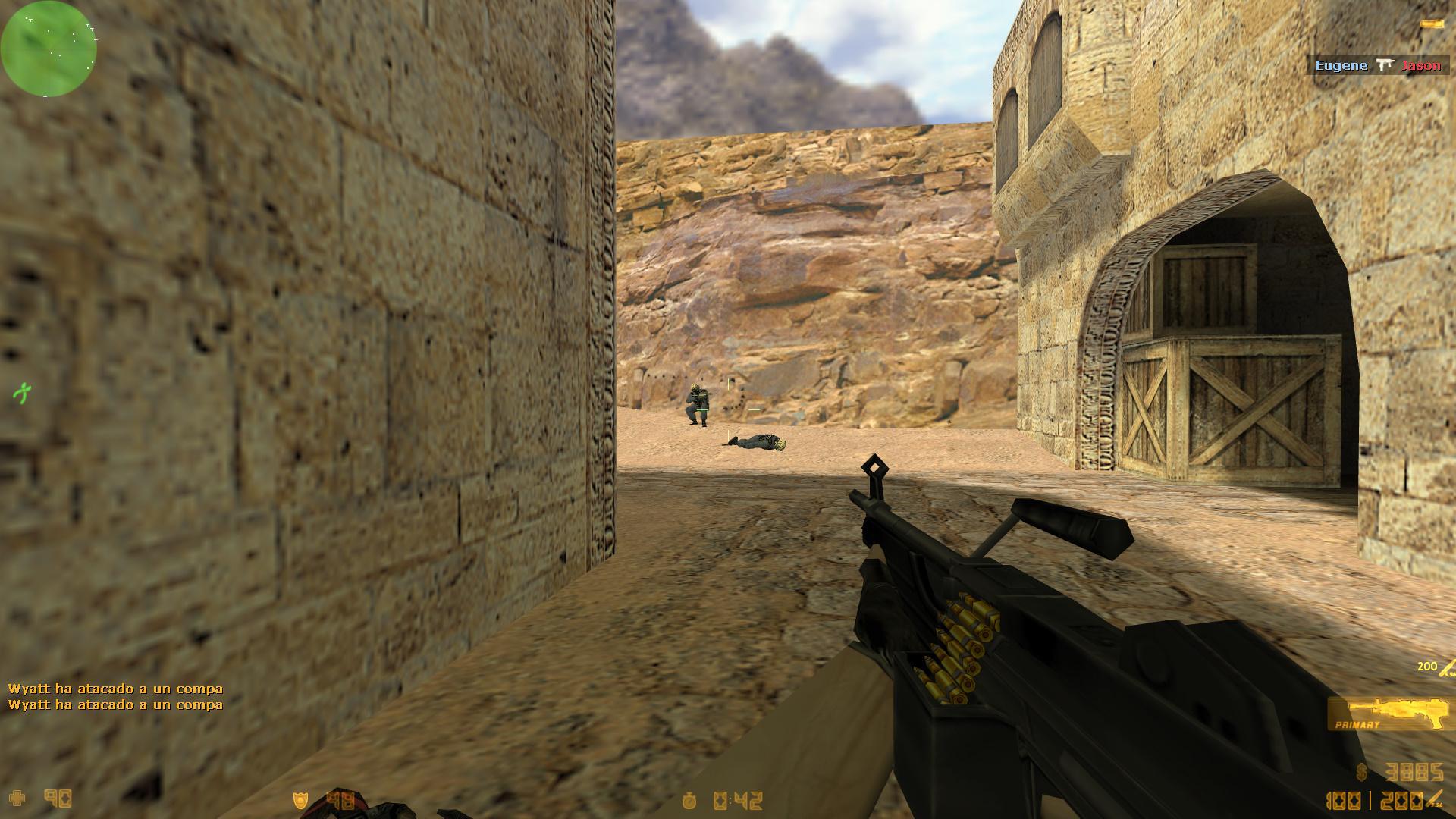
The M249 in CS 1.6 is the Belgian FN Minimi from 1974, which uses the same belt-feed concept in a lighter package. It costs $5750 and holds 100 rounds, so you can hold a spray for a long time. The price is speed: you walk slowly and the first bullets scatter. Crouch, aim at the doorway and let the belt do the work.
Dual Elites and the officer’s pistol
The Dual Elites are a pair of Beretta 96 pistols, a Beretta 92 derivative from the 1970s, and the 92 line goes back to Italian design habits of the war years. During WWII, Beretta supplied the Italian army with the Model 1934, a compact officer’s sidearm that many Allied soldiers also took home as a trophy. The open slide cut-out you see on the modern guns is a direct descendant of the same philosophy: a simple, reliable pistol for people who are not supposed to need it often.
In the game they cost $800, hold 30 rounds between both guns and shoot fast. They are loud and look cool, but the accuracy at range is poor. Treat them as a close-quarters option for a rush on a small map, not as a replacement for a rifle.
HE grenade and the pineapple
The standard American grenade of WWII was the Mk 2, nicknamed the “pineapple” for its grooved iron body. The grooves helped grip and, contrary to the myth, did not control how the casing broke apart. A pin, a lever and a fuse of a few seconds: the same basic logic the HE grenade uses in CS 1.6.
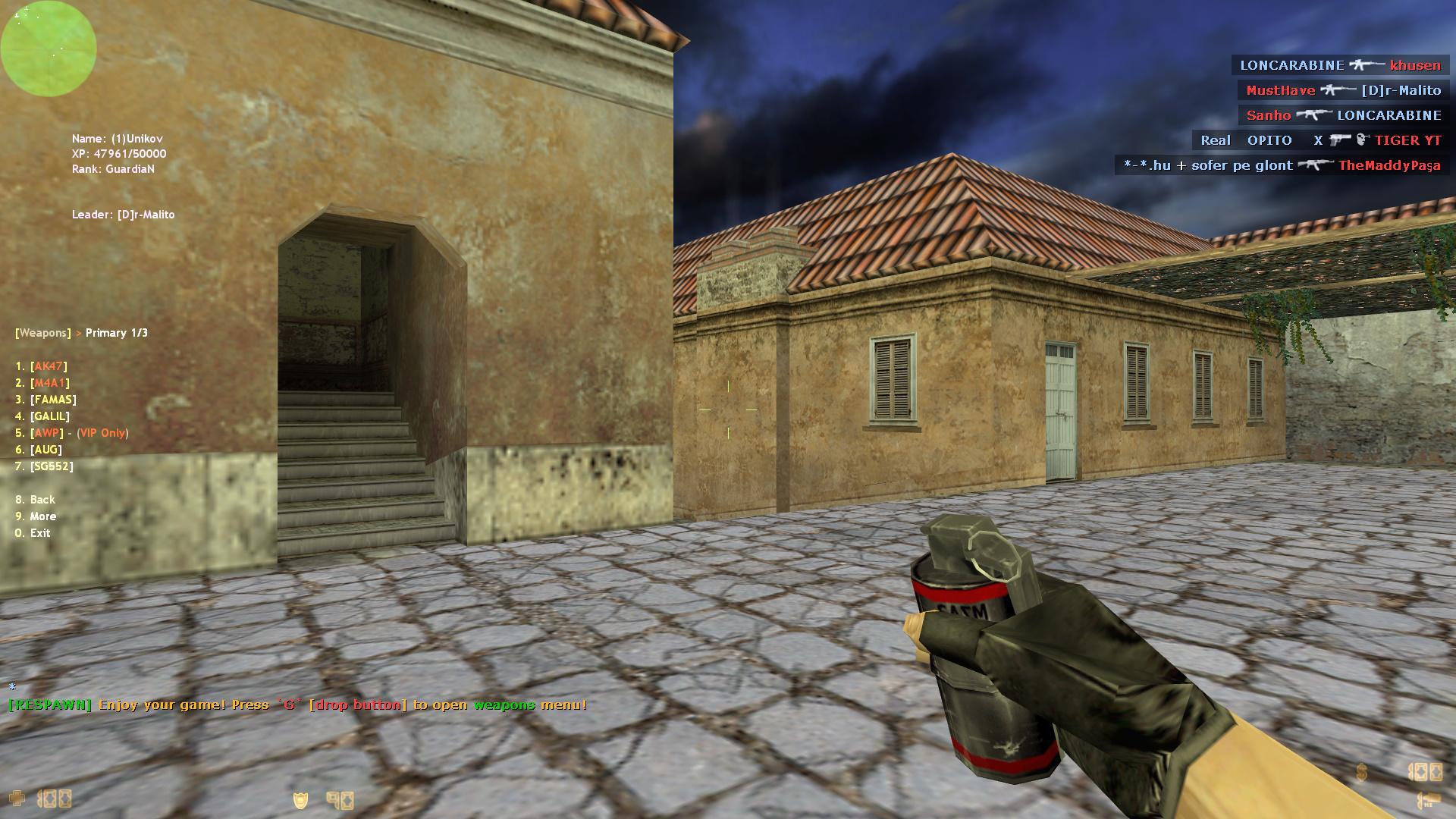
The game version costs $300 and looks like a modern fragmentation model. Its job has not changed in eighty years: flush someone out of a corner or finish a wounded enemy. A nade thrown over a wall at the right moment beats a lot of aim.
Knife and the combat blade tradition
The knife has no real-world name in the game, so there is nothing to point at and say “that is a WWII model”. But the role comes from the war. Fighting knives like the Fairbairn-Sykes dagger and the USMC Ka-Bar, issued from 1942, were made for silent work and last-resort defense.
In CS 1.6 the knife is free, speeds you up and gives you one of the best feelings in the game: sneaking up from behind. The secondary stab hits hard, so use it when you are sure nobody will turn around.
Take the history into your next match
CS 1.6 does not hide a single Sherman or Thompson, yet the guns you fire every day have a clear line back to 1945: the AK to the StG 44, the G3 and the MP5 to the StG 45(M), the Scout to the Mauser bolt, the shotgun to the trench guns. That is the lesson. Even a game about modern counter-terrorism is built on ideas from the war that shaped how soldiers fight.
Next time you buy a rifle, think about where it came from. Install Counter-Strike 1.6, join a server with friends and see whether you can tell the wartime ancestors by feel alone.