


All figures on the American defense industry (1939–1945). Detailed statistics on the production of tanks (Sherman), aircraft, ships, and raw materials.
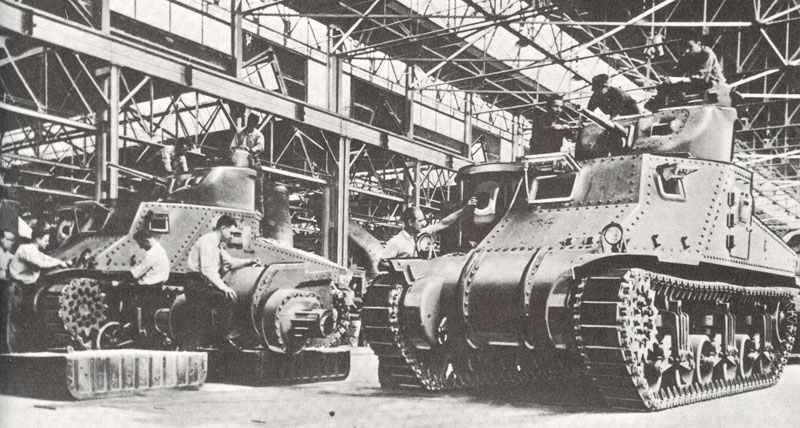
U.S. arms production in WW2
During World War 2, the United States underwent a massive industrial mobilization to produce armaments and supplies for itself and its allies. This effort was often referred to as the “Arsenal of Democracy.”
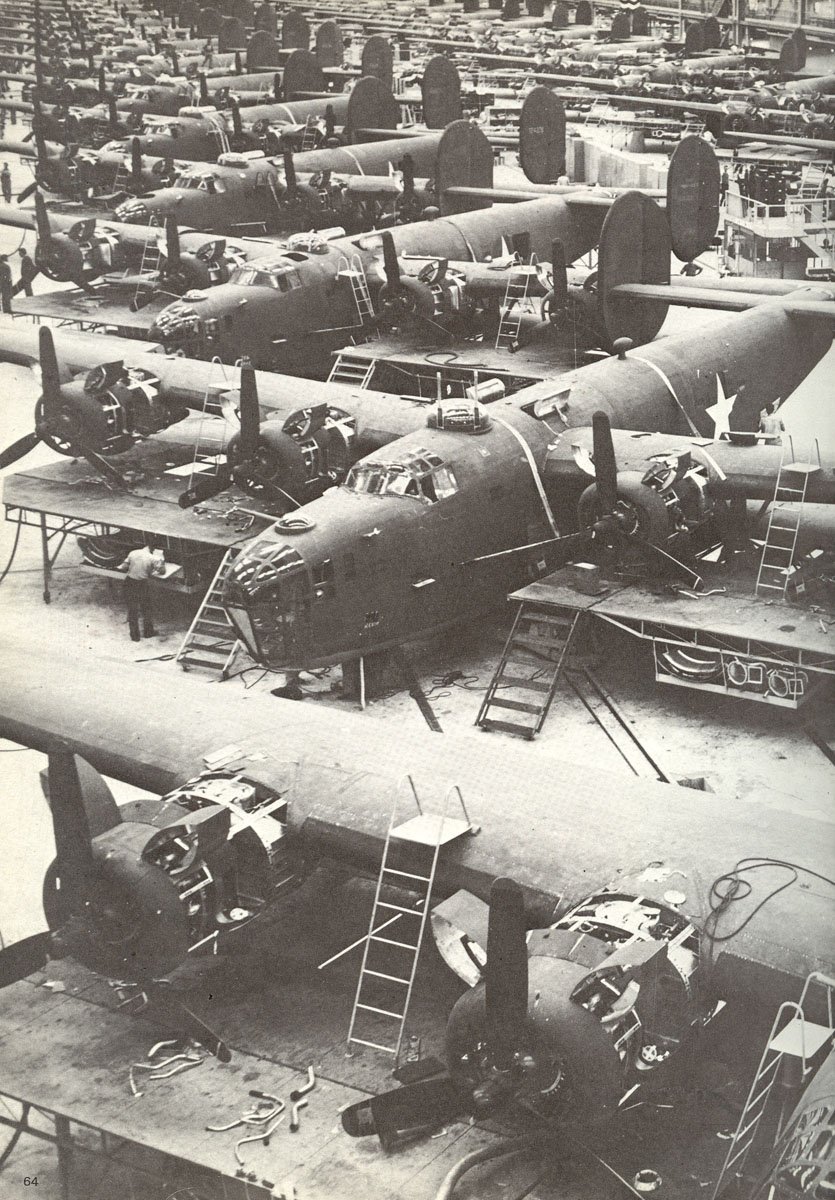
Overview
Scale: The US produced enormous quantities of military equipment, including:
– 300,000 aircraft
– 124,000 ships
– 41 billion rounds of ammunition
– 100,000 tanks
– 2.4 million military trucks
Conversion of civilian industries: Many civilian factories were converted to produce military goods. For example, automobile manufacturers switched to producing tanks, aircraft engines, and other military vehicles.

New facilities: The government invested in building new production facilities, such as shipyards and aircraft factories.
Scientific advancements: The war spurred technological innovations, including radar, jet engines, and nuclear weapons.
Lend-Lease program: The US supplied vast amounts of equipment to its allies, particularly the UK and Soviet Union, through the Lend-Lease program.
Women in the workforce: With many men serving in the military, women entered the workforce in unprecedented numbers to support production efforts.
Standardization: The US focused on mass-producing standardized designs to increase efficiency and output.
Key products:
– Aircraft: B-17 and B-24 bombers, P-51 Mustang fighters
– Ships: Liberty ships, aircraft carriers, destroyers
– Tanks: M4 Sherman
– Vehicles: Jeeps, trucks, half-tracks
Economic impact: The massive production effort helped end the Great Depression and positioned the US as the world’s leading economic power after the war.
Coordination: The War Production Board was established to coordinate the conversion of civilian industries to military production and allocate resources.
This unprecedented industrial mobilization played a crucial role in the Allied victory in World War 2, cementing the United States’ position as a global superpower.
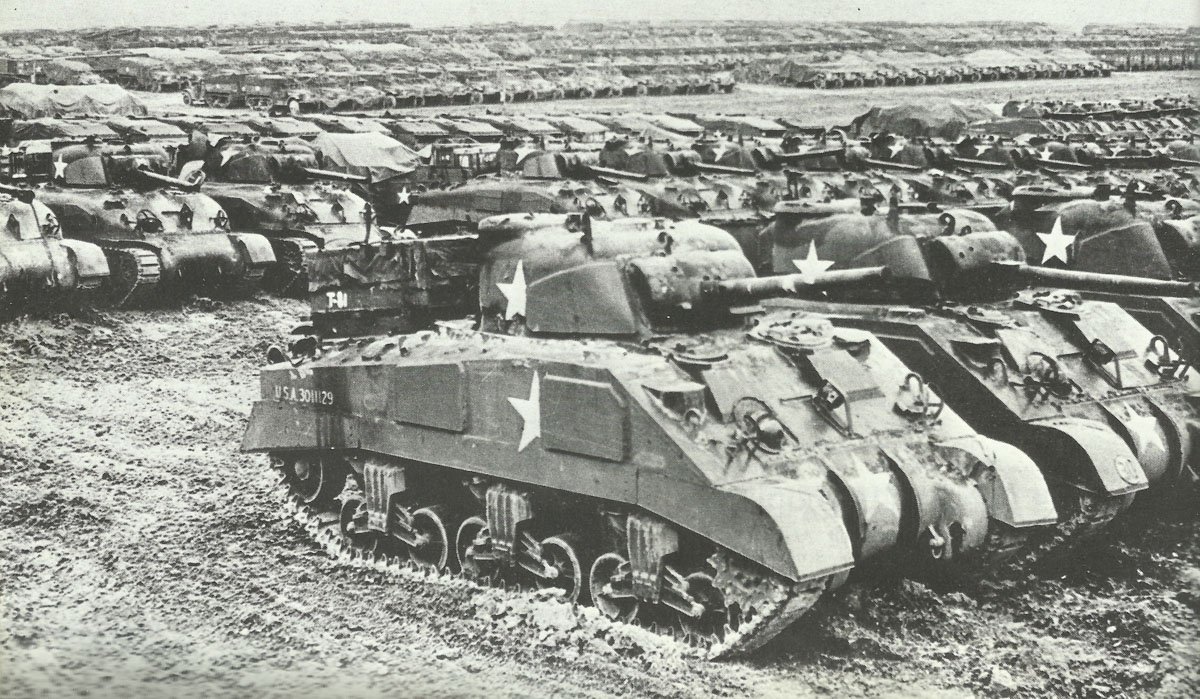
U.S. arms production by weapon types
Following are tables of the annual U.S. arms production (excluding ammunition) and a comparison of the necessary strategic raw materials.
Annual U.S. production figures of the main arms and military equipment (without ammunition) during WW2 from 1939-1945:
Armaments:
Type of Weapon | 1939 | 1940 | 1941 | 1942 | 1943 | 1944 | 1945 | TOTAL |
|---|---|---|---|---|---|---|---|---|
Tanks and Self-propelled guns | - | 331 | 4,052 | 24,997 | 29,497 | 17,565 | 11,968 | 88,410 |
Artillery (including anti-tank and anti-aircraft guns) | 257,390 (1939-45) | ? | ? | ? | ? | ? | ? | 257,390 |
Mortars | 105,054 (1939-45) | ? | ? | ? | ? | ? | ? | 105,054 |
Machine-guns (without sub-machine guns) | 2,679,840 (1939-45) | ? | ? | ? | ? | ? | ? | 2,679,840 |
Infantry rifles | c.11,750,000 (1939-45) | ? | ? | ? | ? | ? | ? | c.11,750,000 |
Sub-machine guns | c.1,956,000 (1939-45) | ? | ? | ? | ? | ? | ? | c.1,956,000 |
Military trucks and Lorries | 32,604 (1939-40) | ? | 183,614 | 619,735 | 621,502 | 596,963 | 327,893 | 2,382,311 |
Fighter planes | ? | 1,162 | 4,416 | 10,769 | 23,988 | 38,873 | 20,742 | 99,950 |
Light and medium bombers | ? | 623 (incl. heavy) | 4,115 (incl. heavy) | 10,012 | 19,740 | 18,672 | 9,282 | maximum 62,444 |
Four-engined bombers | ? | ? (in light and medium) | ? (in light and medium) | 2,615 | 9,615 | 16,331 | 6,805 | minimum 35,366 |
Reconnaissance planes | ? | 63 | 727 | 1,468 | 734 | 259 | 667 | 3,918 |
Transport planes | ? | 164 | 532 | 1,984 | 7,012 | 9,834 | 4,403 | 23,929 |
Trainers and miscellaneous military types | ? | 1,794 | 9,373 | 17,631 | 19,939 | 7,577 | 1,309 | 57,623 |
Aircraft carriers (all types) | - | - | - | 18 | 65 | 45 | 13 | 141 |
Battleships | - | - | - | 4 | 2 | 2 | - | 8 |
Cruisers | - | - | 1 | 8 | 11 | 14 | 14 | 48 |
Destroyers | - | - | 2 | 82 | 128 | 74 | 63 | 349 |
Escorts (Corvettes, Frigates) | - | - | - | - | 298 | 194 | 6 | 498 |
Submarines | - | - | 2 | 34 | 55 | 81 | 31 | 203 |
Merchant shipping tonnage | 376,419 | 528,697 | 1,031,974 | 5,479,766 | 11,448,360 | 9,288,156 | 5,839,858 | 33,993,230 |
Raw material production for the military weapon production above:
Annual strategic raw material production (m. metric tons):
Year | 1939 | 1940 | 1941 | 1942 | 1943 | 1944 | 1945 |
|---|---|---|---|---|---|---|---|
Coal | ? | ? | ? | 528.5 | 535.3 | 562.0 | 523.9 |
Ore | ? | ? | ? | 107.6 | 103.1 | 96.0 | 90.2 |
Steel | ? | ? | ? | 80.6 | 82.2 | 85.1 | 86.6 |
Aluminium (in 1,000 metric tons - especially important for aircraft production) | ? | ? | ? | 751.9 | 1,251.7 | 1,092.9 | 1,026.7 |
References and literature
World War II – A Statistical Survey (John Ellis)
Chronology of World War II (Christopher Argyle)


Any idea where I can locate information relating to how and where phosphorus incendiary devices were put together and stored during WWII? I can locate no information or references.
Thanks
Charles