


Everything you need to know about the fully automatic Mauser C96 pistol: its history during the First and Second World Wars, the different models, and its current collector’s value.
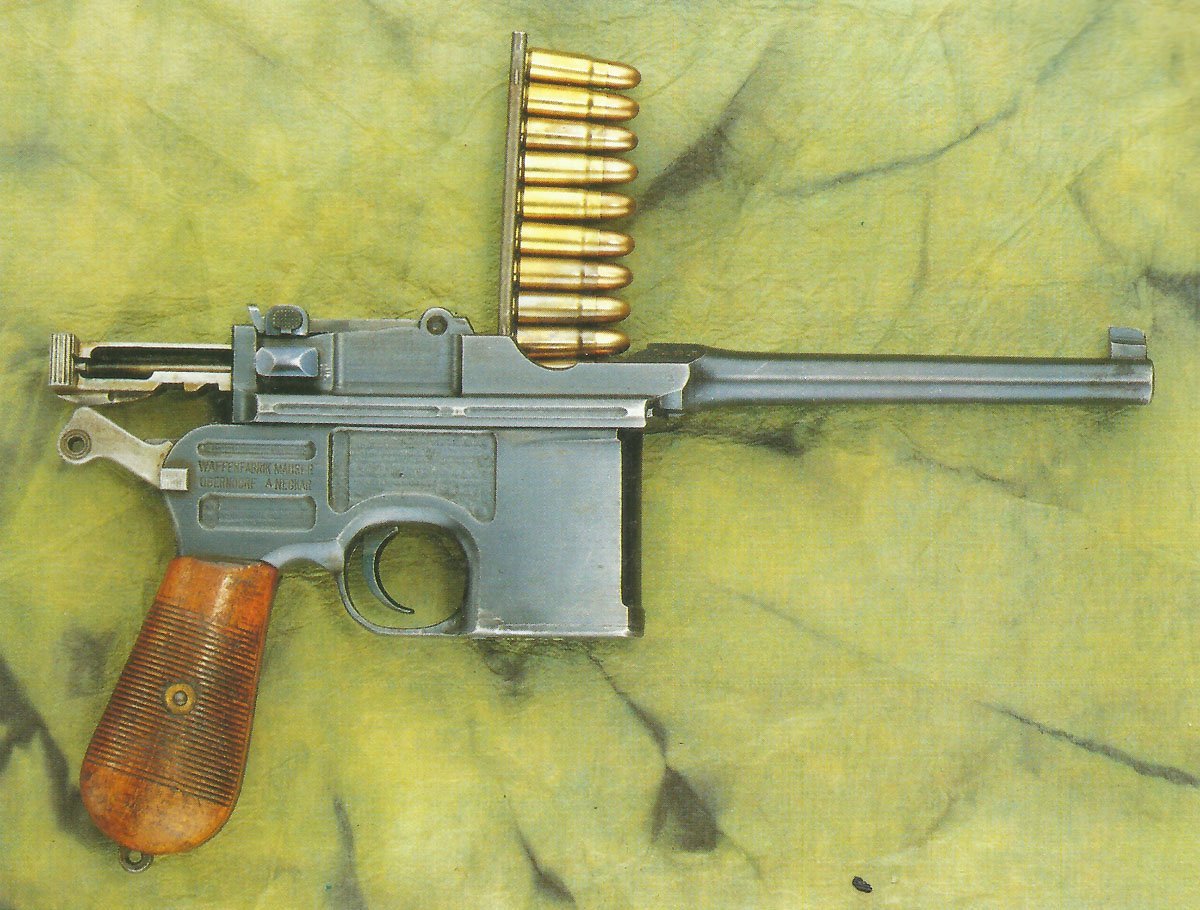
German Automatic pistol Mauser C/96
Mauser C/96
Type: Automatic pistol.

The Mauser C/96 is a famous semi-automatic pistol that was produced by the German arms manufacturer Mauser from 1896 to about 1937. It is often simply called the “C96” or referred to by its most famous nickname, the “Broomhandle Mauser”, due to its distinctive, rounded wooden grip.
Overview
Key Features

– Caliber: Most commonly 7.63×25mm Mauser, but also made in 9mm Parabellum and other calibers.
– Magazine: Internal, non-detachable magazine (usually 10 rounds) loaded from the top with stripper clips.
– Barrel Length: Typically 140mm (5.5 inches), but longer “Bolo” and carbine versions exist.
– Action: Short recoil, locked breech, semi-automatic.
– Sights: Rear tangent sight, adjustable for long distances (up to 1000 meters, though this is optimistic for a pistol).
– Stock: Could be fitted with a wooden holster that doubled as a shoulder stock, effectively turning the pistol into a short carbine.
– Distinctive Features: Broomhandle-shaped grip, integral magazine ahead of the trigger, long barrel, and unique silhouette.
Historical Significance
– First Successful Semi-Auto Pistol: One of the earliest and most successful semi-automatic pistols.
– Widespread Use: Used by German, Chinese, Russian, Spanish, and other military and police forces, as well as by civilians.
– Famous Users: Winston Churchill carried one during the Battle of Omdurman; it was also popular with Chinese warlords and Bolshevik revolutionaries.
– Iconic in Pop Culture: The C96 inspired the design of Han Solo’s blaster in the Star Wars films.
Variants
– “Red 9”: A 9mm version made for the German military in WWI, with a large “9” burned into the grip to avoid confusion with the 7.63mm version.
– “Bolo”: Short-barreled and smaller-gripped version, popular in post-WWI Russia and China.
– Carbine: Long-barreled version with a wooden shoulder stock.
– Chinese Copies: Many unlicensed copies and variants were produced in China, some with selective-fire capability.
Collectibility
Today, the Mauser C96 is a sought-after collector’s item due to its historical significance, unique design, and role in early semi-automatic pistol development.
History
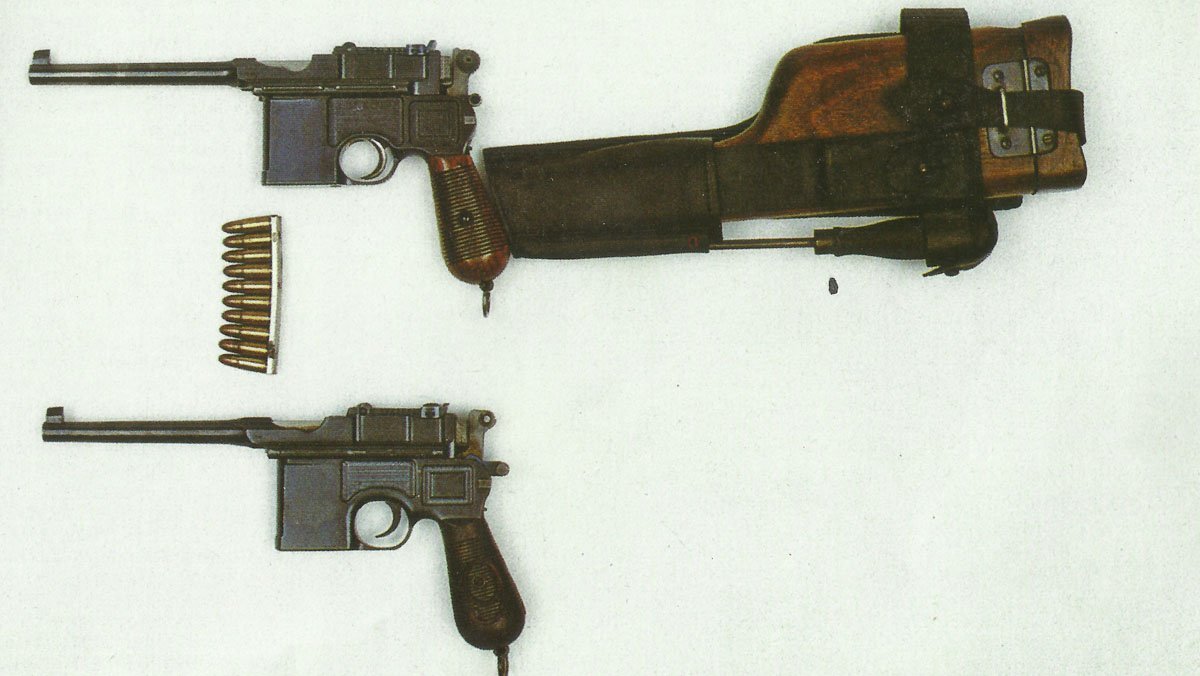
Designed as early as 1894 and with a cock intended attached to the rider’s saddle, the Mauser C/96 was already Winston Churchill’s preferred weapon during his time in the British Army. Afterwards copied again and again in different weapon factories around the globe, even in the 1980s a modern version was built as a machine pistol by the Chinese.
The history of the Mauser C/96 ‘Broomhandle’ pistol may have begun in the 1890s, but it is far from over. The C/96 was the world’s first real automatic self-loading pistol and over the decades it has produced many successors that are still in use.
The Mauser C/96 pistol was first manufactured in 1896 and immediately became a much sought-after weapon. The main attraction was its self-loading function, but many buyers were also attracted by the look of the gun. Simply carrying the weapon with you already sets the wearer apart from the others, but this was compensated by the disadvantage that it was not easy to maintain. It had a complicated mechanism and it took some time to understand. But the outsiders never noticed these hidden activities, and so they were impressed.
Everyone at the other end of the barrel of the pistol was equally impressed, albeit less to his delight. The 7.63mm cartridge fired from the C/96 was a high-speed projectile which, compared to other pistols of the time, caused considerable damage even over long distances.
Mauser promoted this by attaching aiming devices up to distances of c.1,100 yards (1,000 metres) to some models, but this was a little too optimistic.
In order to take full advantage of this characteristic of the large fire range, there were wooden holsters, which could also be doubled to shoulder pieces, in order to aim more accurately. Originally these accessories were only built for well-to-do customers, but it didn’t take long before they attracted the attention of the military. They adopted these ideas, but wanted the cleaning accessories, additional loading strips and other accessories mounted on the holster. Finally, the wooden holster was replaced by a leather one with all these extras.

When World War One broke out, the Mauser automatic pistol C/96 was widely used. Many were sold to officers and also to various other countries, since at that time the officers had to procure their own handguns themselves. Many were fascinated by the C/96 and also many British officers carried it. Even Winston Churchill wore a Mauser C/96 during his time behind the trenches of the First World War.
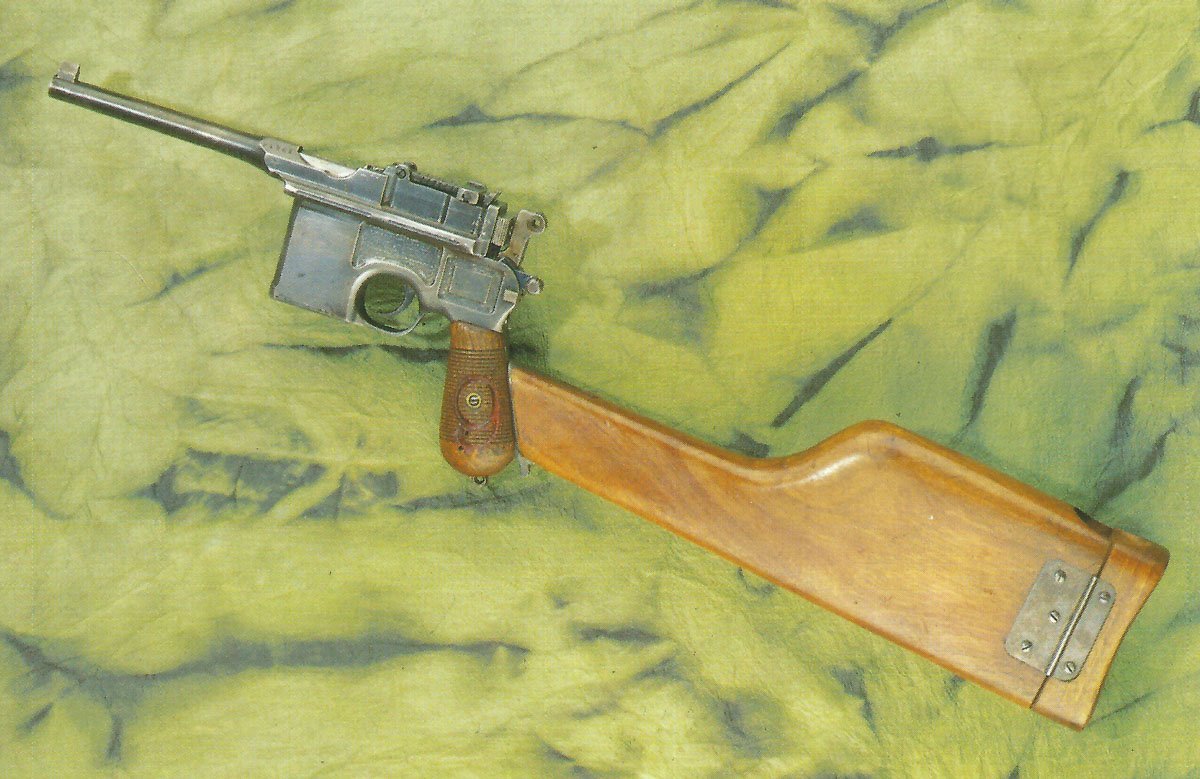
However, most C/96 were used by the German army during the war, where they were referred to as the ‘new 1912 fuse’. These were simplified variants compared to the previous models and had a standard barrel length of 5.5in (139.7 mm). Many were issued with the wooden holster.
It was this 1912 model that increasingly made the C/96 a special assassination weapon, triggered by the introduction of a powerful 9 mm cartridge by Mauser, known as ‘Mauser Export’. This used a bullet identical to the Parabellum cartridge, but with a greater muzzle velocity of 1.362ft (415 metres) per second. This made the combination of pistol and cartridge to an excellent long-range weapon, which could be relatively easily concealed and used over distances well beyond the usual ranges of handguns.
The ‘Mauser Export’ pistols were often used for covert operations and killing missions all over the world, especially in the Balkans, where the C/96 was the most preferred.
The importance of this special cartridge does not need to be overestimated, however, as the standard Mauser 7.63 mm bullet also offered more than average performance.
During the First World War, the various shapes of the Mauser C/96 in the trenches were not as successful as some other pistols. The complex mechanism of the weapon suffered under the conditions of the trench warfare, where it came into contact with dirt and mud. Therefore, the C/96 was mainly used by soldiers behind the front line, such as artillerymen.
The automatic pistol was also used with some success by the new German flying units. It was practically one of the first weapons ever used in air combat when German pilots tried to shoot at nearby Allied aircraft and their pilots with their otherwise unarmed aircraft.
The C/96 was probably better than most other firearms in these difficult conditions, forcing Allied pilots to respond with less suitable pistols and rifles. But this did not happen long before machine guns were used in the planes, and so the time of the pistols in aerial combat ended as fast as it had begun.
During the First World War, Mauser produced thousands of the C/96 – mainly the 1912 model – to meet the ever-increasing demands. The quality of many of these war-built specimens suffered, and a modification was made in 1916 to allow the pistol to fire 9 mm Parabellum ammunition. These pistols had a large ‘9’ burnt into the rear piston, which was colored red.
After the armistice, the Allied banned the Mauser company to supply weapons to the German army and so the company looked for new customers. Many commercial deals were made by assembling pistols from existing spare parts, but the biggest post-war customer was the new Soviet Union. Mauser produced the 7.62 mm model, known as the ‘Bolo’, which was supposedly derived from the ‘Bolshevik’.
This version had a 3.9in (99 mm) long barrel and a shortened magazine for 6 cartridges. The overall appearance was clean and much smoother than the earlier models. The ‘Bolos’ were used in large quantities by both sides during the Russian Civil War in the early 1920s and even more were bought in 1926.
In the late 1920s, Mauser lost customers to a number of overseas Mauser copy producers. The appeal of the C/96 was not limited to the war combatants of the First World War and a number of C/96s had been sold to Persia and China before the war broke out, where the model was welcomed.
So it did not take long until manufacturers from other countries made copies of the C/96 for this market. Especially in Spain direct copies of the weapon were built for sales to China and other Far Eastern countries.
Also in China itself the C/96 was built in all variants after. Some of them were complete copies, others just looked like that and used a different mechanism. In addition, there were still some exhibits, which were rather more dangerous for the shooter than his target.
These Chinese weapons were usually also marked with Chinese marks to indicate their origin and were built in thousands of pieces for the local market.
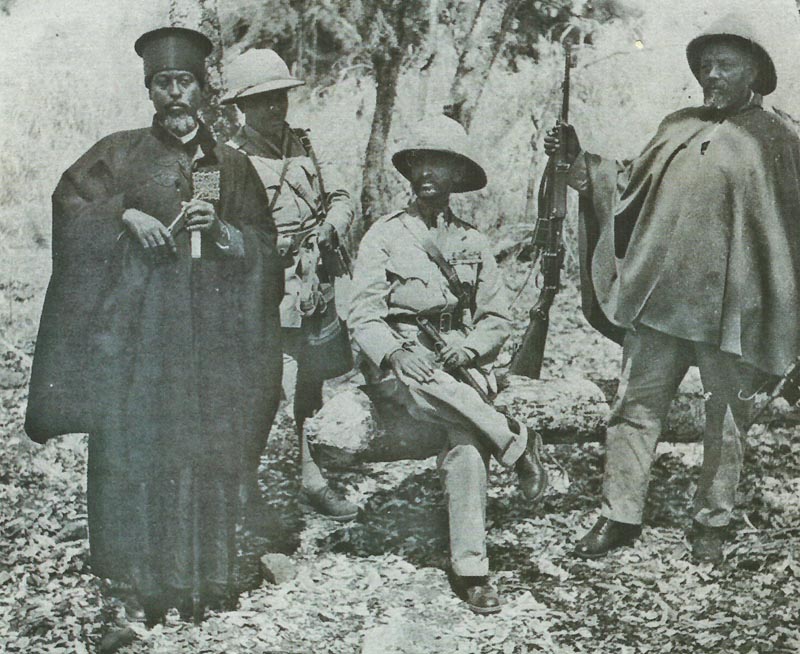
The Spanish and Chinese also introduced an innovation. By some slight changes in the mechanism of the trigger the C/96 could be changed into a kind of machine pistol, or more precisely into an automatic pistol, which could also shoot fully automatically.
The value of a weapon the size of the C/96 that could shoot fully automatically was doubtful, but the results could still be dramatic. Especially at short distances the 10-rounds magazine was quickly emptied and the recoil made the barrel pull upwards from its target just as quickly. This didn’t seem to be a problem for the Chinese, who were enthusiastic about this new Spanish and locally built version.
These weapons quickly became a special status symbol and the warlords often equipped their personal bodyguards with them. This ensured that the necessary respect was shown to these men everywhere.
The violent pulling up of the muzzle during firing was easily controlled by the Chinese by simply holding the weapon sideways to cover a wide arc with horizontal fire.
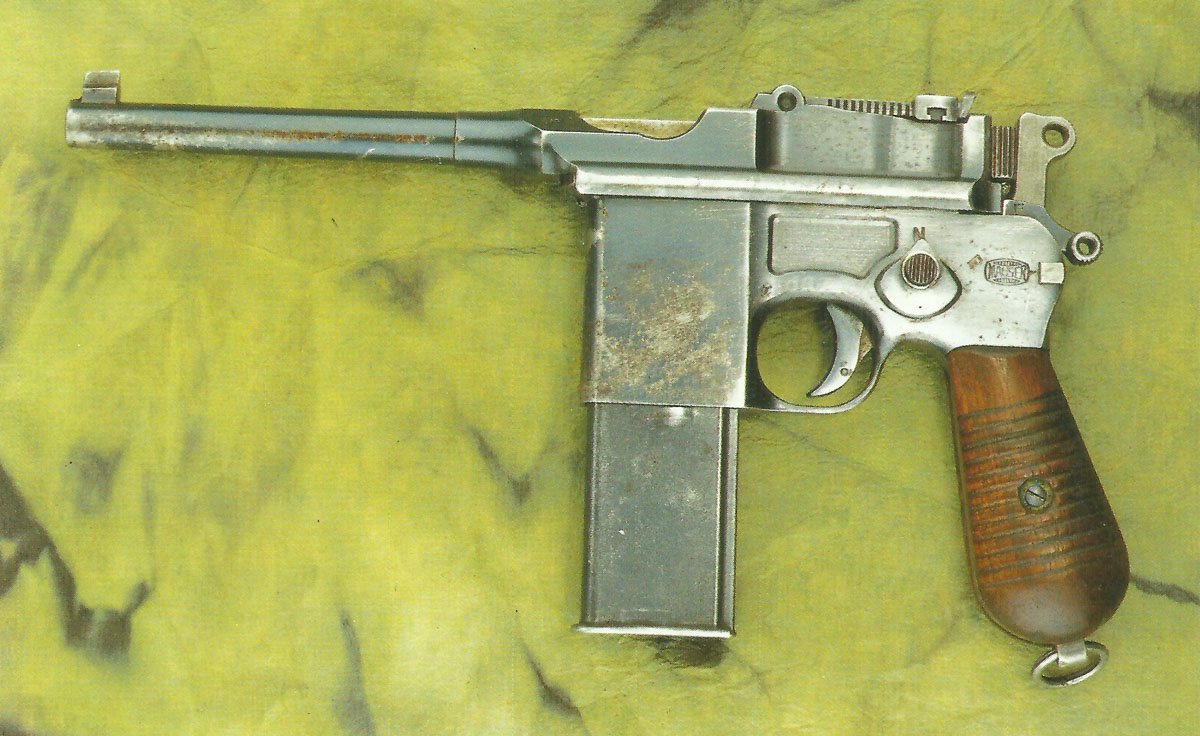
The Mauser company was of course soon alarmed by such activities in its market segment and began building its own model in 1930 to keep the situation under control.
The company changed the basic mechanism of the C/96 slightly to the Model 712, which became known as the ‘Schnellfeuer’ (‘rapid fire’). This was a more advanced weapon than many of the foreign-built models, with an extended magazine that could hold up to 20 cartridges. In addition, there was a much better quality of workmanship and most of the weapons were equipped with a device for attaching a shoulder piece.
This weapon was just as successful as many of the previous models, although it did not have much combat value. It only earned respect for the wearer and soon appeared as a terrible assassination weapon. King Alexander II of Yugoslavia was murdered by such a weapon in 1934.
The German military, on the other hand, was less impressed, but nevertheless some were built for the German Wehrmacht. Some went to the Luftwaffe, even more to the Waffen-SS and other organizations, such as the Hitler Youth. Also, the German Kriegsmarine (German Navy) received a series, which had been ordered by the Chinese, but were not delivered.
In German operations, the ‘Schnellfeuer’ was not widely used in combat, but often by the Waffen-SS in actions behind the front, mainly against resistance fighters and partisans. The special units of the division ‘Brandenburg’ also used them for their covert operations.
The C/96 and the ‘Schnellfeuer’ were taken out of production before the end of the Second World War. Both were too expensive for extensive production under war conditions and other weapons had a higher priority.
However, the history of the Mauser C/96 automatic pistol did not end here. In China the production of the various copies was continued and used in all campaigns until the communist victory in the civil war of 1948-49. And the C/96 is still carried there by individuals, who use it today rather as a ranking award than as a combat weapon.

Collectible Value of the Mauser C96
The Mauser C96 is one of the most famous collector’s pistols of all time.
Since Mauser Oberndorf introduced it to the market in 1896, it has carved out its own unique history. Its value on the collector’s market continues to reflect this to this day.
The value of a Mauser C96 varies greatly—condition, matching serial numbers, and variant make all the difference. The price difference between a simple everyday model and a rare version can easily run into several thousand euros.
Anyone looking to buy or sell a C96 should be familiar with the key factors that determine its value. These include condition, original parts, caliber, and model variant.
Such collector’s items appear at specialized dealers and on auction platforms. The price differences can sometimes be astonishing.
Current Price Ranges in the Collectors’ Market
Standard C96 models typically retail for between 800 and 1,800 EUR. Condition and completeness make all the difference.
Rare variants or particularly beautiful pieces quickly exceed the 2,000 EUR mark. Surprising price differences often arise at auctions and among dealer listings.
Typical Price Ranges for Standard Models
Basic C96 models without rare features usually cost between 800 and 1,400 EUR at German specialty retailers. Used but functional examples tend to fall on the lower end of the range.
Dealers such as Waffen Frank or the VDB marketplace regularly offer the C96 in 7.63 Mauser caliber for 1,200 to 1,400 EUR. A model with the same serial number and original bluing often fetches a higher price than a refurbished one.
Comparing Auction Prices and Retailer Offers
On platforms like eGun or international auctions, the price can sometimes be lower and sometimes higher than at specialty retailers. Bidding competition and the item description make a big difference.
Dealer prices offer more certainty regarding condition and legality. Auctions are a risk, but sometimes also an opportunity for a bargain—especially if the description isn’t perfect.
When High Bids Are Truly Meaningful
High individual bids at auctions do not always reflect the true market value. Two ambitious collectors can easily drive the price well above the norm.
Only when several comparable items fetch similar prices within a short period of time can one speak of a true market value.
Which Features Most Strongly Determine the Price
Three things are particularly important for the C96: condition of the bluing, matching serial numbers, and an original stock. Collectors are willing to pay significantly more for this combination.
Condition and Original Bluing
The bluing is the first thing that catches every collector’s eye. A deep black, original bluing without any re-bluing significantly increases the value.
Light signs of wear are acceptable, as long as the bluing has not been artificially refreshed. A C96 that has been re-blued loses noticeable value on the collector’s market.
Matching Numbers as a Key Value Factor
Matching numbers means: the frame, slide, barrel, and all numbered parts bear the same serial number. For collectors, this is proof of authenticity.
Such specimens regularly fetch 20 to 40 percent more than pieces with mixed serial numbers. For the Red 9, the premium can be even higher.
Accessories and Original Stock
The original wooden stock, which also serves as a case, is actually part of the set. If it has the same serial number and is in good condition, the value increases significantly.
If the stock is missing or does not fit, this noticeably lowers the price. A set consisting of the pistol, stock, and loading strip is simply more sought-after than the pistol alone.
Calibers and Models with Special Market Value
The caliber directly influences the value. Variants in 9mm Luger, especially the Red 9, command different prices than the classic 7.63 Mauser models.
7.63 Mauser as a Classic Collector’s Item
The original caliber of the C96 is 7.63 Mauser. This variant is the most commonly found.
Well-preserved examples in this caliber typically range between 1,000 and 1,800 EUR. There are many comparable pieces, making it easier for collectors to compare.
9mm Luger and the Price Impact of Military Versions
During World War I, C96 pistols were converted to 9mm Luger to simplify ammunition supply. These military versions are highly sought after today.
A 9mm Luger model with the same serial number that is in good condition and can be verified as having military origins easily fetches 2,000 EUR or more. Its military background makes it even more intriguing.
Red 9 and Rote 9 in a Market Comparison
The Rote 9 can be recognized by the red number “9” in the grip wood, which was intended to prevent confusion with the 7.63 mm caliber. Matching-numbered pieces with good grip wood and a clear red marking regularly fetch between 2,500 and over 3,500 EUR.
In collector forums, prices starting at 3,000 EUR are often discussed for such Red 9 pieces with a matching stock. The condition of the marking really matters here.
Early and Sought-After Variants
Early C96 models fascinate many collectors because they illustrate the pistol’s development. Mauser Oberndorf modified the design several times over the years.
Early pieces differ from later production models in several details. For some, that’s what makes them truly exciting.
Flatside and Other Early Production Variants
“Flatside” refers to early C96 variants in which the sides of the slide are still smooth. These features are found only on very early serial numbers.
Flatsides are among the most sought-after variants of all. Well-preserved examples regularly fetch 4,000 EUR or more at auctions—sometimes significantly more.
Mauser Oberndorf and Production Attribution
Production at Mauser Oberndorf can be identified by the stamp, proof marks, and serial number. Originals from Oberndorf are always in higher demand than copies.
Serial number tables help to precisely date the C96. A verified origin from Oberndorf increases the value compared to unknown or foreign production.
Weighing Rarity Against Condition
Sometimes you’re faced with the question: Would you rather have a rare piece in poor condition or a more common one in top condition? Both factors influence the price, but in different ways.
With very rare variants like Flatsides or Persian export models, collectors often turn a blind eye to the condition. For more common models, the condition is almost always the deciding factor.
Rare Models, Offshoots, and Price Differences
Within the C96 family, there are quite significant price differences between standard models, late series, and the special variants. Comparisons with designs like the Astra 900 are also of great interest to many collectors.
M1912, M1930, and Late Production Series
The 1912 model is seen quite often and can usually be found in good condition for 1,200 to 1,800 EUR. The 1930 model introduced detachable magazines—and is also highly sought after by collectors.
Later series sometimes seem less steeped in history than earlier ones, but with a complete set of accessories, they too command high prices. The M712 rapid-fire pistol is fully automatic, requires a BKA exemption, and ranks among the most expensive C96 variants of all.
Astra 900 as a Point of Comparison for Collectors
The Astra 900 comes from Spain; it is an unlicensed replica of the C96 and often sits right next to the Mauser in many collectors’ collections. Price-wise, it is usually cheaper than genuine original Mausers.
Anyone holding both models side by side will quickly notice: The Astra 900 serves as a reference for how the C96 design was further developed abroad.
Distinguishing Between Replicas and Conversions
Modern replicas or conversions, such as those from China or Spain, hold little appeal for collectors—the original from Mauser Oberndorf simply retains greater value. The price difference is enormous.
Conversions to other calibers or those with replaced parts significantly reduce the value. Buyers must clearly distinguish between originals and reproductions.
Authenticity, Restoration, and Value Deductions
Restorations are a double-edged sword for collectors. What shines isn’t necessarily worth more—in most cases, the unaltered piece simply holds greater value.
Re-bluing, Refurbishment, and Collector Acceptance
Re-bluing isn’t always recognizable at first glance. Collectors look for transitions, color nuances, and typical wear to expose it.
Even a clean re-bluing often reduces the value by 20 to 30 percent. Acceptance of restored pieces is quite low, and this is reflected in the price.
Mismatched Parts and Missing Accessories
Matching serial numbers are a must for collectors. If a part is missing or doesn’t fit, the value drops significantly—especially for grip panels, magazines, or firing pins.
If accessories such as loading strips, tools, or the stop pin are missing, it shows in the price. A complete set fetches significantly more than a bare pistol.
Import Marks, Repairs, and Condition
Many C96s ended up in the U.S. and bear import marks. These stamps lower the value in Europe because they are considered alterations to the original.
The condition of the barrel also matters. A sharp-edged, polished barrel interior indicates little use and commands a higher price. If the barrel is worn, the value is reduced.
Buying, Selling, and Realistic Valuation
In the collector’s market, prices often vary widely between dealers and private sellers. Anyone looking to buy or sell a C96 should weigh both options.
Dealer Price vs. Private Sale
Dealers add their margin but offer security, advice, and inspected merchandise in return. In specialty stores, C96s usually sell for between 1,200 and over 2,000 EUR—depending on condition.
Private sales are often cheaper but riskier in terms of condition and paperwork. Those with little experience are usually better off going through a gun dealer.
How Collectible Guns Are Listed and Compared
Collectible guns like the C96 appear on platforms such as eGun, VDB-Marktplatz, Gunfinder, or international auctions. It’s worth comparing prices to get a feel for the market.
Completed sales say more than asking prices. A high listing often stays up for weeks—that doesn’t necessarily reflect the true market value.
When a Professional Appraisal Makes Sense
If the price exceeds 2,000 EUR, you should have an experienced gunsmith or expert take a look at it. This protects you from overpriced or tampered-with items.
Especially with rare variants like the Flatside or Rote-9, it’s worth consulting a professional. The appraisal doesn’t cost much compared to the potential loss in value.
Frequently Asked Questions
How can you tell if a Mauser C96 is an original or a later reproduction?
Originals from Mauser Oberndorf bear special manufacturing stamps, proof marks, and matching serial numbers throughout. Spanish and Chinese copies stand out due to different stamps, workmanship, and materials. An experienced expert can spot these differences quite quickly.
Which features and variants (e.g., 9mm, rapid-fire, fully automatic) have the greatest impact on collector’s value?
Matching serial numbers, original bluing, the 9mm Luger caliber, and above all the red “9” marking drive up the value. The fully automatic M712 rapid-fire pistol is among the most expensive variants, but in Germany it is only available with a BKA exemption. Rare early models like the Flatside are often the ultimate in terms of price.
How can one correctly identify the serial numbers, and what do they reveal about the year of manufacture and model?
There are well-documented serial number lists for the C96. The number usually allows for precise determination of when and in which variant the weapon was manufactured. Sites like OldGuns.net even offer a direct input feature for dating.
How does a matching stock affect authenticity, rarity, and market price?
A matching, original wooden stock often increases the value of a C96 by several hundred euros. The case served as a stock for all models and is considered part of the original equipment. If it is missing or does not fit, the price drops significantly.
These three factors form the basis of any valuation. Matching serial numbers guarantee authenticity, the condition indicates how much of the original substance remains, and proof marks confirm that the firearm has been tested and often reveal its history of use. Anyone who finds a piece with all three characteristics in good condition can expect to get the best price.
How do alarm pistol models differ visually and legally from live-fire models, and how does this affect the market price?
In Germany, alarm pistol models bear the PTB certification mark. They have structural differences that make conversion to live ammunition impossible.
Visually, they sometimes bear a striking resemblance to the original C96 pistols. Nevertheless, differences in the barrel and slide become apparent upon closer inspection.
For collectors of original historical firearms, alarm guns have virtually no collectible value. They typically sell on the market at significantly lower prices.
Specifications Mauser C/96 Military Model
Specifications:
Mauser C/96 | Specification |
|---|---|
Type | automatic self-loading pistol |
Caliber | 7.63 mm or 9 mm |
Length | 12.125in (30.80cm) |
Weight | 2.69lb (1.22kg) |
Barrel | 5.51in (14cm) |
Feed System | 10-round detachable box magazine (Model 1932 also with 20-rounds) |
System of Operation | Recoil; Mauser rising block lock system |
Muzzle velocity | 1,420 ft per second (433 m/sec) |
Service statistics:
Mauser C/96 | Figures |
|---|---|
Manufactures | Mauser |
Production delivery | 1896 |
Final delivery | 1938 |
Production figure | c.270,000 (150,000 used by the German Army 1914-18); 95,000 Model 1932 (70,000 exported to China; 7,800 used by German troops) |
Price per unit | ? |
Mauser HSc
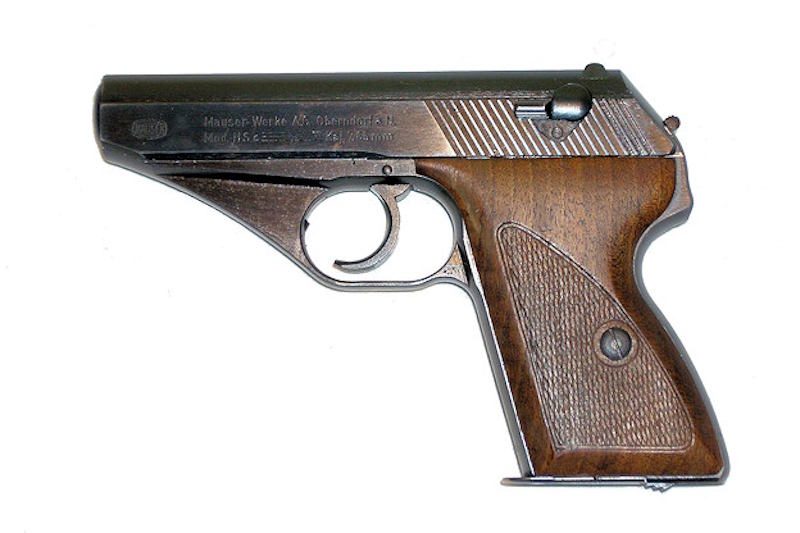
Introduction & Production:
– The Mauser HSc (the “c” stands for *pistol, small* in German: *Hahn Selbstspanner, c*) was introduced in 1940 by Mauser.
– It was designed as a compact, semi-automatic pistol for military, police, and civilian markets.
Design & Features:
– Caliber: Most commonly chambered in .32 ACP (7.65mm Browning), though some were made in .380 ACP (9mm Kurz).
– Operation: Blowback-operated with a double-action trigger system.
– Capacity: 8-round magazine (in .32 ACP).
– Build: Sleek, rounded design with excellent ergonomics for the era, and a distinctive curved trigger guard.
Historical Context:
– Used by the German Kriegsmarine (Navy), police, and later the Wehrmacht during WWII.
– After the war, production resumed in the 1960s and continued into the 1970s, with some models exported to the U.S. market.
– Known for its solid construction and elegant styling compared to many other wartime pistols.
Collectibility:
– Early WWII production pistols with Nazi acceptance marks are especially collectible.
– Postwar commercial versions are also valued for their craftsmanship.
References and literature
The Encyclopedia of Weapons of World War II (Chris Bishop)
The Encyclopedia of Infantry Weapons of World War II (Ian V.Hogg)
Illustriertes Lexikon der Waffen im 1. und 2. Weltkrieg (V. Dolinek, V. Francev, J. Sach)
The Illustrated Encyclopedia of Weapons of World War I (Chris Bishop)


Extremely thorough explanation, appreciate the effort put into this.
bdias,me gustaría encontrar información sobre la mauser c96 royal fabricada en Eibar por los hermanos Beistegui