
The German Orders of Battle from October 4, 1943, after the surrender and occupation of Italy.
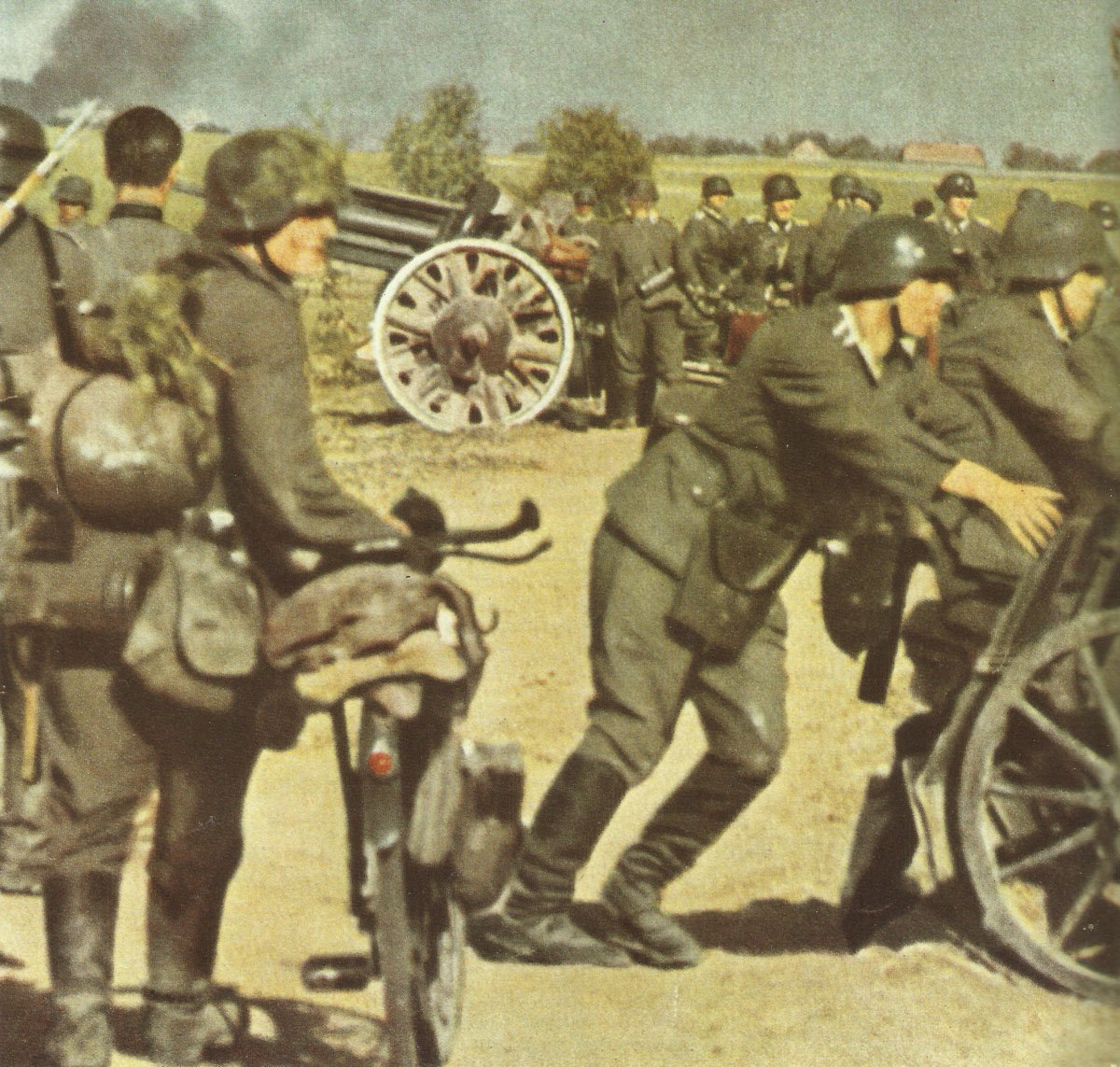
Orders of Battle from 4 October 1943
The German Orders of Battle and distribution of the divisions of the Wehrmacht and subordinated units of allies after the capitulation of Italy, 8 September 1943, and the following disarmament of the Italian troops and take over of their positions by German units.
The Orders of Battle includes also shattered divisions (marked as remnant) as well as divisions under preparation.
Fortress divisions are officially designated ‘not mobile’ divisions, designated for the defense of coastal sections in the west.
Luftwaffe field divisions were raised from surplus ground crews and anti-aircraft soldiers of the Air Force to reinforce the army, but they were of little combat value because it’s soldiers and officers had little experience in ground warfare.
Security divisions were used for the guarding and defense of bridges, railway lines and other important objects against partisans. Jaeger divisions were light and mobile units for difficult terrain and were especially active in the fight against partisans.
It is noteworthy that many divisions at the southern and central sector of the Eastern Front have fallen far below their organization strength since the Battle of Kursk (July 1943), because nearly all German reserves were needed for the disarmament of the Italian army and the take-over of the Italian occupation zones, and to fight against the Anglo-Americans in Southern Italy. During this period, the headquarters of the German Wehrmacht expected also a further invasion at the Balkans, mainly in Greece. A successful Allied landing there would have probably resulted in the surrender of also Romania, Hungary and Bulgaria and their change into the camp of the Western allies.
Schematic layout of the German Wehrmacht from October 4, 1943
Army Group A:
Army | Corps | Divisions |
|---|---|---|
located on the Crimea and Kuban bridgehead (Caucasus) | ||
17 Army (Reserves: 9 Romanian Cavalry Div) | Commander of the Crimea | 153 Training (bulk), 1 Slovak Infantry (bulk) divs |
Romanian Mountain Corps | 1 Romanian Mountain, 2 Romanian Mountain divs" | |
V Corps | 3 Romanian Mountain, 6 Romanian Cavalry, 10 Romanian Infantry divs | |
XXXXIX Mountain Corps | 4 Mountain, 19 Romanian Infantry, 98 Infantry, 370 Infantry, 50 Infantry, 97 Jaeger divs | |
6 Army (Reserves: 73 Infantry Div) | XXXXIV Corps | 4 Romanian Mountain, 24 Romanian Infantry, 336 Infantry, 111 Infantry, 14 Luftwaffen Field (elements) divs, Cavalry Regiment South |
XXIX Corps | 79 Infantry, 17 Infantry, 15 Luftwaffen Field (elements), 5 Luftwaffen Field (elements), 9 Infantry, 13 Panzer (bulk) divs | |
IV Corps | 3 Mountain, 302 Infantry (elements), 17 Panzer, 5 Luftwaffen Field (elements), 101 Jaeger, 258 Infantry (remains), 302 Infantry (bulk) divs |
Army Group South:
Army | Corps | Divisions |
|---|---|---|
located in south Russia | Reserves: | 24 Romanian Infantry div |
1 Panzer Army | XVII Corps (subordinated to XXXX. Panzer Corps) | 335 Infantry, 333 Infantry, 123 Infantry, 125 Infantry, 304 Infantry, 294 Infantry (remains) divs |
XXXX Panzer Corps | 16 Panzer Grenadier div | |
XXX Corps | 257 Infantry, 387 Infantry, 46 Infantry, 15 Infantry divs | |
LII Corps (subordinated to LVII Panzer Corps) | 262 Infantry, 355 Infantry, 38 Infantry (remains), 328 Infantry, 161 Infantry (remains), 293 Infantry (remains) divs" | |
LVII Panzer Corps | 306 Infantry (remains), Grossdeutschland, 23 Panzer, SS Cavalry, 9 Panzer (remains) divs" | |
8 Army | XI Corps | 106 Infantry (remains), 39 Infantry (remains), SS Panzer Totenkopf, 282 Infantry (remains), 198 Infantry (remains) divs |
XXXXVII Panzer Corps | 320 Infantry (remains), 389 Infantry, 6 Panzer (remains), 167 Infantry (remains) divs" | |
III Panzer Corps | 11 Panzer (remains), 57 Infantry, SS Panzer Wiking, 3 Panzer (remains), 168 Panzer (remains), 223 Infantry divs" | |
XXXXVIII Panzer Corps | 112 Infantry (remains), 255 Infantry (remains), 20 Panzer Grenadier, 372 Infantry (bulk), 19 Panzer divs | |
XXIV Panzer Corps | 10 Panzer Grenadier, SS Pz Das Reich, 34 Infantry divs | |
4 Panzer Army (Reserves: 332 Infantry (remains), 7 Panzer divs) | VII Corps | 88 Infantry, 75 Infantry, 68 Infantry, 213 Security divs |
XIII Corps | 82 Infantry, 32 Infantry (remains), 208 Infantry (remains), 340 Infantry (remains), 82 Infantry (elements) divs | |
LIX Corps | 183 Infantry, 217 Infantry, 339 Infantry, 291 Infantry, 8 Panzer (remains), 2 Panzer (remains) divs | |
XXXXII Corps | 454 Security div | |
Commander of the Army Group South | 444 Security div |
Army Group Center:
Army | Corps | Divisions |
|---|---|---|
located in Byelorussia | Reserves: | 390 Training, 391 Training divs |
2 Army (Reserves: 72 Infantry (elements) div) | LVI Panzer Corps | 2 Panzer (remains), 12 Panzer (remains), 5 Panzer, 86 Infantry (remains), 4 Panzer (remains) divs |
XXXXVI Panzer Corps | 251 Infantry (remains), 7 Infantry (remains), 221 Security, 137 Infantry (remains) divs | |
XX Corps | 102 Infantry (remains), 31 Infantry (remains), 6 Infantry (remains)" | |
XXXV Corps | 45 Infantry, 299 Infantry, 292 Infantry, 216 Infantry divs | |
9 Army (Reserves: 707 Infantry, 129 Infantry (bulk) div) | XXIII Corps | 253 Infantry, 134 Infantry, 20 Panzer (remains), 296 Infantry, 383 Infantry divs |
LV Corps | 110 Infantry, 211 Infantry, 321 Infantry (bulk), 268 Infantry (remains), 36 Infantry (remains) divs" | |
XXXXI Panzer Corps | 267 Infantry, 260 Infantry, 131 Infantry divs | |
4 Army (Reserves: 18 Panzer (remains), one cavalry regiment) | XII Corps | 56 Infantry (remains), 26 Infantry, 262 Infantry (remains) divs |
IX Corps | 35 Infantry, 330 Infantry (remains), 78 Infantry, 342 Infantry, 252 Infantry divs | |
XXXIX Panzer Corps | 95 Infantry, 337 Infantry, 25 Panzer Grenadier, 1 SS Brigade | |
XXVII Corps | 18 Panzer Grenadier, 197 Infantry, 52 Infantry (remains), 113 Infantry (remains) divs | |
3 Panzer Army | VI Corps | 256 Infantry, 246 Infantry (remains), 206 Infantry, 14 Infantry, 87 Infantry divs |
II Luftwaffen Field Corps | 4 Luftwaffen Field, 6 Luftwaffen Field, 3 Luftwaffen Field, 2 Luftwaffen Field divs | |
IX Corps | 342 Infantry, 252 Infantry, 35 Infantry divs | |
XXXIX Panzer Corps | 337 Infantry, 95 Infantry, 129 Infantry divs | |
XXVII Corps | 246 Infantry, 197 Infantry, 256 Infantry, 52 Infantry divs | |
Commander of the Army Group Center | Hungarian VIII Army Corps | 1 Hungarian Infantry, 5 Hungarian Infantry, 9 Hungarian Infantry, 12 Hungarian Infantry, 23 Hungarian Infantry, 18 Hungarian Infantry divs" |
Commander of the Army Group Center | 286 Security, 201 Security (bulk), 203 Security, 2 Slovak Infantry divs |
Army Group North:
Army | Corps | Divisions |
|---|---|---|
in north Russia | Reserves: | 388 Training div |
16 Army (Reserves: 58 Infantry div) | XXXXIII Corps | 263 Infantry, 83 Infantry, 201 Security (elements), 205 Infantry divs |
II Corps | 331 Infantry, 12 Infantry, 218 Infantry, 93 Infantry divs | |
VIII Corps | 21 Luftwaffen Field, 32 Infantry, 5 Jaeger, 207 Security (elements) divs | |
XXXVIII Corps | 8 Jaeger, 30 Infantry, 122 Infantry, 329 Infantry divs | |
18 Army (Reserves: 28 Jaeger div) | XXVIII Corps | 96 Infantry, 132 Infantry, 81 Infantry, 12 Luftwaffen Field, 1 Infantry, 121 Infantry divs |
XXVI Corps | 212 Infantry, 5 Mountain, 254 Infantry, 269 Infantry, 290 Infantry, 61 Infantry, 227 Infantry, 215 Infantry | |
LIV Corps | 225 Infantry, 24 Infantry, SS Police, 11 Infantry divs | |
L Corps | 250 (Spanish) Infantry, 170 Infantry, 126 Infantry divs | |
III Luftwaffen Field Corps | 9 Luftwaffen Field, 10 Luftwaffen Field | |
Commander of the Army Group North | 207 Security (bulk), 281 Security, 285 Security divs |
Subordinated to OKW (Headquarter of the Wehrmacht):
Army | Corps | Divisions |
|---|---|---|
located in Norway, Lapland and Finland | ||
20 Mountain Army | XVIII Mountain Corps | SS Mountain North, 7 Mountain divs |
XXXVI Mountain Corps | 169 Infantry, 163 Infantry divs | |
XIX Mountain Corps | 2 Mountain, 6 Mountain, 210 Infantry divs + 4 inf regiments | |
AOK (Army Headquarter) Norway (Reserves: 196 Infantry, 214 Infantry, 280 Infantry, Panzer Regiment Norway) | LXXI Corps | 230 Infantry, 270 Infantry, 199 Infantry divs |
XXXIII Corps | 14 Luftwaffen Field, 702 Infantry, 295 Infantry (in preparation) divs | |
LXX Corps | 269 Infantry, 274 Fortress, 710 Infantry divs |
Army Group D, Commander of the West:
Army | Corps | Divisions |
|---|---|---|
in France, Belgium and Netherlands | Reserves: | 325 Security, 148 Reserve, 189 Reserve, 159 Reserve, 157 Reserve, 165 Reserve, 155 Reserve Panzer, 179 Reserve Panzer divs, 2 bycicle regiments - in preparation: 25 Panzer, 182 Reserve, 9 SS Panzer Hohenstaufen, 10 SS Panzer Karl der Grosse, 12 SS Panzer Hitlerjugend, 13 Croatian SS Mountain, 14 Panzer, 21 Panzer, 244 Fortress, 245 Fortress divs |
Army Commander Netherlands (Reserves: 376 Infantry div) | LXXXVIII Corps | 347 Fortress, 16 Luftwaffen Fortress, 719 Fortress divs |
15 Army (at Pas de Calais; Reserves: 384 Infantry div) | LXXXIX Corps | 19 Luftwaffen Fortress, 712 Fortress, 171 Reserve, 264 Fortress (in preparation) divs |
LXXXII Corps | 18 Luftwaffen Fortress, 156 Reserve, 191 Reserve divs" | |
LXXXI Corps | 348 Fortress, 17 Luftwaffen Fortress, 711 Fortress divs | |
7 Army (in Normandy and Brittany; Reserves: 371 Infantry div) | LXXXIV Corps | 716 Fortress, 709 Fortress, 319 Fortress divs |
LXXXVII Corps | 346 Fortress, 266 Fortress divs | |
XXV Corps | 343 Fortress, 265 Fortress, 243 Fortress divs | |
1 Army (in southwest France; Reserves: 374 Infantry (in preparation) div) | LXXX Corps | 158 Reserve, 708 Fortress divs |
LXXXVI Corps | 344 Fortress div | |
19 Army (in Southern France; Reserves: 242 Fortress div) | IV Luftwaffen Field Corps | 326 Fortress, 388 Fortress div |
Group General Faulenbach | 356 Infantry div, 2 security inf regiments | |
Group General Kniess | 715 Infantry, Panzer Grenadier Feldherrnhalle (in preparation) div |
Army Group B:
Army | Corps | Divisions |
|---|---|---|
in north Italy | Reserves: | Brigade Reichsfuehrer SS |
LXXXVII Corps | 76 Infantry, 94 Infantry divs | |
II SS Panzer Corps | SS Panzer Leibstandarte, 162 (Turkmen) Infantry, 71 Infantry divs | |
LI Mountain Corps | 65 Infantry, 305 Infantry, 24 Panzer, 90 Panzer Grenadier divs |
Supreme Commander South:
Army | Corps | Divisions |
|---|---|---|
in Southern Italy | Reserves: | 3 Panzer Grenadier, 2 Airborne divs |
10 Army (Reserves: 15 Panzer (bulk) div) | XIV Panzer Corps | 15 Panzer Grenadier (elements), Panzer Hermann Goering divs |
LXXVI Panzer Corps | 16 Panzer, 29 Panzer Grenadier, 26 Panzer, 1 Airborne divs |
Army Group F, Commander South East:
Army | Corps | Divisions |
|---|---|---|
in the northern Balkans | Reserves: | 22 Bulgarian Infantry, 24 Bulgarian Infantry, 25 Bulgarian Infantry, 27 Bulgarian Infantry divs |
2 Panzer Army (Reserves: elements Brandenburg div) | III SS Panzer Corps | 11 SS Panzer Grenadier Nordland (in preparation), SS Police Regiment 14 |
XV Mountain Corps | 373 (Croatian) Infantry, 369 (Croatian) Infantry, 114 Jaeger, SS Mountain Prinz Eugen, 1 motorised Grenadier regiment | |
XXI Mountain Corps | 118 Jaeger, 297 Infantry (in preparation), 100 Jaeger, 181 Infantry div | |
LXIX Reserve Corps | 173 Reserve, 187 Reserve, 1 Russian Cossack Division |
Army Group E (subordinated to Army Group F):
Army | Corps | Divisions |
|---|---|---|
in Greece and the Aegean islands | Reserves: | Assault div Rhodos (in preparation), 11 Luftwaffen Field div, SS Police Regiment 18, bulk Brandenburg div, two motorised SS Police regiments |
XXII Mountain Corps | 1 Mountain, 104 Jaeger div | |
LXVIII Corps | 1 Panzer, 117 Jaeger div" | |
Commander of Salonika | 7 Bulgarian Infantry div | |
Commander of the fortress Crete | 22 Infantry div, Fortress brigade Crete |
Reserve Army and Commander of the army armament:
Army | Corps | Divisions |
|---|---|---|
Commander of the German troops in Denmark | 416 Infantry, 233 Reserve Panzer, 20 Luftwaffen Field (in preparation) divs | |
154 Reserve, 174 Reserve Infantry divs | ||
divisions under preparation (units total): | 7 infantry, 5 Panzer Grenadier, 2 Panzer, 1 SS mountain divs |
Overview of fully established and operational divisions of the Wehrmacht, Waffen-SS, Luftwaffe, Reserve Army and allied units:
| Pz | PzGr | Inf | Jag | Mt | Sec | Res | Lw | Ax | |
|---|---|---|---|---|---|---|---|---|---|
| HrGr A | 2 | - | 11 | 2 | 2 | 1/3 | 1 | 2 | 10 |
| HrGr South | 8 | 7 | 43,5 | - | - | 3 | - | - | - |
| HrGr Center | 6 | 2,5 | 42 | - | - | 5 | 2 | 4 | 7 |
| HrGr North | - | - | 33 | 3 | 1 | 3 | 1 | 6 | 1 |
| Norway Finnl. | 0,5 | - | 11 2/3 | - | 4 1/3 | - | - | 1 | - |
| OB West | 1 | 1 | 23 | - | - | 1 | 12 | 4 | - |
| OB South East | 1 | - | 3,8 | 5 | 2 | - | 2 | 1 | 8 |
| OB South | 3 | 5,5 | 6 | - | - | - | - | 3 | 1 |
| Denmark | - | - | 1 | - | - | - | 1 | 1 | - |
| Reserve Army | - | - | - | - | - | - | 33 | - | - |
| Total | 29,5 | 16 | 175 | 10 | 9 1/3 | 12 1/3 | 52 | 22 | 27 |
Sum 353 divisions (326 without allies, 274 without reserve divisions)
Pz = Panzer (tank); PzGr = Panzer-Grenadier (motorized infantry); Inf = infantry; Jag = Jaeger (light infantry); Mt = Gebirgsjäger (Mountain troops); Sec = Security; Res = Training, Reserves or Replacement divisions; Lw = Luftwaffe-Feld- and Airborne divisions; Ax = allied Axis units under operational control.
See also: Germany Army Unit Organization 1942-45.
The Italian surrender
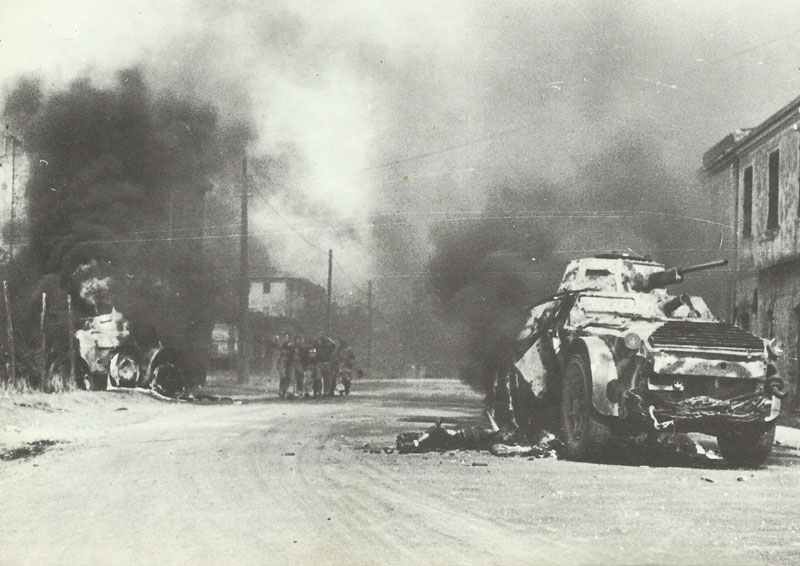
In September 1943, Italy surrendered to the Allied forces. The most important events leading up to the surrender were:
10 July 1943: The Allies launch Operation Husky, the invasion of Sicily, in order to gain a foothold in Europe and throw Italy out of the war.
25 July 1943: Following the successful Allied invasion of Sicily and the bombing of Rome, the Grand Council of Fascism passed a vote of no confidence in Benito Mussolini. King Victor Emmanuel III dismissed and arrested Mussolini and appointed Pietro Badoglio as the new Prime Minister.
3 September 1943: The new Italian government secretly signs the Armistice of Cassibile with the Allies, agreeing to cease hostilities.
8 September 1943: Eisenhower unilaterally announces the armistice. German forces in Italy, who had anticipated this move, quickly disarm and intern the Italian forces. They also occupied key positions in Italy to stop the Allies from advancing.
9 September 1943: The Italian royal family and the Badoglio government fled Rome and eventually established a new government in the southern city of Brindisi, which was under Allied control.
Italy’s surrender did not end the fighting in the country. The German army continued to fight the Allies in Italy, while Mussolini, who had been rescued by the Germans in Operation Oak, established the Italian Social Republic (Repubblica Sociale Italiana) in northern Italy. This led to a civil war between Mussolini’s fascist supporters and the Italian resistance. Fighting in Italy continued until the end of the war in Europe in May 1945.
Battle of Salerno
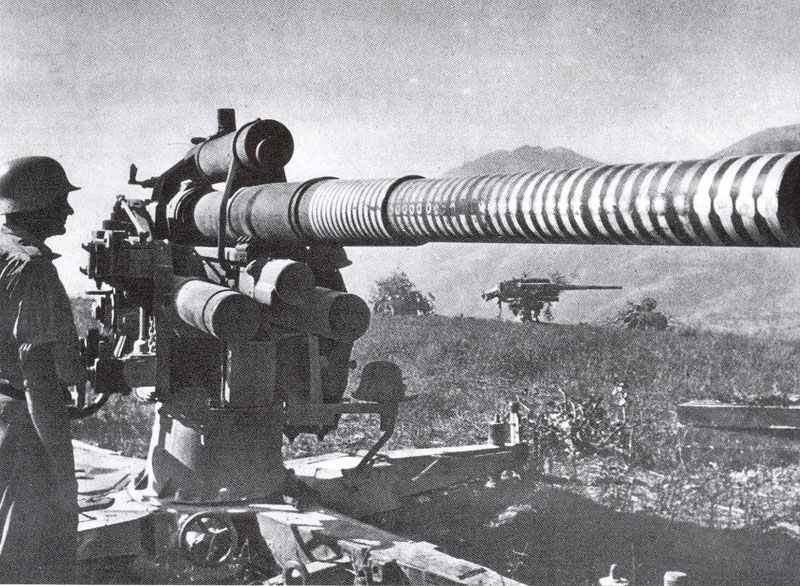
The Battle of Salerno (also known as Operation Avalanche) was a major Allied amphibious invasion during World War II, fought from 9 to 16 September 1943 near the city of Salerno, on Italy’s western coast. It marked the beginning of the Allied mainland campaign in Italy.
Background
After the successful Allied invasion of Sicily (Operation Husky) in July–August 1943, Italy’s Fascist government collapsed. On 8 September 1943, Italy publicly announced an armistice with the Allies. Despite this, German forces were prepared to resist and swiftly moved to occupy Italy, turning former Italian allies into enemies overnight.
The Allies aimed to land at Salerno to secure a port, establish a foothold on the Italian mainland, and advance toward Naples, a critical logistical hub.
Opposing Forces
– Allies:
– Mainly the U.S. Fifth Army, commanded by Lieutenant General Mark W. Clark
– Included American, British, and Commonwealth units
– Supported by naval gunfire and air power
– Axis:
– German 10th Army, commanded by General Heinrich von Vietinghoff
– Experienced and well-prepared defensive forces
The Landings (9 September 1943)
Allied troops landed along a broad stretch of coastline south of Salerno. Unlike earlier amphibious assaults, there was no preliminary naval bombardment, in an attempt to achieve surprise. This decision proved costly, as German defenders were alert and well-positioned.
The Allies encountered fierce resistance almost immediately. German artillery, tanks, and infantry launched coordinated counterattacks that threatened to push the invaders back into the sea.
Crisis and Turning Point
Between 12 and 14 September, the situation became critical. German forces launched powerful counteroffensives aimed at splitting the beachhead. At several points, Allied lines were dangerously close to collapse.
The invasion was saved by:
– Intense naval gunfire, firing directly into German positions
– Massive Allied air support
– The arrival of reinforcements, including U.S. airborne units
These measures halted the German advance and stabilized the beachhead.
German Withdrawal
By 16 September 1943, German commanders concluded that holding the Salerno area was no longer sustainable, especially as Allied forces advancing from the south linked up with the beachhead. German units withdrew northward in good order, establishing new defensive lines.
Aftermath and Significance
– The Allies captured Naples on 1 October 1943, securing a vital port.
– The battle opened the long and difficult Italian Campaign, characterized by mountainous terrain and strong German defensive positions.
– Although successful, the battle exposed weaknesses in Allied planning and command coordination.
Casualties
– Allied casualties: approximately 12,500 killed, wounded, or missing
– German casualties: estimated 3,500–4,000
Historical Importance
The Battle of Salerno demonstrated both the risks of amphibious warfare and the effectiveness of combined arms—naval, air, and ground forces working together. While it did not lead to a rapid collapse of German defenses in Italy, it forced Germany to commit substantial resources to a secondary front, aiding the broader Allied war effort in Europe.
References and literature
Kriegstagebuch des Oberkommandos der Wehrmacht, Band 1-8 (Percy E. Schramm)
Der Grosse Atlas zum II. Weltkrieg (Peter Young)
World War II – A Statistical Survey (John Ellis)