
German long-range submarine class Type IX of the Second World War.
History, development, service, specifications, pictures and 3D model.
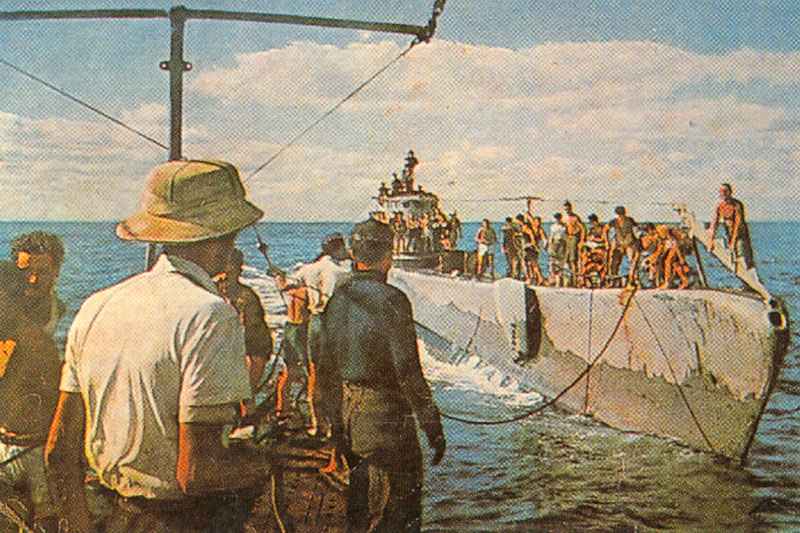
German long-range Type IX U-boat class
Type IX U-boat class (180 boats).
Type: Submarine, German U boats.

German Type IX U-boats were a class of large ocean-going submarines used by Nazi Germany’s Kriegsmarine during World War II.
Overview
Purpose: Designed for long-range operations and extended patrols, particularly in the Atlantic Ocean.
Development: Introduced in 1938 as an improvement over the Type VII submarine.
Variants: Several sub-types were produced, including IXA, IXB, IXC, and IXD.
Size: Larger than the Type VII, with a length of about 76.5 meters (251 feet) for most variants.
Crew: Typically carried a crew of 48-56 men.
Armament: Usually equipped with six torpedo tubes (four bow, two stern) and carried up to 22 torpedoes.
Deck gun: Most had a 10.5 cm deck gun for surface engagements.
Range: Could travel up to 11,000 nautical miles (20,000 km) without refueling, depending on the variant.
Speed: Surface speed of about 18.2 knots (33.7 km/h) and submerged speed of 7.3 knots (13.5 km/h).
Notable operations: Participated in the Battle of the Atlantic and conducted long-range missions to the Indian Ocean and Caribbean Sea.
Production: About 194 Type IX U-boats were built during the war.
Post-war: Some captured Type IX U-boats were used by other navies after the war, including the French and U.S. navies for testing and training purposes.

The Type IX U-boats played a significant role in Germany’s submarine warfare strategy during World War II, particularly in long-distance operations against Allied shipping.
History
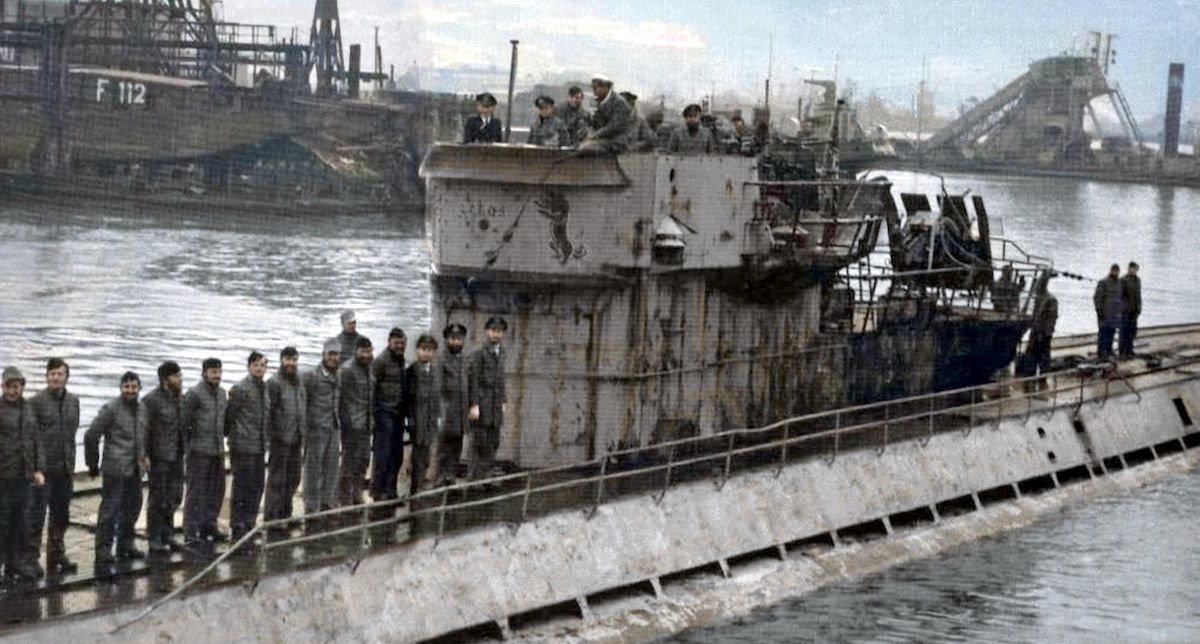
The big sister of the German U-boat’s Type VII was the Type IX U-boat class which had a greater range and better habitability. It was designed for operations in distant waters and possessed good sea keeping qualities. The first boat, U37, was commissioned in August 1938 only three months after being launched.
The Type IX B built shortly afterward carried an extra 11 tons of fuel. The Types IX C and IX C-40, which differed only slightly from each other, again increased the fuel capacity and range of the boats. Contracts for some of these boats were cancelled in 1944 in order to concentrate production on the new Type XXI.
U511 was handed over to Japan in 1943 and became the RO500; U1224 similarly became RO501 in 1944, but was sunk north-west of the Cape Verde Islands by a US destroyer while on passage to Japan.
As the Allied blockade on Germany tightened, there arose a requirement for a submarine to carry small cargoes of vital materials from the Far East to Germany. The Type IX C design was therefore modified by being lengthened by 7.6 m (25 ft) and given a cargo capacity of 252 tons. The Type IX D-41 which resulted sacrificed all its own torpedo armament and some of its battery capacity to achieve this, while a later version, the Type IX D-42, reverted to having its own torpedo armament. This last series of boats may be regarded as the final series of the conventional submarine to join the German navy. Apart from its ability to carry vital cargo from the Far East it also had the greatest range of any German submarine of over 31,500 nautical miles.
U195 was transferred to Japan as I506, while U181 and U862 became the I501 and the I502.
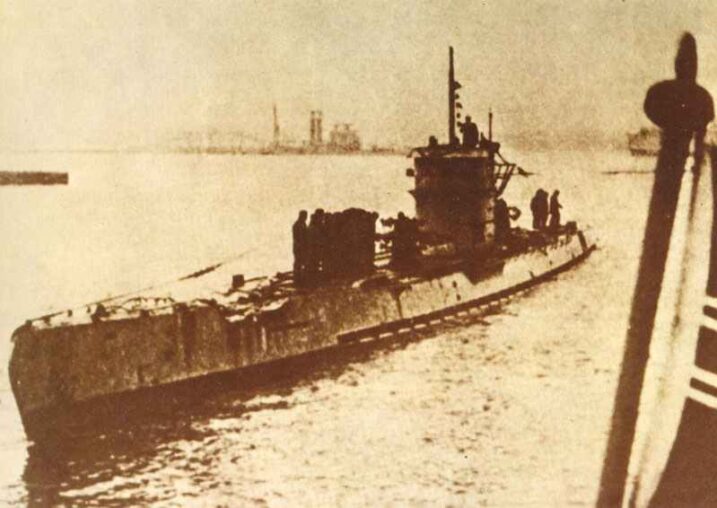
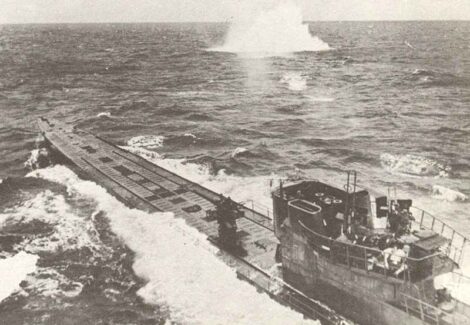
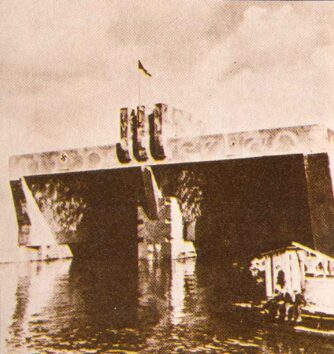
A few Type X B submarines were built as large ocean-going mine layers, the Type X A never having left the drawing board. The mines were stowed in six internal mine chutes aft of the forward torpedo tubes, three mines in each chute, and two mines in each of 24 external chutes arranged either side of the beat amidships. Torpedo reloads were stowed both internally and externally. The boats had a range in excess of 14,000 nautical miles, and they were later increasingly used for cargo-carrying missions. U219 was in Penang at the time of the German surrender and was captured by the Japanese, who renumbered her I505.
The Type XIV were tanker U-Boats derived from the Type VII C. They were used to supplying fuel to ether submarines to increase their time on patrol, and for this purpose they carried an additional 203 tons of fuel. They had no torpedo tubes of their own, though they carried four torpedoes for transfer to other boats.
Type XB, The Giants of the Deep
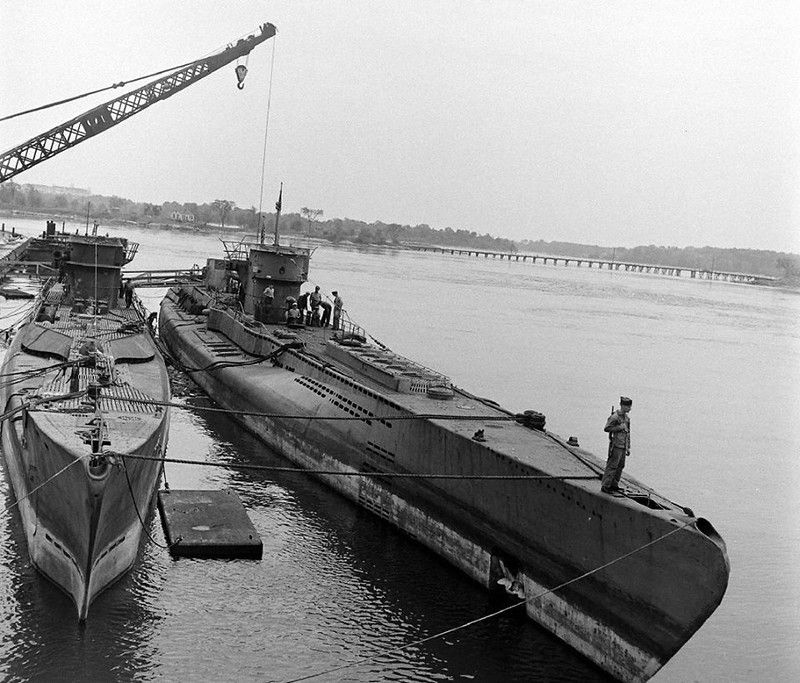
The Type XB was a unique and formidable class of German submarine used during World War II. Unlike the more famous Type VII or Type IX boats designed primarily for torpedo attacks, the Type XB was a specialized minelayer and, later in the war, a heavy-duty cargo transport.
When we think of U-boats, we usually imagine sleek hunters stalking convoys in the Atlantic. However, the Type XB was a different breed entirely. As the largest U-boats ever to see combat, these massive vessels played a critical role in the German naval strategy, shifting from offensive minelayers to vital supply links between the Axis powers.
Design and Technical Specifications
The Type XB was designed specifically to replace the smaller Type XA. The goal was a boat that could carry a massive payload of mines over long distances.
* Displacement: 1,763 tons (surfaced) / 2,710 tons (submerged)
* Length: 89.8 meters (approx. 295 feet)
* Speed: 17 knots (surfaced) / 7 knots (submerged)
* Range: 18,450 nautical miles at 10 knots (making them true long-range vessels)
* Armament:
Mines: 66 SMA mines carried in 30 vertical shafts (6 in the bow, 24 in the side shafts).
Torpedoes: 2 stern tubes (they notably lacked bow torpedo tubes to make room for mine shafts).
Deck Guns: One 10.5 cm SK L/45 gun and various anti-aircraft configurations.
From Minelayers to Cargo Carriers
Only eight Type XB boats were ever built (U-116, U-117, U-118, U-119, U-219, U-220, U-233, and U-234).
Initially, they were used to plant minefields off the coasts of the United States, Great Britain, and North Africa. However, as the war progressed and the Allied anti-submarine warfare (ASW) capabilities improved, their large size made them easy targets.
Because of their immense internal volume, the surviving boats were eventually converted into transport submarines. They became essential for “Yanagi” missions—clandestine voyages between Germany and Japan to exchange technology, personnel, and raw materials.
The Famous Case of U-234
The most legendary Type XB is undoubtedly U-234. In May 1945, as Germany was surrendering, U-234 was en route to Japan with a high-priority cargo that sounds like a spy novel:
* Technical drawings for the Me 262 jet fighter.
* A disassembled Me 262 aircraft.
* High-ranking German experts and two Japanese naval officers.
* 560 kilograms of uranium oxide (intended for the Japanese nuclear program).
When the order to surrender came, the commander decided to head for the United States. The two Japanese officers on board committed suicide to avoid capture, and the boat eventually surrendered in Portsmouth, New Hampshire.
The Fate of the Class
The Type XB class suffered heavy losses. Of the eight boats built:
* Six were sunk in action** (mostly by Allied carrier-based aircraft).
* U-219 was seized by the Japanese in Batavia (Jakarta) after Germany’s surrender and renamed I-505.
* U-234 surrendered to the U.S. Navy.
Why the Type XB Matters Today
For naval historians and modelers, the Type XB represents the pinnacle of German underwater engineering in terms of sheer scale. It proved that the U-boat arm was not just a “one-trick pony” of torpedo warfare, but a versatile force capable of global logistics and specialized mine operations.
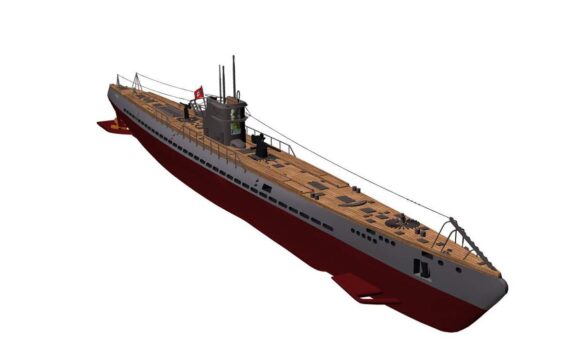
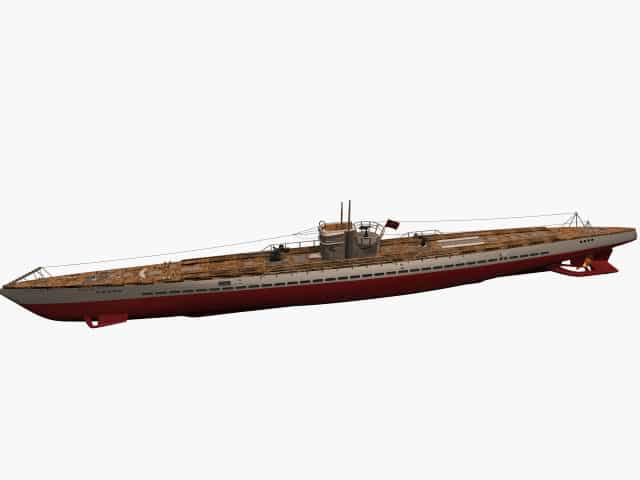
3D Model U-boat Type IX B
Specifications U-Boat Type IX B
Specifications:
Type IX B | specification |
|---|---|
Displacement | 1,051 tons surfaced; 1,178 tons submerged |
Length | 252.6 ft |
Bream | 22.6 ft |
Draught | 15.5 ft |
Engines | six diesel, one electric motor |
Power | 2,400 hp surfaced; 1,000 hp submerged |
Fuel | 166 tons |
Speed | 18.25 kts surfaced; 7.25 kts submerged |
Range | 12,000 nm at 10 kts; 7,555 nm at 12 kts (submerged: 20 hours at 4 kts= 80 nm) |
Diving depth | ? |
Crew | 57 |
Armament:
Type IX B | specification |
|---|---|
Main Armament | 4 bow 21-in torpedo tubes, 2 stern 21-in torped tube with 22 torpedoes |
Secondary Armament | 1 x 10,5 cm gun (later replaced by 2 x 20-mm AA) |
Anti-Aircraft | 1 x 37-mm AA; 2 x 20-mm AA (later 4) |
Service statistics:
Type IX U-boats | figures |
|---|---|
Total build | 140 boats |
U-Boats | U 64-65, 103-111, 122-124 |
Launching (all submarines from Type IX) | May 1933 (U37) - February 1944 (U1238) |
Complement | 1938-1944 |
Remaining | 142 sunk for different reasons, 10 sunk by their crews at surrender, 28 handed over |

References and literature
Fighting Ships of the World (Antony Preston)
Kriegsschiffe von 1900 bis heute – Technik und Einsatz (Buch und Zeit Verlagsgesellschaft)
The Illustrated Directory of Warships from 1860 to the present day (David Miller)
Kriegsschiffe 1939-45 (Heyne-Bildpaperback)
Flotten des 2. Weltkrieges (Antony Preston)
Die Schlacht im Atlantik (Andrew Kershaw)
U-Boote seit 1919 (Antony Preston, John Batchelor)
The Encyclopedia of Weapons of World War II (Chris Bishop)