
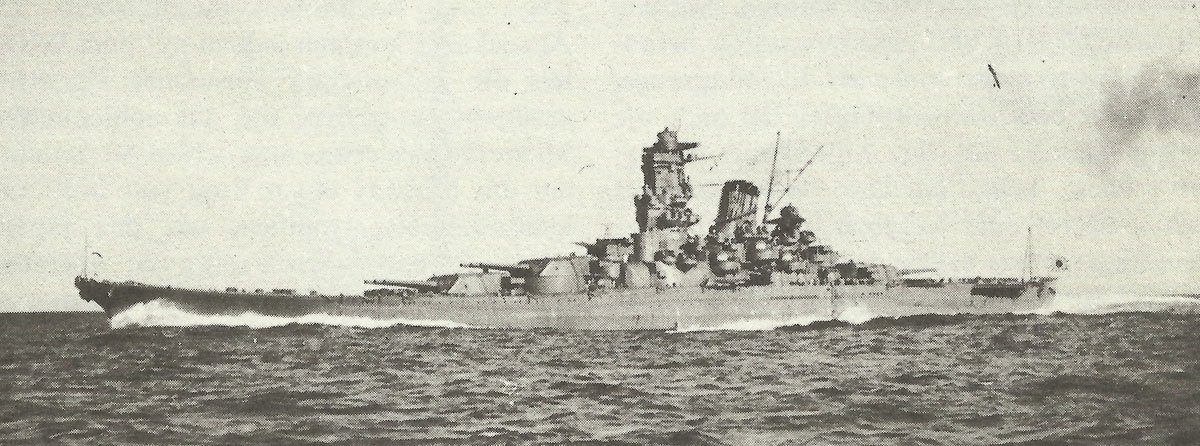
Japanese super battleship Yamato.
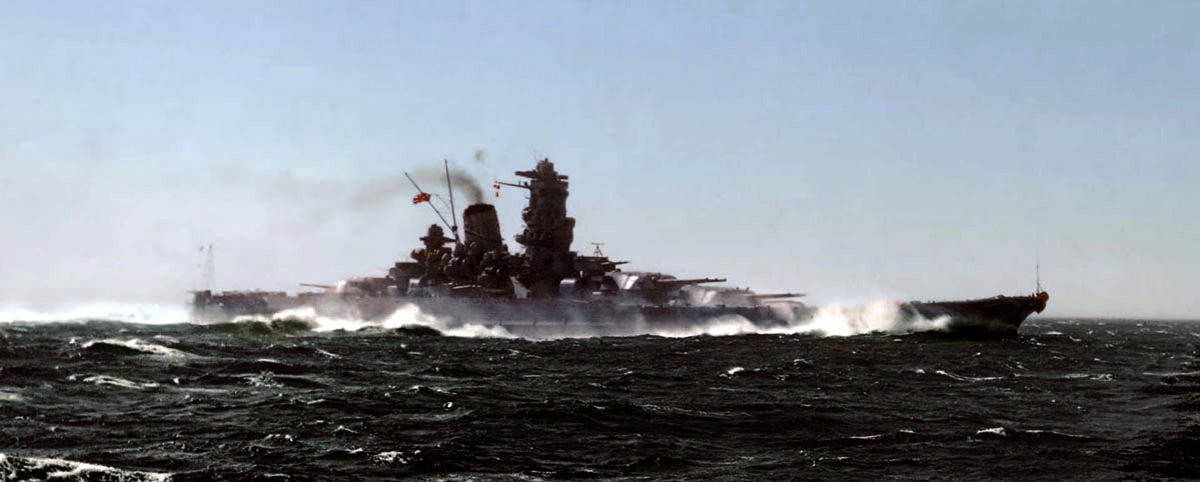
The Yamato stands as one of history’s most famous warships. It marks both the peak of battleship design and, honestly, the twilight of that whole era in naval warfare.
Japan built this massive vessel during World War II. The idea? Counter America’s numbers in the Pacific with sheer size and firepower.
The Yamato was the largest and most powerful battleship ever constructed, displacing nearly 72,000 tons and armed with the biggest naval guns ever mounted on a warship.

Japan started developing the Yamato class in the late 1930s. It was all part of a secret naval program.
The ship’s construction demanded special facilities and a lot of secrecy. They wanted to keep its true capabilities hidden from potential enemies.
When they finished building it in 1941, the Yamato carried nine 18.1-inch guns. Its armor was thick enough to shrug off attacks from conventional battleships of the time.
Despite its specs and the hopes riding on it, the Yamato’s actual combat record didn’t quite match the grand ambitions behind its design. Its dramatic but brief service life really shows how quickly naval warfare shifted during World War II.
Origins and Strategic Purpose
The Yamato battleship came from Japan’s big naval expansion plans in the 1930s. This drive was fueled by rivalry with the United States and the restrictions of international treaties.
Japan’s naval leaders figured that building the world’s most powerful battleship might make up for America’s industrial edge. They hoped superior ship capability could tip the balance.
Imperial Japanese Navy Ambitions
The Imperial Japanese Navy came up with the Yamato class plans in October 1934. It was part of a bigger push to challenge American naval dominance in the Pacific.
Japanese strategists knew they couldn’t outbuild the United States. So, they aimed to make each warship so powerful that American forces couldn’t easily counter them.
This thinking led to the decision to mount eighteen-inch guns on the new battleships. That made them the most heavily armed warships anyone had ever built.
The Japanese Navy wanted these ships to hit around 30 knots. They assumed new American battleships would max out at 24 or 25 knots, giving Yamato a speed edge.
Influence of the Washington Naval Treaty
The Washington Naval Treaty of 1922 put strict limits on Japanese naval construction. It set tonnage ratios that gave Britain and the U.S. the upper hand over Japan.
Japan ditched the treaty system in the mid-1930s. That move let them chase unlimited naval construction.
Free from treaty restrictions, Japanese designers could finally go big—literally. They pushed past previous size and armament limits that had been in place since 1922.
Now, Japan could focus on qualitative superiority instead of trying to match numbers. Without tonnage caps, they went all-in on building the largest and most powerful battleships ever imagined.
Design Philosophy and Naval Strategy
Japanese naval strategy focused on building battleships too large to fit through the Panama Canal. This was meant to stop the U.S. from quickly moving ships between oceans.
Studies showed the biggest ship that could use the canal displaced 63,000 tons and had ten 16-inch guns. Yamato blew past that—nearly 72,000 tons.
The name Yamato itself was a poetic term for Japan. The battleship became a symbol of Japan’s naval ambitions and their hopes for Pacific dominance.
Design and Engineering Innovations
The Yamato-class battleships pushed Japanese naval engineering to its absolute peak. They featured the world’s largest naval guns at 18.1 inches and some pretty wild armor protection systems.
These ships stretched the definition of battleship design with advanced hull engineering and firepower that was, frankly, over the top.
Yamato-Class Features
The Yamato-class displaced 69,100 tons at full load. That made them the heaviest battleships ever.
They measured 863 feet long with a beam of 127 feet. Japanese designers gave the hull an extra-large bulbous bow, which cut hull resistance by 8.2% at 27 knots—better than most bulbous bows manage.
The ships had a displacement-to-length ratio of 112.2 and a prismatic coefficient of 0.612. Those choices created a broad, shallow-draft vessel that still fit the depths of Japanese harbors.
Steam turbines pumped out 150,000 shaft horsepower through four separate engine units. The system hit 50% efficiency at full power and 58.7% at cruising speed.
The hull combined lap-joint and butt-joint plating. Lap-joints covered the middle; butt-joints went at the bow and stern, where water pressure was rougher.
Naval Artillery and Type 94 Naval Guns
The Type 94 naval guns were monsters—18.1-inch weapons firing 3,200-pound shells. Each triple-gun turret weighed as much as a destroyer: 2,774 tons.
Nine guns went into three triple turrets, two up front and one aft. This was the biggest naval artillery system ever put on a warship.
The guns could punch through armor built to stop 16-inch shells. That gave Yamato a real edge over any battleship afloat at the time.
Each shell weighed 1,000 pounds more than the standard 16-inch rounds. Heavier shells meant more punch and bigger explosions.
Building these guns forced Japanese industry to invent new manufacturing techniques. They’d never made weapons this big or complicated before the Yamato project.
Armor and Protection Systems
The Yamato’s armor protection hit 23,500 tons—more than double what the old Mutsu-class ships had. The main belt armor maxed out at 16 inches thick.
Engine rooms sat behind 200-millimeter armor plates. That level of protection meant you couldn’t replace the engines after installation, so reliability was a must.
The armor scheme was supposed to stop 18.1-inch shells at battle ranges. On paper, Yamato was immune to her own guns if you angled her right.
Deck armor shielded against plunging fire from long-range shots. The armored citadel protected all the vital stuff—magazines, engines, command centers.
The armor layout followed the “all-or-nothing” idea: put maximum protection where it matters, leave less important spots unarmored to save weight.
Construction and Secrecy
Building the Yamato was one of Japan’s boldest naval projects. They kept it under wraps like few military secrets in history.
Japan pulled off this massive battleship through careful industrial planning and tight security. The world had no idea how big the ship really was.
Kure Naval Arsenal and Industrial Effort
Work started on November 4, 1937, at the Kure Naval Arsenal—Japan’s top shipyard. The Imperial Japanese Navy picked Kure for its skilled workers and solid infrastructure.
Engineers expanded the shipyard to handle Yamato’s size. They reinforced drydocks and brought in new equipment for the job.
The keel stretched longer than any battleship before it. Key Construction Details:
- Launch Date: August 8, 1940
- Service Entry: December 16, 1941
- Total Displacement: 72,800 tonnes fully loaded
- Length: 263 meters
- Beam: 38.9 meters
The hull needed thousands of tonnes of high-tensile steel. Workers installed four huge steam turbines, together making 150,000 shaft horsepower, hooked up to three propeller shafts.
Labor Force and Project Leadership
Naval architect Kikuo Fujimoto led the initial design. Captain Keiji Fukuda took over for the final construction stages.
Skilled laborers handled the tough work under tight military supervision. Many had previous warship experience. Riveting and welding were the name of the game throughout the build.
Thousands of workers filled the Kure Naval Arsenal. Construction ran almost four years, start to finish.
Security Measures and Code Names
Japanese authorities ran a tight ship on secrecy. Workers had to sign non-disclosure agreements before setting foot on the project.
Military police watched everyone, all the time. The construction site was off limits to outsiders, and engineers built the ship in a covered drydock to keep it out of sight from the air.
Security Measures:
- Workers couldn’t talk about the project
- Official paperwork used code names like “Battleship No. 1”
- Radio silence during sea operations
- No public discussion of specifications
Yamato’s size, speed, and armament details stayed locked down. Officers got orders to keep things vague during shore visits. These layers of secrecy kept the Allies mostly in the dark until late in the war.
Armament, Capabilities, and Crew
The Yamato carried the largest naval guns ever put on a battleship—nine massive Type 94 cannons. Steam turbines pushed her to 27 knots, and more than 2,700 crew members kept this complicated beast running.
Main and Secondary Weapons
The Yamato’s main armament featured nine 46 cm Type 94 naval guns in three triple turrets. These 18.1-inch guns? Absolutely massive—no battleship ever carried bigger.
Each gun tipped the scales at 147.3 tons and stretched 69.3 feet long. They could hurl 3,220-pound shells out to 26 miles.
The Type 94 guns could punch through 17 inches of armor at 30,000 meters. Yamato packed firepower that outclassed any rival battleship.
Secondary weapons included:
- Twelve 155 mm guns
- Twelve 127 mm dual-purpose guns
- Multiple anti-aircraft guns
The ship also carried seven aircraft for reconnaissance. Two catapults launched these seaplanes from the deck.
Propulsion and Performance
Twelve Kampon boilers powered four steam turbines. This setup pushed out 150,000 shaft horsepower.
The turbines drove Yamato up to 27 knots (31 mph). At a steady 16 knots, she could cruise 7,200 nautical miles.
At full load, Yamato weighed in at 73,000 tons. Still, she handled surprisingly well in combat for such a behemoth.
The ship measured 863 feet long with a 127-foot beam. Her 36-foot draft meant she needed deep water ports—no getting around that.
Shipboard Life and Crew Structure
More than 2,700 officers and crew kept Yamato running. You needed a small city to operate a ship this complex.
Teams managed the main guns, secondary weapons, and all the artillery. Others ran the steam turbines and kept the engines humming.
Despite Yamato’s size, living quarters were tight. Most guys slept in hammocks or cramped bunks, squeezed side by side.
The ship had multiple decks and compartments. Armor was thick—25.6 inches on the gun turrets, 16.1 inches on the belt. Overkill? Maybe, but it was the plan.
Specifcations
Yamato | Specifications |
|---|---|
Type | Battleship |
Displacement (standard) | 77,800 tons (planned 64,000 tons) |
Displacement (full loaded) | 81,500 tons |
Length | 863 ft (263 m) overall |
Beam | 127 ft 9 in (38.9 m) overall |
Draught | 34 ft 3 in (10.4 m) |
Boilers | 12 Kampon |
Propulsion | Kampon geared turbines with 4 shafts |
Total power output | 153,000 hp (trial runs); 150,000 hp (design) |
Fuel oil | 7,055 t |
Speed | 27 kn (design); 27.46 kn (trial run) |
Range | 6,054 nautical miles at 16 kn |
Crew | 2,200 men |
Armament | 1941 | 1945 |
|---|---|---|
Main armament | 9 x 18.1in (460mm) L/45 | = |
Secondary armament | 12 x 6.1in (155mm) L/55, 12 x 5in (127mm) L/40 | 6 x 6.1in (155mm) L/55, 24 x 5in (127mm) L/40 |
Anti-aircraft guns | 24 x 1in (25mm), 4 x 13mm machine guns | 146 x 1in (25mm) |
Aircraft | 6 | 6 |
Armour protection | mm |
|---|---|
Side (belt) | 102–410 mm (~16.4in) |
Deck | 200–230 mm (~7.75-9in) |
Main artillery | 190–650 mm (~7.5-25.5in) |
Barbettes | 380–560 mm |
Secondary artillery | 25 mm |
Command tower | 76-502 mm (~3-19.75in) |
Service statistics | Yamato | Musashi | Ship 4 (No. 111) | |
|---|---|---|---|---|
Laid down | 4 November 1937 | 29 March 1938 | 4 May 1940 | 7 November 1940 |
Launched | 8 August 1940 | 11 November 1941 | 8 October 1944 | – |
Commissioning | 16 December 1941 | 5 August 1942 | Completed as an aircraft carrier on 19 November 1944 | – |
Fate | Sunk on 7 April 1945 | Sunk on 24 October 1944 | Sunk unfinished on 29 November 1944 | – |
Combat Operations and Major Battles
Even as the world’s biggest battleship, Yamato didn’t see much action in World War II. She spent most of 1942-1943 at Truk as a fleet flagship and picked up the “hotel” nickname before joining the Battle of Leyte Gulf and finally going down during Operation Ten-Go near Okinawa.
Role in the Pacific War
Yamato entered service in December 1941, right as Japan kicked off the Pacific War. But for the early years, she mostly served as a flagship instead of fighting.
From August 1942 to May 1943, Yamato stayed anchored at Truk, acting as Admiral Yamamoto’s Combined Fleet HQ. The crew started calling her “hotel” because she barely left port.
Why so inactive? Fuel shortages, not enough bombardment shells, and worries about shallow waters near battle zones. Admiral Yamamoto just didn’t want to risk his biggest ship unless he had to.
Yamato did go on a few patrols. In September 1943, she tried to intercept American carriers but never found them. October saw more unsuccessful sorties.
Battle of Leyte Gulf and Japanese Combined Fleet
Yamato finally got into a real fight at Leyte Gulf in October 1944. This was Japan’s last big push in the war.
She led Vice Admiral Kurita’s Center Force. The goal? Break through American lines and hit the invasion fleet at Leyte Gulf in the Philippines.
For the first time, Yamato unleashed her giant 18.1-inch guns in combat. She targeted American escort carriers and destroyers off Samar Island on October 25, 1944.
The battle didn’t go Japan’s way. Even against lighter American forces, Kurita’s Center Force pulled back after doing little damage. Yamato’s big moment ended up showing just how much Japan’s navy had faded by late 1944.
Operation Ten-Go and the Sinking of Yamato
Yamato’s last mission was Operation Ten-Go in April 1945—a desperate, almost hopeless move to support Japanese troops during the Battle of Okinawa.
On April 6, 1945, Yamato set out with cruiser Yahagi and eight destroyers. They only had enough fuel to reach Okinawa, planning to beach the ship as a stationary gun platform.
But American codebreakers were already on to them. Task Force 58 scrambled 280 aircraft from multiple carriers to intercept.
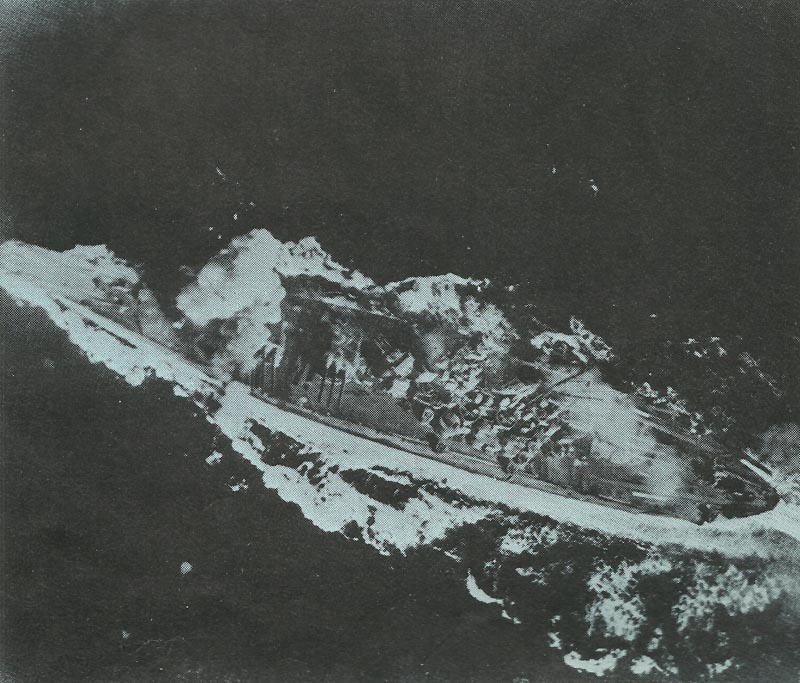
The attack started April 7, north of Okinawa. Waves of American bombers and torpedo planes swarmed Yamato. For two hours, she took hit after hit—torpedoes, bombs, everything.
At 2:23 PM, the ship’s magazines exploded in a blast so huge people saw it 100 miles away. Out of 2,700 crew, 2,498 died. The sinking ended the battleship era, closing Japan’s last major naval chapter in World War II.
Opponents and Changing Naval Warfare
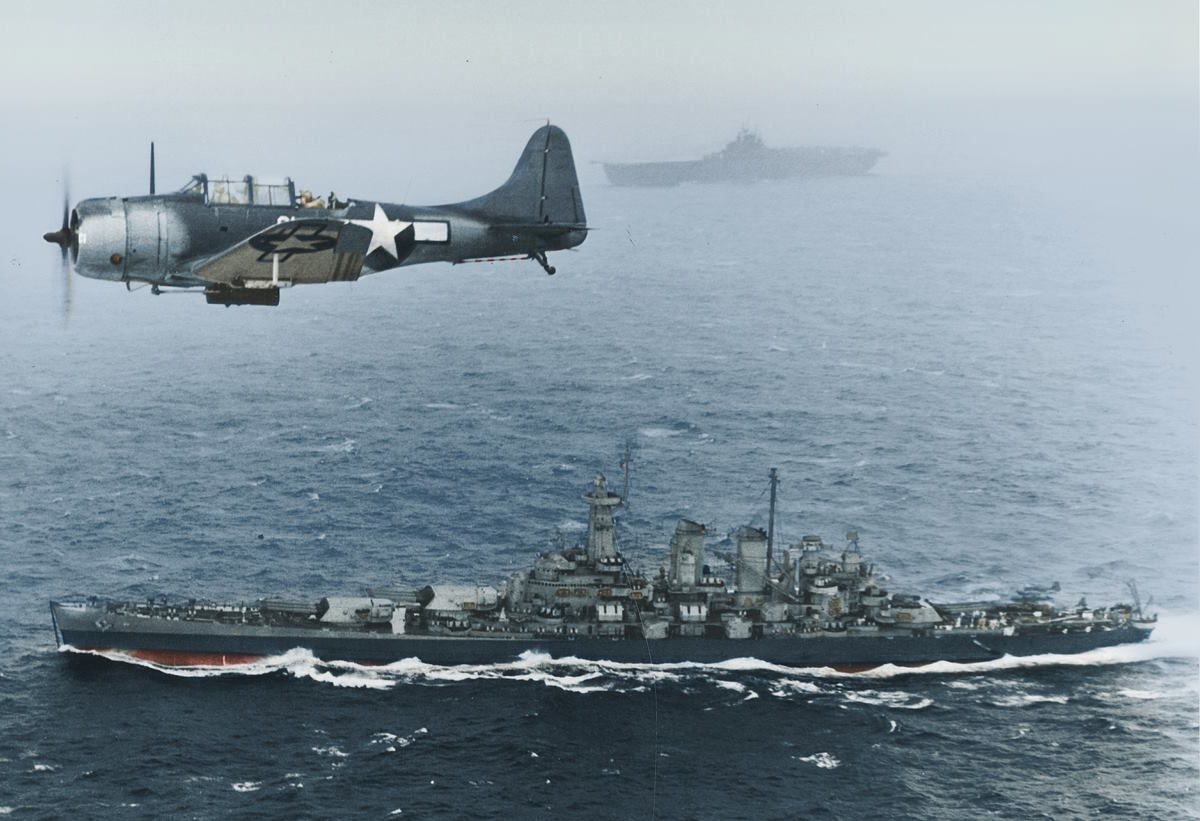
Yamato ran up against enemies that proved naval warfare was changing fast. American aircraft carriers and their planes became the real threat; old-school battleship duels faded away.
Impact of Allied Aircraft and Bombers
Allied planes turned out to be Yamato’s deadliest enemy. Her thick armor could shrug off shells, but attacks from above were a whole different story.
American bombers and torpedo planes swarmed in from every direction. The ship’s gunners just couldn’t shoot them all down, no matter how hard they tried.
On April 7, 1945, more than 380 American planes went after Yamato. Bombs and torpedoes rained down. The anti-aircraft guns couldn’t keep up.
Key weapons used against Yamato:
- Torpedo bombers aiming for the sides
- Dive bombers dropping ordnance on the deck
- Fighter planes covering the bombers
The onslaught lasted about two hours. At least 10 torpedoes and 5 bombs hit home. Even Yamato couldn’t take that kind of pounding.
Task Force 58 and United States Navy
Task Force 58 was an American powerhouse—tons of carriers and support ships. The U.S. Navy had changed, and this force proved it.
They could launch hundreds of planes at once, sending them far beyond the horizon to strike enemy ships. That reach gave the Americans a real edge over Japan’s battleships.
During Leyte Gulf, ships like USS Johnston (a destroyer) and USS Gambier Bay (an escort carrier) faced off with Yamato. Johnston even attacked the giant battleship head-on. Gambier Bay, less lucky, was sunk with Yamato’s help.
These battles showed smaller American ships could be gutsy and that aircraft carriers had become the real heavyweights in modern naval fights.
Task Force 58 finished off Yamato with carrier planes alone. No American battleships needed—kind of says it all.
The Rise of Aircraft Carriers
Aircraft carriers took center stage in the Pacific. They could strike targets hundreds of miles away, while battleships like Yamato had to see what they were shooting at.
American carriers teamed up, protecting each other and pooling their planes. That made them tough to beat.
Advantages of aircraft carriers over battleships:
- Range: Planes could strike from over 200 miles out
- Speed: Carriers could outrun battleships
- Flexibility: Planes scouted, fought, and bombed—all in one
Yamato was built to trade shots with other battleships. But by 1945, most sea battles happened between carriers and their air wings. Giant guns just weren’t much help against swarms of planes.
Carriers could replace lost planes fast. Yamato couldn’t swap out main guns if they got wrecked. For a long, grinding war, carriers won out.
After World War II, navies everywhere switched focus—carriers over battleships, every time. The old era was gone.
Legacy and Influence
Yamato’s story goes way beyond her short time in battle. She changed naval strategy and still pops up in pop culture. Her construction showed the limits of the battleship idea, and her sister ships proved Japan’s obsession with big-gun power in World War II.
Lessons in Naval Strategy
Yamato’s fate exposed big flaws in old naval thinking. Her giant guns and thick armor were no match for aircraft carriers and subs. She spent most of the war at Truk, dodging fights that might reveal Japan’s weaknesses.
Modern navies realized speed and flexibility mattered more than brute force. Planes could sink battleships from hundreds of miles away. Designers started focusing on missiles and air defense instead of just piling on bigger guns.
After Yamato, the “bigger is better” mindset faded. New warships got radar, electronic gear, and serious anti-aircraft defenses. The lessons shaped missile cruisers and nuclear subs that ruled after the war.
Comparisons with Musashi and Shinano
All three Yamato-class ships met similar ends, despite their cutting-edge design. Musashi went down at the Battle of the Philippine Sea in 1944 after wave after wave of air attacks. Even the thickest armor couldn’t stand up to that.
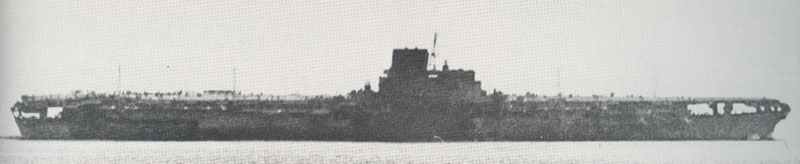
Shinano was a different story—Japan turned her hull into an aircraft carrier. But she sank just days after launch, torpedoed by a U.S. sub in 1944. Japan was stretched too thin by then.
These ships ate up a ton of steel and labor—resources that might’ve built dozens of smaller, more useful ships. Their loss pretty much closed the book on the battleship era.
Cultural and Historical Impact
Yamato became a symbol of Japanese pride and engineering. Museums across Japan show off artifacts and exhibits about her construction and service. The 1974 anime “Space Battleship Yamato” even turned her into a sci-fi legend.
The Okinawa Peace Memorial Park added the names of over 1,000 Yamato crew members to its monument not long ago. That move sparked debate—some see the ship as a symbol of sacrifice, others as a reminder of wartime aggression.
Yamato keeps showing up in movies, books, and video games. Her size and tragic end make her an irresistible story. Her legacy is complicated—a mix of engineering genius and the futility of Japan’s Pacific War strategy.
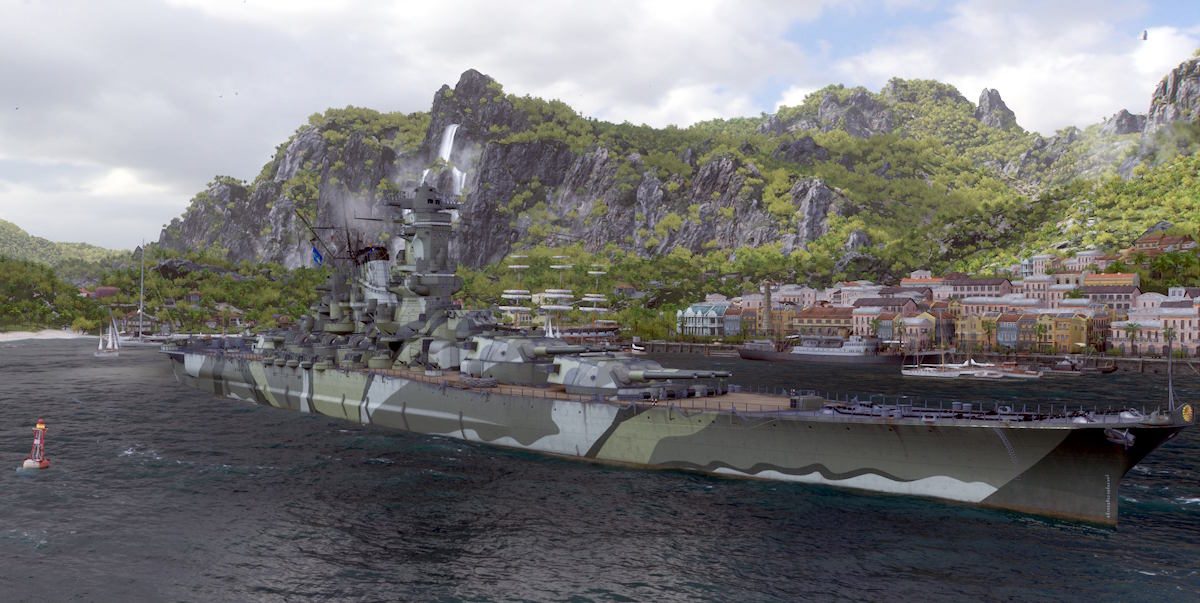
Battleship Yamato in World of Warships (WoWs):
Frequently Asked Questions
The Yamato battleship remains famous for her size, big guns, and doomed final mission. People still ask about her military role, her place in culture, and how she stacked up against other battleships of her time.
What was the historical significance of the Japanese battleship Yamato during World War II?
The Yamato served as the flagship of the Combined Fleet from February 1942 until early 1943. Admiral Isoroku Yamamoto actually directed the Battle of Midway from her bridge in June 1942.
Japan built the ship hoping to balance out America’s overwhelming number of battleships. Her designers wanted her to take on several enemy ships at once—pretty ambitious, honestly.
Yamato only fired her main guns at enemy ships once during the war. That happened at the Battle off Samar in October 1944, where she helped sink USS Gambier Bay and two destroyers.
Her final mission in April 1945 was grim—a one-way trip to Okinawa. The plan was for her to beach herself and fight as a stationary gun platform until she was destroyed.
American carrier planes sank the Yamato on April 7, 1945. Air power had the final word, and the battleship era ended right there.
How does the anime ‘Space Battleship Yamato’ differ from the historical events surrounding the actual ship?
The anime totally reimagines the battleship as a spacecraft on a mission to save Earth from an alien invasion. Instead of fighting in the Pacific, this version travels to the Andromeda galaxy to grab a device that can heal the planet.
The space Yamato keeps the real ship’s signature design and weapon ideas. But instead of a tragic end, it’s a wild space adventure with a shot at redemption.
The anime leans hard into themes of sacrifice and hope. It gives the Yamato name another chance at glory, just through sci-fi rather than history.
Can you describe the discovery and condition of the Battleship Yamato wreck?
The Yamato wreck still sits on the ocean floor where she went down in 1945. Over the years, people have recovered fragments, and you can see some of them in Japanese museums.
Her ammunition exploded during the American air attack, breaking the ship apart. The blast was so huge it created a mushroom cloud you could see for miles.
Recovery teams have found various pieces of the ship since then. These artifacts are a tangible link to the ship and her crew’s fate.
What were the primary differences between the Yamato class battleships and other battleship classes of their time?
The Yamato class ships were, hands down, the heaviest battleships ever built. At full load, they displaced nearly 72,000 tons—way more than their American or British rivals.
Their main guns were monsters—the biggest ever put on a warship. Nine 46-centimeter guns could lob shells up to 42 kilometers away.
The armor was no joke, either. The main belt armor was 410 millimeters thick, and the gun turret faces had an almost absurd 650 millimeters of protection.
Japan designed these ships to fight several enemy battleships at once. It was their answer to being outnumbered—just make each ship as powerful as possible.
In what ways has the Battleship Yamato been depicted in film and popular culture?
The ship shows up in a bunch of Japanese World War II movies about naval battles. These films usually focus on her last mission and the sacrifices of her crew.
The Space Battleship Yamato anime series got huge, even outside Japan. It led to multiple seasons, movies, and a mountain of merchandise that made the ship famous worldwide.
Gamers know the Yamato too—she’s often one of the most powerful ships you can play in naval combat games.
In Japan, the ship has become a cultural icon. She stands for both national pride and the sorrow of war.
What were the differences in design and capabilities between the Battleship Yamato and its sister ship, the Musashi?
Both ships shared the same basic design and armament. Each one carried nine 46-centimeter main guns, with similar armor protection schemes.
Musashi came a bit later and had a few tweaks. The builders made these changes after picking up some lessons from Yamato’s construction and early days at sea.
During the war, both ships ended up with different anti-aircraft gun setups. The numbers and placements of the smaller guns never quite matched between the two.
Musashi took over as the Combined Fleet flagship after Yamato in early 1943. She went down at the Battle of Leyte Gulf in October 1944, several months before her sister ship met the same fate.
References and literature
Fighting Ships of the World (Antony Preston)
Kriegsschiffe von 1900 bis heute – Technik und Einsatz (Buch und Zeit Verlagsgesellschaft)
The Illustrated Directory of Warships from 1860 to the present day (David Miller)
Flotten des 2. Weltkrieges (Antony Preston)
Kriegsschiffe 1939-45 (Heyne-Bildpaperback)
Atlas zur Seefahrts-Geschichte (Christopher Loyd)
Seemacht – eine Seekriegsgeschichte von der Antike bis zur Gegenwart (Elmar B. Potter, Admiral Chester W.Nimitz)