
Germans standard machine gun Maschinengewehr MG34.
History, development, service, specifications, pictures and 3D model.
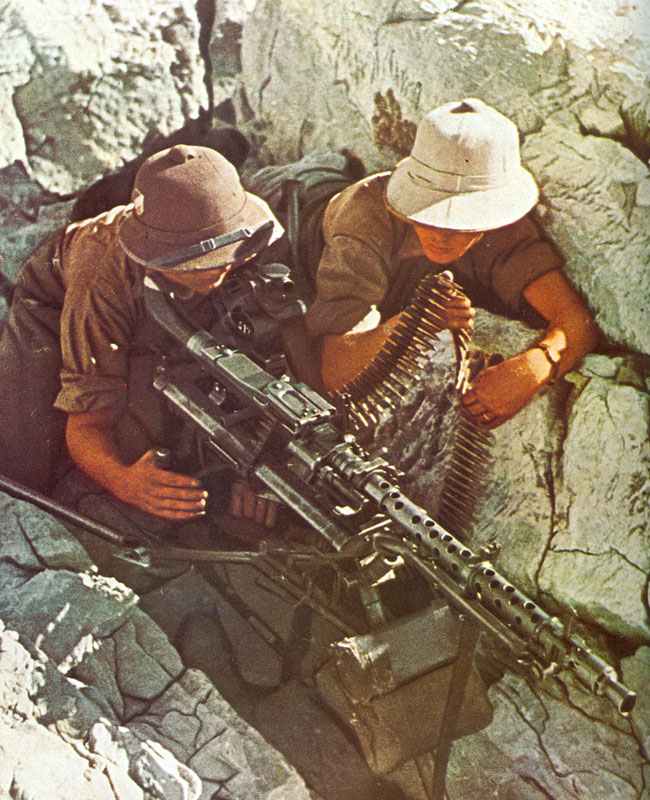
Maschinengewehr MG34
Type: Machine gun

Maschinengewehr 34 (MG 34): The World’s First True General-Purpose Machine Gun.
The Maschinengewehr 34 (MG 34) was one of the most influential firearms of the 20th century. Developed in Germany in the early 1930s, it became the backbone of the Wehrmacht’s infantry firepower during the early years of World War II and set the standard for what is now known as the general-purpose machine gun (GPMG).
Overview
Development and Design

The MG 34 was designed by Heinrich Vollmer and adopted by the German Army in 1934. It was revolutionary for its time because it could fulfill multiple battlefield roles:
– Light machine gun (with a bipod for mobile infantry use)
– Medium machine gun (mounted on a tripod for sustained fire)
– Anti-aircraft weapon (with specialized mounts)
– Vehicle-mounted weapon (on tanks and armored vehicles)
This versatility reduced the need for multiple specialized machine guns, streamlining logistics and training.
Technical Specifications
– Caliber: 7.92×57mm Mauser
– Operation: Short recoil, rotating bolt
– Rate of Fire: 800–900 rounds per minute
– Feed System: 50-round belt drums or larger ammunition belts
– Weight: Approx. 12 kg (without tripod)
One of its defining characteristics was its high rate of fire, which produced a distinctive and intimidating sound on the battlefield.
Strengths and Limitations
Strengths:
– Exceptional accuracy for a machine gun
– Flexible deployment in multiple combat roles
– Precision-machined components ensuring reliability under normal conditions
Limitations:
– Complex and expensive manufacturing process
– Sensitive to dirt and harsh battlefield conditions
– Required skilled maintenance
Because of its high production cost and intricate machining, the MG 34 was later supplemented and partially replaced by the MG 42, which was cheaper and easier to manufacture.
Combat Use in World War II
The MG 34 saw extensive action in:
– The invasion of Poland (1939)
– The Battle of France (1940)
– The Eastern Front
– North Africa
German infantry tactics were built around the machine gun squad, with the MG 34 serving as the squad’s primary source of firepower.
Legacy
The MG 34’s concept of a single machine gun adaptable to various roles influenced many post-war designs. Modern GPMGs such as the MG 3 (still in service in several countries) trace their lineage directly to the MG 34 and MG 42.

Today, surviving MG 34s are primarily found in museums, private collections (where legally permitted), and historical reenactments.
The MG 34 was a groundbreaking weapon that reshaped infantry tactics and military weapon design. Although eventually overshadowed by the MG 42, its innovative multi-role concept earned it a lasting place in military history.
History
In 1930 the Solothurn Company of Switzerland produced a machine gun known as the MG30, which they offered to the German Army. It was a very advanced design which used barrel recoil to drive back the bolt which was rotated by two rollers running in cam tracks in the receiver. It was probably the first ‘straight line’ design, the butt being in prolongation of the barrel axis, and it incorporated an ingenious quick-change method for the barrel in which the butt was twisted through 90 degrees and pulled off; the bolt and barrel could then be quickly withdrawn through the gun body and the barrel replaced. About 5,000 of these guns were made, most of which were bought by Austria and Hungary, and doubtless a number were used during the war. But the German Army were less impressed and passed the gun across to Mauserwerke with the request that they improve it.
This Mauserwerke did. They jettisoned the side-feeding box magazine of the MG30 and made the new design a belt-fed weapon which, by quick substitution of a different feed unit, could also use the 75-round saddle drum of the MG15. The bolt locking system was changed so that only the bolt head revolved, locking by interrupted threads; an additional recoil impulse was given to the barrel by adding a muzzle gas trap. Barrel changing was simplified by hinging the gun body to the rear end of the barrel casing; unlatching allowed the gun body to be swung sideways and the barrel pulled straight out of its bearings.
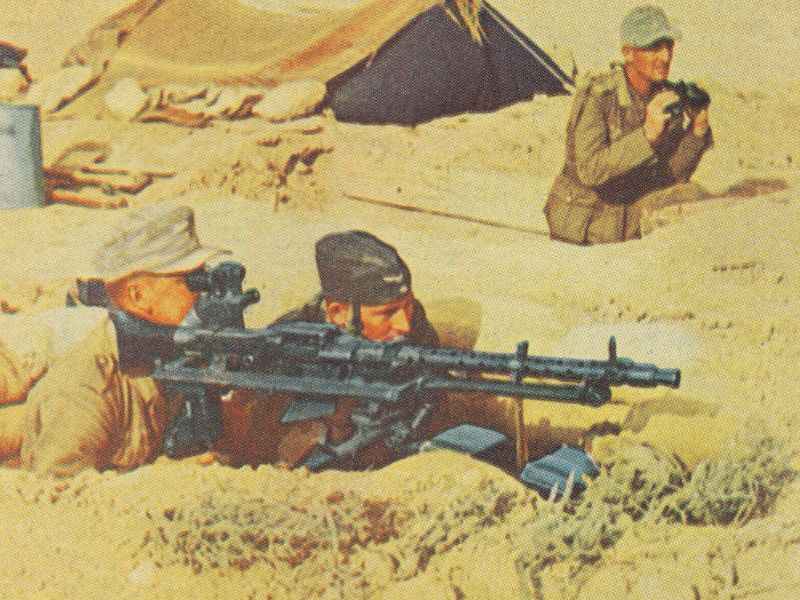
The most far-reaching feature of the MG34 was tactical rather than mechanical; it was the first example of what is known today as the ‘General Purpose’ machine gun. Fitted with a bipod it functioned as the squad light automatic; on its tripod, which incorporated a sprung cradle to reduce the recoil and vibration and thus make continuous fire less fatiguing for the gunner, it functioned as a medium machine gun; and on a different pattern of light tripod and fitted with the saddle-drum magazine, it made a good anti-aircraft weapon.
It was the first belt-fed weapon to be used as a light machine gun in quantity and it proved that the concept was valid; previously it had always been considered that the feed system of the light machine gun had to be one to which riflemen could contribute in an emergency, and this argued some form of easily filled box magazine. The MG34 showed that provided the supply organization was efficient, belt feed was perfectly acceptable in this role, even if it did mean the gun crew going about the battlefield festooned with belts of ammunition.
The MG34 only had one real defect; it was too good. The quality of design and workmanship meant long and extremely precise manufacturing processes, and eventually five factories were doing nothing but turn out MG34s as hard as they could, plus a number of manufacturing parts. By 1941 this was obviously impractical and a new design was sought – the MG42; but in spite of this, the MG34 remained in production and use until the war ended.
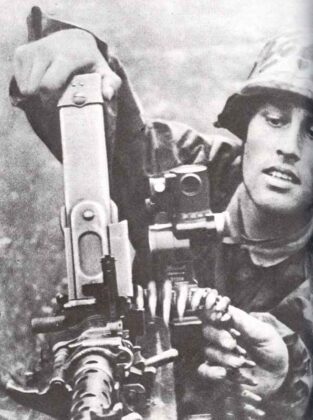
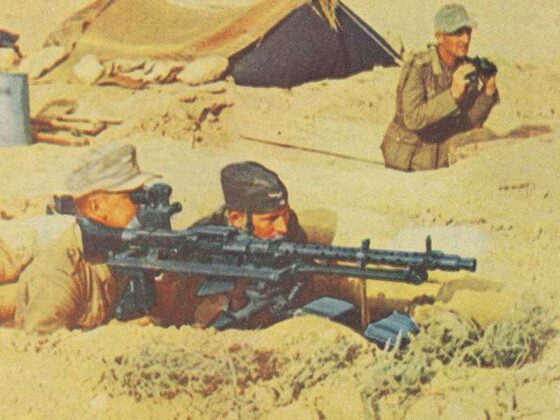
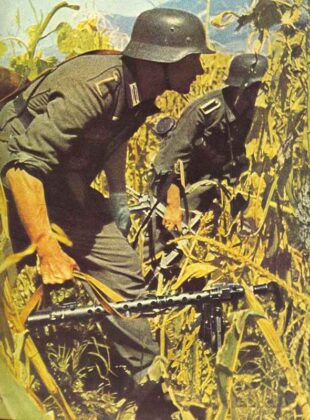
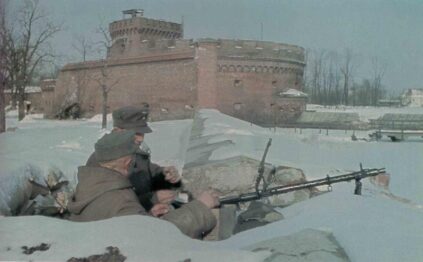
Pictures of MG34
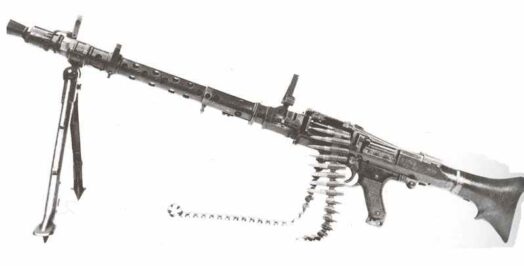
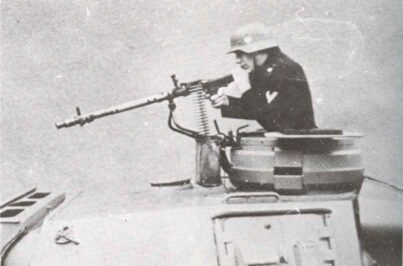
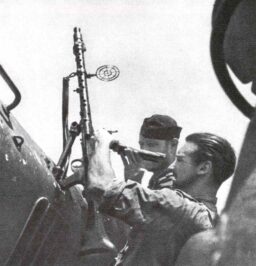
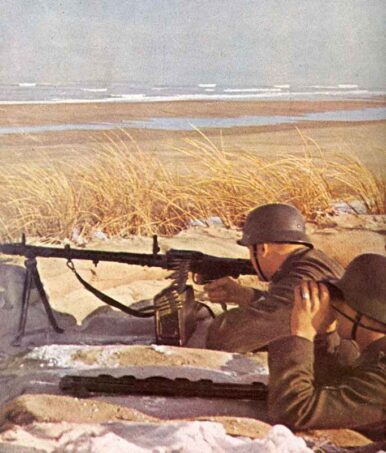
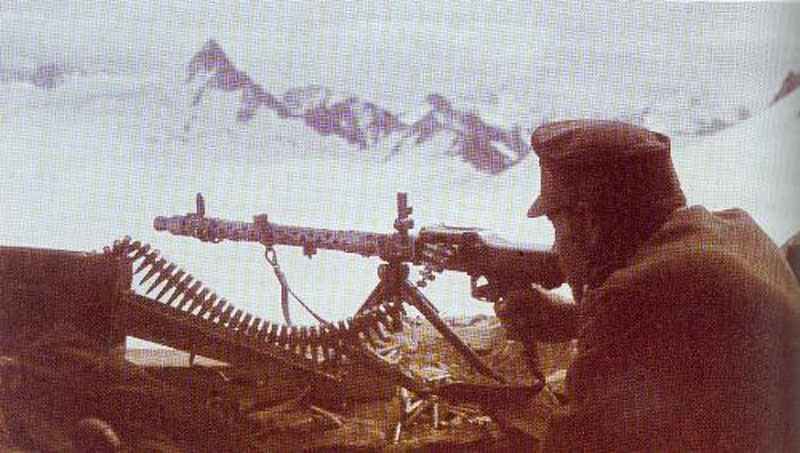
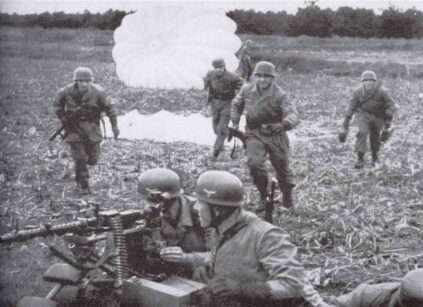
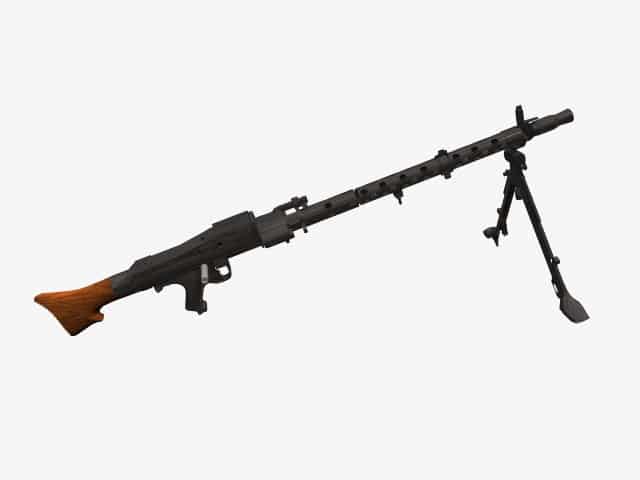
Specifiactions MG34
Specifications:
MG34 | Specification |
|---|---|
Type | light or medium machine gun |
Caliber | 7.92mm |
Length | 48.0 in |
Weight | 26 lb 11 oz |
Barrel | 24.75 in long, 4 grooves, right hand twist |
Feed system | Belt or 75-round saddle drum |
System of operation | Recoil; revolving bolt head |
Muzzle velocity | 2,475 feet/sec |
Rate of fire | 850 rpm |
Service statistics:
MG34 | figures |
|---|---|
Manufactures | Mauserwerke AG in Berlin, Stey-Daimler-Puch AG in Austria, Waffenwerke Brünn (Brno) in Czechoslovakia |
Production figure 1942 (all MGs for infantry use) | 77,340 |
Production figure 1943 (all MGs for infantry use) | 165,527 |
Production figure 1944 (all MGs for infantry use) | 278,164 |
Production figure 1945 (January and February, all MGs for infantry use) | 56,089 |
Price per unit | 327 RM, with tripod 400 RM = ~ $147/180, ~ £31/38 |
Animated 3D model of MG34
References and literature
The Encyclopedia of Infantry Weapons of World War II (Ian V.Hogg)
Infanterie im 2. Weltkrieg (J.B.King, John Batchelor)
Illustriertes Lexikon der Waffen im 1. und 2. Weltkrieg (V. Dolinek, V. Francev, J. Sach)
The Encyclopedia of Weapons of World War II (Chris Bishop)