
Imagine waking up in Canada, pulling back the curtains, and suddenly seeing soldiers marching through the snow wearing swastika armbands. Sirens wail, bridges are reported to have been blown up, and the city surrenders before breakfast.
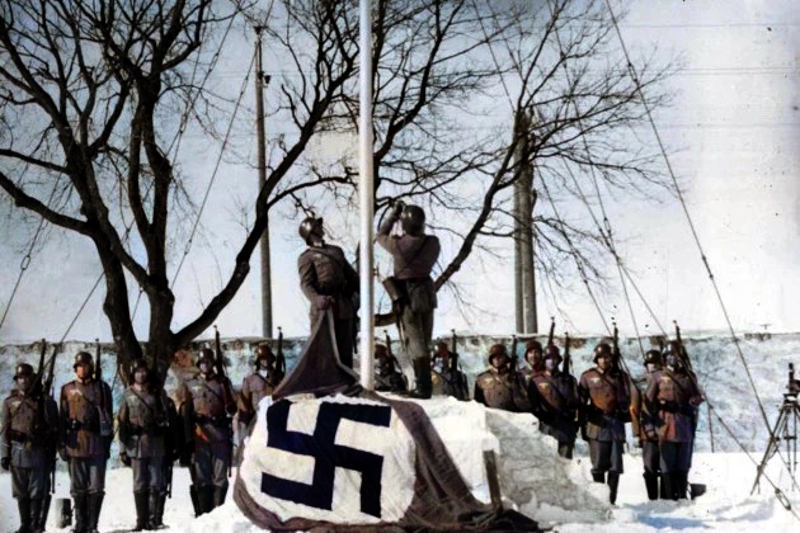
If you search for “When the Wehrmacht Occupied Canada,” you’ll come across one of the strangest propaganda campaigns of World War II: the so-called If Day, a completely staged Nazi occupation in Manitoba that had one primary goal: to raise money for the war.
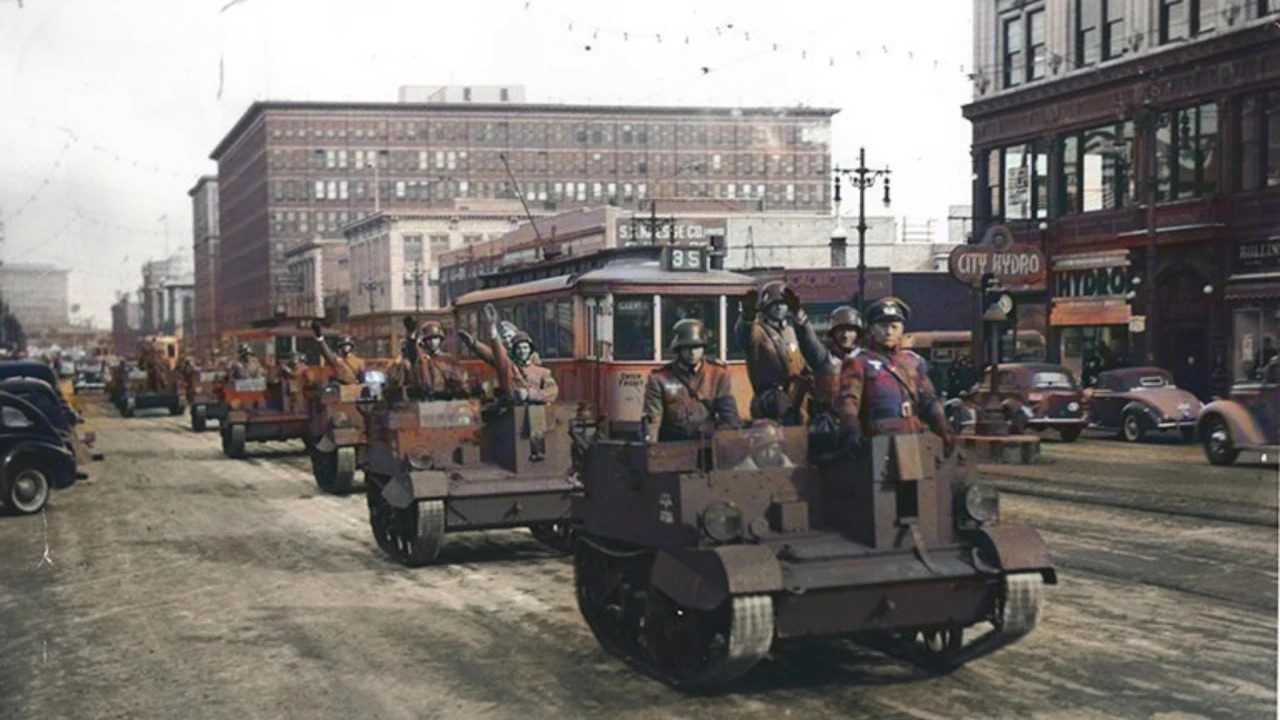
The deeper you look into this story, the more absurd it becomes. There were tanks on the streets, arrests of local politicians, staged air raids, burned books, and occupation rules designed to deliberately shock.
Canada hadn’t actually fallen. The goal was to show what could happen if the war in Europe wasn’t stopped.
The attack supposedly came from the north

Early in the morning of February 18, 1942, the grand spectacle began in Winnipeg. Even before sunrise, reporters were reporting enemy aircraft in northern Manitoba.
Shortly thereafter, word came that other towns had already fallen. The advance was heading straight for Winnipeg.
At 6 a.m., the air raid sirens wailed. Canadian units took up positions, volunteers mobilized, and a scene of genuine emergency unfolded on the streets.
If you had been standing there, you wouldn’t have casually asked whether this might just be a very elaborate city tour.
The organizers staged the defense in multiple lines. Artillery fired blank rounds, anti-aircraft units responded to alleged attacks, and bridges were declared destroyed, even though they remained intact.
The whole thing was meticulously planned to make the situation appear as credible as possible. By around 9:30 a.m., the matter was settled.
Winnipeg surrendered unconditionally. Other locations in Manitoba were also symbolically considered occupied.
A few details show just how carefully this was staged:
- About 3,500 soldiers and volunteers were involved
- The retreats and counterattacks were predetermined
- Maps showed the “occupied” areas in the province
- Press and camera crews were already on standby
Canada had been at war with Germany since 1939. Nevertheless, many people felt far removed from the war.
It was precisely this feeling that If Day was intended to dispel.
The staged occupation of Winnipeg
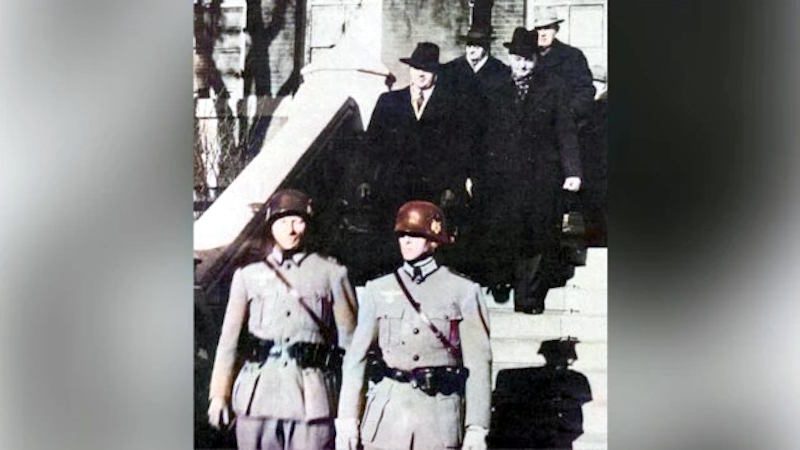
After the “surrender,” the second phase began. Armed patrols roamed the city center, checkpoints were set up, and government offices were symbolically taken over.
Normal order vanished so completely for a few hours that even sober onlookers were left speechless.
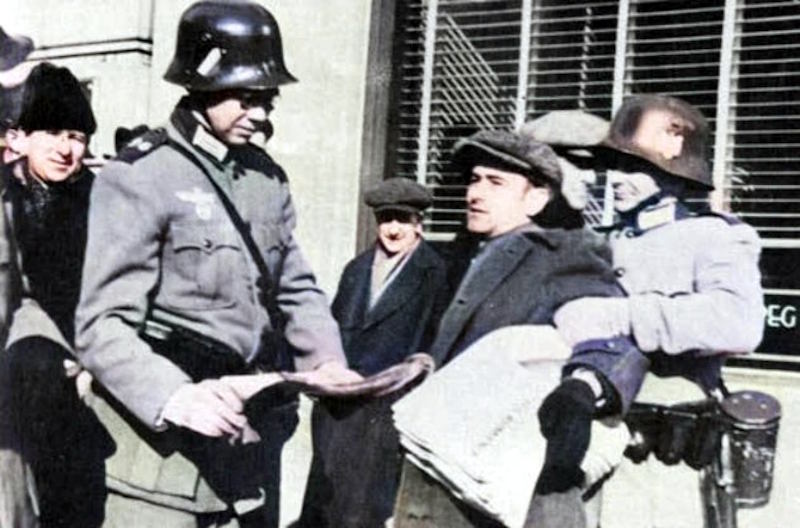
An organizer posing as a German Gauleiter had the city leadership arrested. Buildings were renamed, Nazi flags flew over public places, and posters displayed occupation rules.
If you thought Canada was the kind of place where even an invasion is handled with a polite “Sorry,” you were in for a surprise that day.
The announced measures included:
- Evening curfew
- Prohibition or restriction of gatherings
- Confiscation of vehicles
- Quartering of soldiers in homes
- Surrender of grain and livestock by farmers
- Rationing of food and clothing
- severe penalties for resistance or unauthorized possession of weapons
The operation specifically targeted everyday life. Schools were searched, people on the street were checked, and public buildings were occupied.
There was even a staged book burning at the city library. Everyone understood the message immediately back then.
I find this aspect the most remarkable. Not the uniforms, not the vehicles, but how quickly a city looks different in an exercise as soon as you change the rules, language, and symbols.
Suddenly, even a main street looks like a movie set with a very poor moral message.
A War Game Without Deaths
As brutal as the spectacle looked, no one died. In fact, there were only two reported injuries, and they sound more like a chaotic winter morning than a battle.
A soldier sprained his ankle. A woman cut her thumb while making breakfast, likely also due to the blackout.
The “skirmishes” consisted of blank cartridges, simulated explosions, and precisely coordinated movements. Even the supposedly destroyed bridges remained undamaged.
Field hospitals admitted simulated casualties. This also served as training for medical teams.
Many residents knew from the newspapers that exercises were planned. Some had overlooked this or not taken it seriously.
That is precisely what made the operation so effective. The shock was not a mistake, but part of the plan.
Media personnel were allowed to observe almost everything. Reporters, photographers, and film crews captured every scene.
Images of an “occupied” Canadian city later spread far beyond Manitoba.
The real goal was the wallet
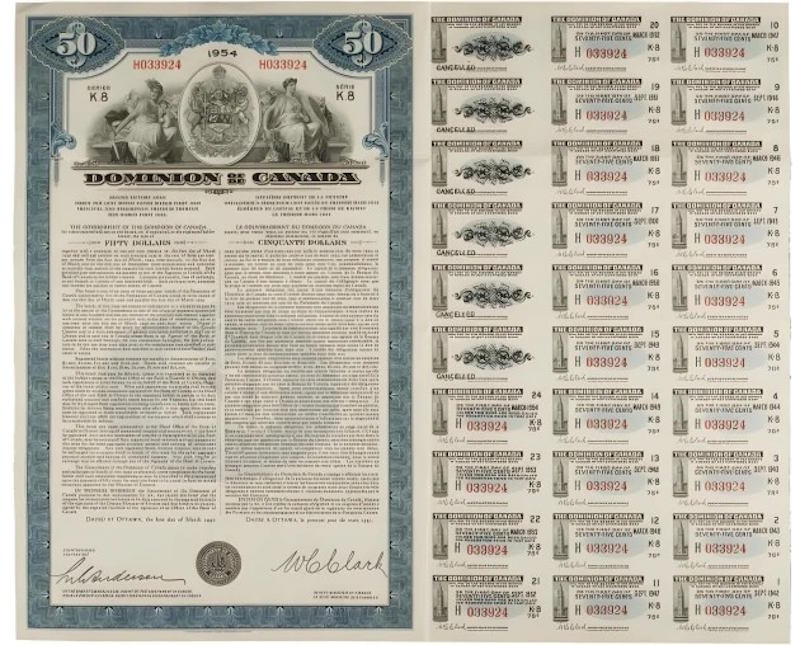
If Day wasn’t just a whim of bored city planners. It was part of the second major campaign for Victory Loans.
The idea was simple: You lend money to the government, and the government uses it to fund training, equipment, production, and operations.
Earlier campaigns relied on speeches, posters, concerts, and patriotic appeals. In 1942, organizers feared that such methods had become too familiar.
One more poster, and even the maple syrup would roll its eyes. So in Manitoba, they opted for the drastic approach.
For a relatively small cost—about $3,000 at the time—a massive production was organized.
The financial goal was $45 million, which today would roughly correspond to a sum in the high three-digit millions.
The message was crystal clear: If you don’t want freedom, property, and everyday life to disappear, then buy war bonds.
A symbolic occupation map in Winnipeg showed the campaign’s progress. Every bond purchase “liberated” another area of the province.
Propaganda can be very creative, especially when it’s also meant to bring in money. And yes, it worked.
The campaign generated attention, conversation, and pressure to participate. You could hardly escape it when, all of a sudden, an entire city around you had switched to XXL-scale anti-fascist street theater.
The Signal to the World
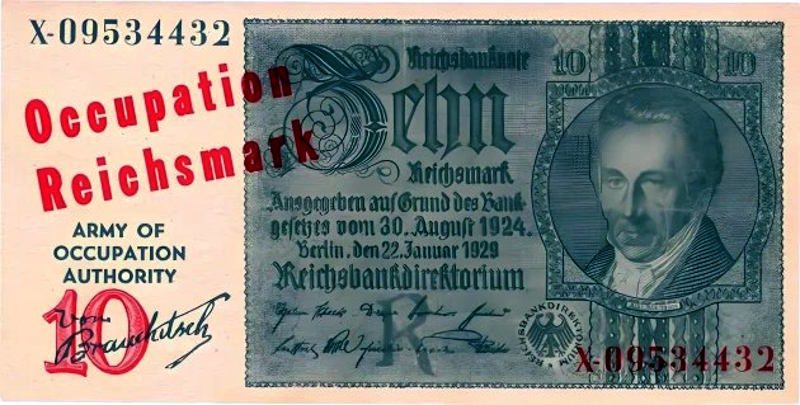
The impact did not end at the city limits. Images and reports from Winnipeg spread throughout North America and beyond with astonishing speed.
Millions of people saw the footage of the alleged conquest. That is precisely why the story stuck.
It translated a distant war into something immediately tangible. No abstract front lines, no dry statistics, but uniforms on familiar streets, proclamations on house walls, and the sudden realization of how quickly rights can vanish.
Other cities picked up on the idea or wanted to know how such an event had been organized. The real impact, however, was psychological.
For a few hours, “The war is far away” turned into a very uncomfortable “What if it were right on your doorstep?”
So the next time you stumble across the phrase “When the Wehrmacht occupied Canada,” there’s no actual German conquest of Canada behind it. It was a staged occupation of Winnipeg, built on fear, symbolism, and a very direct request for financial support.
Frequently Asked Questions
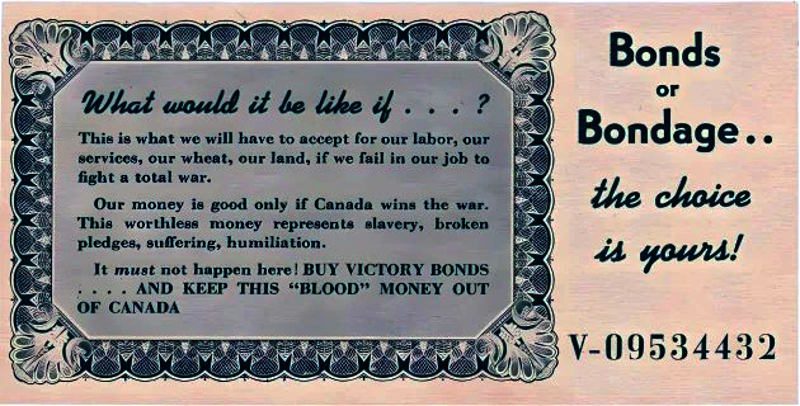
“Buy war bonds … to keep this ‘damned’ money out of Canada.”
Was there really a German footprint in Canadian maple syrup, or is that just a sticky rumor?
There was no actual occupation of Canada by the Wehrmacht. What is meant is “If Day” in 1942 in Winnipeg—a staged Nazi invasion for propaganda and fundraising purposes.
So the maple syrup could safely stay in the cupboard.
How would that have worked logistically—had tanks already passed the transatlantic swim back then?
It wasn’t a real invasion at all. The vehicles, soldiers, roadblocks, and air raid scenes were all prepared by the Canadians on their own soil.
It was a large-scale military and propaganda production. No one secretly shipped German tanks across the Atlantic.
Which Canadian cities would have been next, and would they have knocked politely?
In the scenario, places in Manitoba like Selkirk, Brandon, and Flin Flon were considered the first “fallen” cities. Only after that did Winnipeg surrender.
The whole thing was dramatically staged to make the attack seem credible. Of course, there were no real German operational plans for this.
What would the U.S., Britain, and the rest of the Allies have said to that, other than “Um, excuse me?”
In the event of a real invasion, the U.S. and Britain would likely have responded militarily immediately. After all, Canada was part of the Allies, and an attack on North America would have been a massive escalation.
During If Day, they observed the events more with interest. The focus was on the propaganda effect, not on military intervention.
Which sources actually claim that, and how many of them end with “Trust me, bro”?
This story is well documented, for example in reports on If Day in Winnipeg. Accounts of Canada during World War II also mention the event.
So this isn’t some internet tall tale from the “my grandpa had a Tiger tank in his carport” category. The whole thing is historically documented, even if it sometimes sounds almost too crazy to be true.
If that had happened, what would everyday life have looked like—curfews, rationing, and yet still poutine?
In the staged occupation scenario, there were curfews, checkpoints, and confiscations. Rationing was, of course, also part of it.
Poutine? In 1942, the dish didn’t yet play a major role in everyday national life. People would have been grappling more with shortages, fear, and very strict controls than with any form of comfort food.
References and Bibliography