
The Unholy Alliance: How the Security Battalions, German Occupiers, and British Forces Fought Greek Communism.
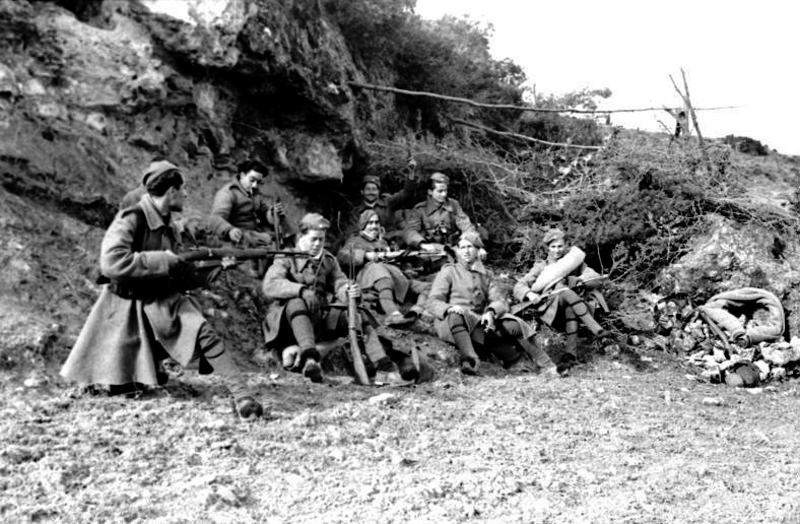
The Security Battalions represent one of the most troubling and complex chapters in modern Greek history. Their existence raises profound questions about collaboration, occupation, resistance, and the Cold War’s origins. Understanding the Battalions requires examining not only German occupation policy, but also the political calculations of the Greek puppet government, the strategic interests of the Exiled Greek Government-in-Exile, and the controversial role played by Britain—America’s principal ally and a major power whose interests in Greece would shape the postwar world.
The Origins of the Security Battalions: April 1943
The Security Battalions (Greek: Tagmata Asfaleias, or Tágmata Asfálías) were officially established on April 7, 1943, by the collaborationist Greek government under Prime Minister Ioannis Rallis. But their origins lay in earlier political machinations and strategic calculations.
The Political Driving Force: General Theodoros Pangalos
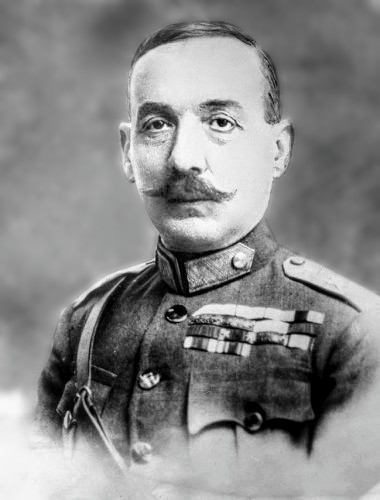
The primary architect of the Security Battalions was not a Nazi but a Greek nationalist: General Theodoros Pangalos, a prominent military figure and former politician. Pangalos was a fierce republican who had long opposed the Greek monarchy and been involved in the factional conflicts between republicans and royalists that had divided Greek politics throughout the 20th century.
Pangalos saw the Security Battalions as an opportunity to:
1. Make a political comeback – reasserting influence after years of marginalization
2. Mobilize republican officers – building a power base among republican military officers who shared his anti-monarchist ideology
3. Fight communism – channeling republican opposition to ELAS
4. Resist the monarchy’s return – preventing the restoration of King George II after the war
In essence, Pangalos viewed the Battalions as a way to position himself as the defender of a republican, anti-communist Greece—one that would exclude both the monarchy and the communists.
The Initial Composition: Republican Officers and Volunteers
When the Security Battalions were first established, they were primarily composed of:
* Republican military officers – associated with Pangalos and his faction
* Fascist and ultra-nationalist civilians – ideologically committed to fighting communism
* Former soldiers and military personnel – seeking to maintain military status during occupation
* Opportunists and coerced recruits – those who joined under pressure or for survival
The republican character of the early Battalions was significant. These were not monarchists, and their initial composition reflected deeper factional conflicts within Greek politics that predated the occupation. Pangalos ensured that his republican allies were given key positions in the Battalions’ leadership structure.
German Mistrust and Limited Resources
Interestingly, German occupation authorities were initially skeptical of the Security Battalions. The Nazis viewed Pangalos as unreliable—a Greek nationalist who might place Greek interests above German interests. They feared that republican-dominated military units might eventually turn against German occupation.
As a result, in the initial period (1943), the Germans supplied the Battalions only with small arms and provided limited logistical support. The Nazis maintained tight control, ensuring that the Battalions could not become an independent power center that might challenge German authority.
The Expansion: Italy’s Fall and ELAS’s Rise (September 1943 onward)
The Security Battalions remained relatively small until a pivotal moment changed the strategic calculus: Italy’s surrender to the Allies in September 1943.
The Italian Armistice and Its Consequences
When Italy signed an armistice with the Allies, the situation in Greece transformed dramatically:
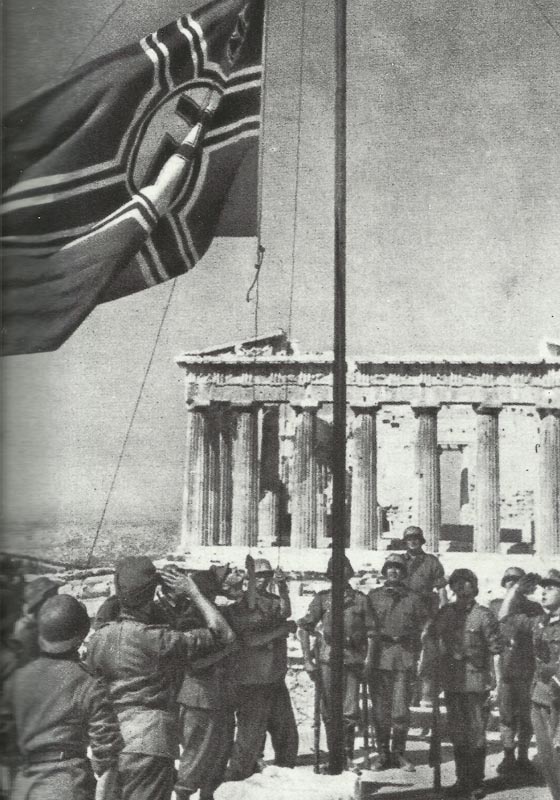
* German forces took direct control of territories previously held by Italian occupation forces
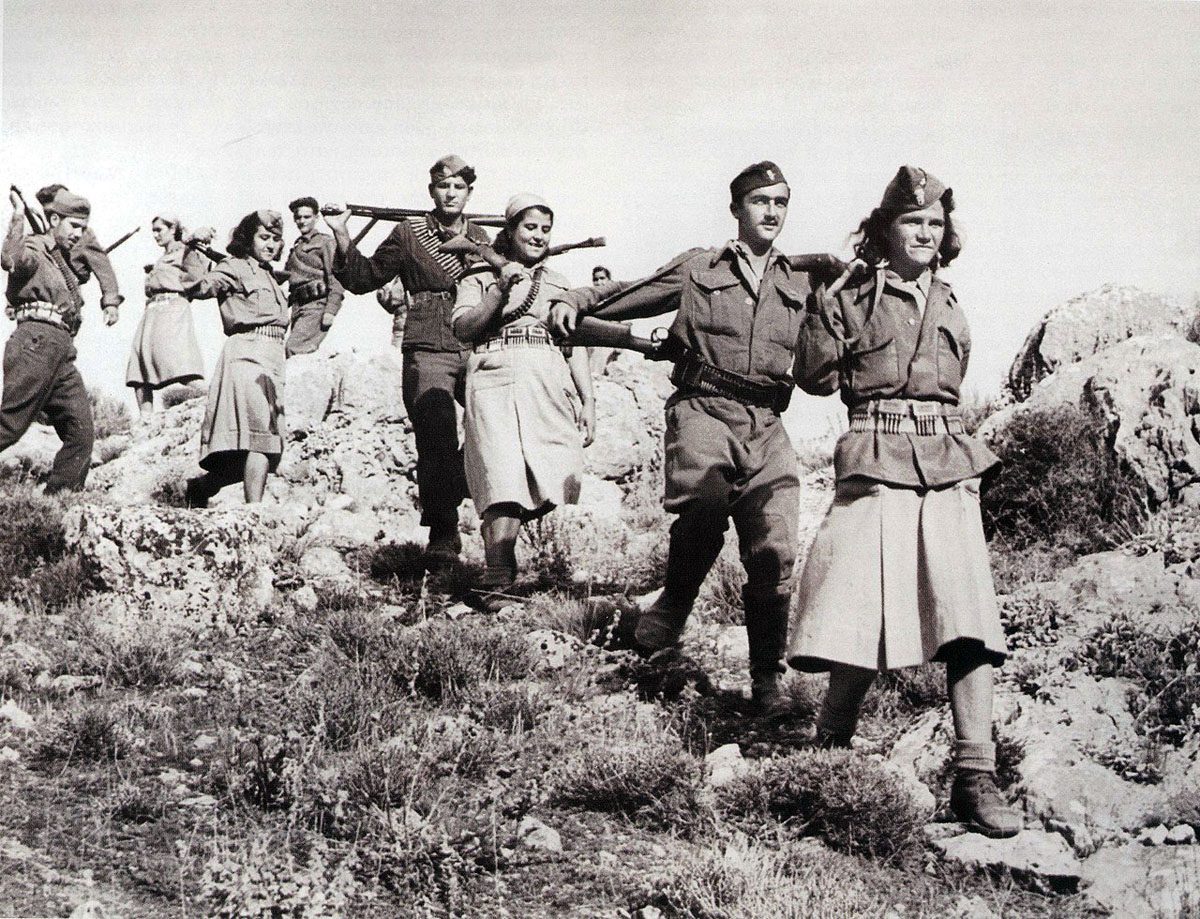
* ELAS launched raids on Italian military installations and captured substantial quantities of weapons and equipment
* The balance of military power shifted in favor of the Greek resistance
* German forces became overstretched trying to maintain control across enlarged territory
The German Strategic Reassessment
General Walter Schimana, the Higher SS and Police Leader in Greece, argued that Germany needed an auxiliary force to relieve the burden on stretched German military resources. The Security Battalions suddenly became much more valuable from a German strategic perspective.
German authorities responded by dramatically increasing military supplies and support to the Battalions. They received:
* Modern infantry weapons
* Machine guns and light artillery
* Ammunition and supplies
* Training and organizational support
The Battalions expanded rapidly from a small force of a few thousand to approximately 22,000 men at their peak, organized into:
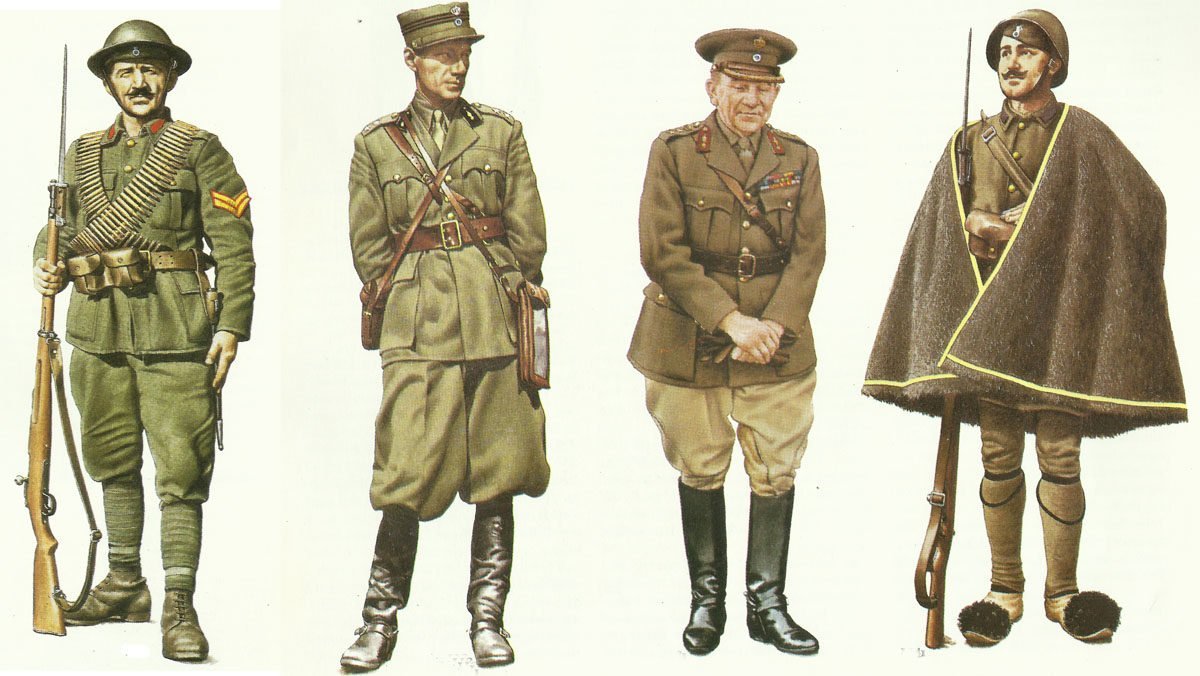
* 9 “evzonic” battalions – elite units modeled on the traditional Greek Evzones regiments
* 22 “voluntary” battalions – larger formations of conscripted or recruited men
The Shift in Recruitment: Royalists Join
As ELAS grew stronger and German support increased, the composition of the Security Battalions shifted. Royalist officers, previously reluctant to join republican-dominated units, now flocked to the Battalions. Their motivation was straightforward: they saw ELAS as a communist threat to the “bourgeois world” they sought to preserve.
Pangalos’s original republican vision was diluted as royalist, conservative, and fascist elements came to dominate the Battalions. The result was an organization that, while ostensibly unified against communism, harbored deep internal factional conflicts.
The Strategic Geography: Where the Battalions Operated
The Security Battalions were not distributed uniformly across occupied Greece. Instead, they were strategically concentrated in regions where ELAS was strongest or where German control was most contested.
Primary Deployment Areas
* Eastern Central Greece – the Thessalian plains and mountain regions where ELAS had significant presence
* The Peloponnese – where German forces sought to maintain control and suppress resistance activity
* Athens and Attica – the capital region, crucial for German political control
* Key transportation routes – roads and mountain passes essential for maintaining German control
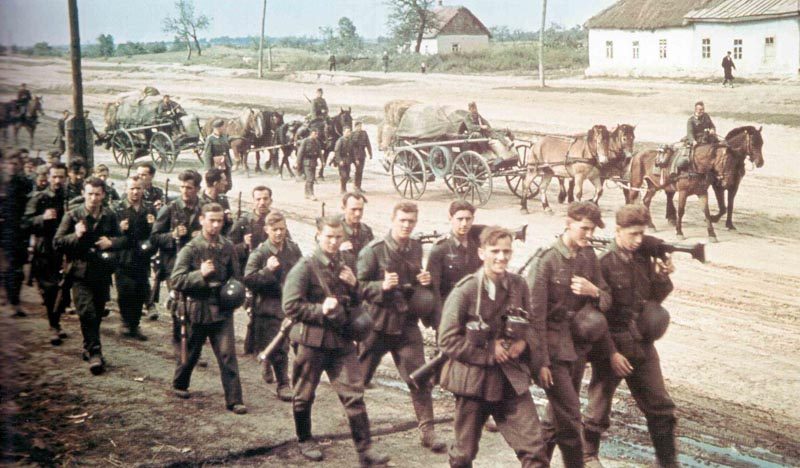
The Battalions were under overall command of General Walter Schimana and worked in coordination with German military and SS forces. They served as an auxiliary police and counterinsurgency force, extending German control without requiring German soldiers to be dispersed across the entire territory.
There are a number of situation assessments in the War Diary of the Wehrmacht High Command that reflect this sentiment. The most telling entries can be found here:
1. Entry for October 15, 1943 (Volume III, Part 2):
During this period, it is noted that fighting between the “National Greek bands” (EDES/Zervas) and the “Bolshevik bands” (ELAS) had fully erupted. The German leadership determined that this represented a significant relief for their own troops.
2. Assessment of the situation in the Southeast from late 1943 / early 1944 (Volume IV, Part 1):
The summary reports on the situation in the Balkans (Southeast sector) explicitly note that the “threat posed by the bands” in Greece is being mitigated by the fact that the groups are wearing each other down through bitter hostility.
A key statement in the situation reports of the Wehrmacht Command Staff (WFSt) reads, in essence: “Since the bands in Greece are fighting each other, the danger to the German occupation forces is currently considered to be lower.”
3. Summary report in January 1944:
Here it is noted that the nationalist groups (EDES) were in some cases allowed to operate freely or even received selective (local) support so that they would lead the fight against the communists (ELAS), thereby sparing German forces.
The passages stating that one should not pay “too much attention” to the Greek partisans (or that they would neutralize one another) were a standard feature of the German assessment of the situation in Greece at the time, particularly following Italy’s surrender in September 1943.
The German strategy under Colonel General Alexander Löhr (Commander-in-Chief of Army Group E) consisted of exploiting the disunity among the Greeks. While the Germans were under massive pressure in Yugoslavia (Tito’s partisans), they viewed the situation in Greece as “less threatening” as long as the internal power struggle between the resistance groups persisted.
The Atrocities: How the Battalions Became Infamous
The Pattern of Violence
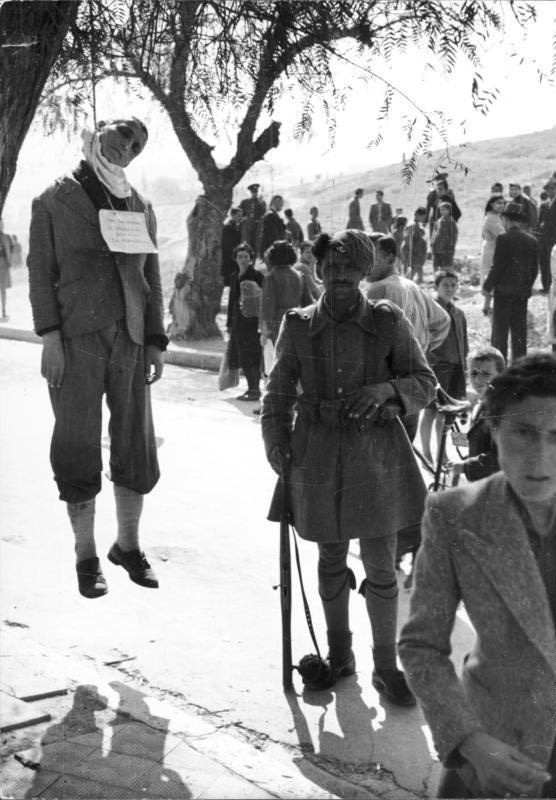
According to historical records and survivor testimony, the Battalions’ conduct included:
* Looting and robbery – systematic theft from civilian populations
* Rape and sexual violence – systematic sexual abuse of women and girls
* Murder – both targeted killings and indiscriminate mass murder
* Torture – systematic torture of suspected resistance sympathizers
* Hostage-taking – seizing civilians as hostages to be executed in retaliation for resistance attacks
The Breakdown of Discipline
The members of the Security Battalions were obviously “poorly disciplined.” This was not accidental; it reflected the nature of their recruitment and training. Many Battalions members were:
* Motivated by ideological fervor rather than military professionalism
* Operating under loose command structures with limited oversight
* Encouraged by German occupiers to engage in brutality as a terror tactic
* Subject to minimal accountability for their actions
The Complaint from Greek Officials
Remarkably, even officials of the collaborationist Greek government itself complained to German occupational authorities that the Battalions’ conduct was counterproductive. These officials argued that:
* The indiscriminate violence was turning civilian populations against the occupation
* Atrocities were increasing support for the Greek resistance
* The Battalions were undermining the Greek government’s attempts to administer territories peacefully
Yet German policy was to encourage the Battalions’ brutality. The Nazis viewed terror as a legitimate tool for suppressing resistance. The goal was not peaceful administration but psychological intimidation.
The Victims: Mostly Non-Combatants
Historian Mark Mazower has documented that the majority of those killed by the Security Battalions were not active resistance members but were killed at random as part of indiscriminate counterinsurgency operations. The Battalions engaged in mass terror rather than targeted counterinsurgency.
The “Total Terror” Strategy
By 1944, as German forces faced increasing pressure and Greek terrain favored resistance fighters, the Battalions adopted a policy of “total terror”. This included:
* Summary executions of suspected resistance sympathizers
* Targeted killings of identified resistance members and sympathizers
* Random killings of civilians to create an atmosphere of fear
* Death squad activities – organized, systematic murder by special units
In one example documented by historians, a Security Battalion death squad in Volos killed 50 local EAM members over the course of March 1944. In another instance, 100 people were shot at random in retaliation for the assassination of Major-general Franz Krech by ELAS.
The pattern was consistent: when Battalions members were killed by ELAS, the Battalions typically responded by summarily executing anybody in the vicinity—a collective punishment strategy designed to terrorize civilian populations.
The Greek Government-in-Exile: A Controversial Alliance
A crucial and controversial dimension of the Security Battalions’ history involves the Greek Government-in-Exile and its relationship to the Battalions.
The Exiled Government’s Dilemma
The Greek Government-in-Exile, operating from Cairo and London, faced a strategic problem: by 1943-1944, ELAS had become the dominant force in Greece, and many believed that if liberation occurred through ELAS military victory, a communist government would inevitably follow.
The Government-in-Exile’s primary concern was ensuring that:
1. The monarchy would be restored after the war
2. Communists would not come to power
3. Conservative and royalist elements would maintain political power
The British Diplomatic Initiative
In November 1943, British Special Operations Executive (SOE) officer Major Donald Stott was sent to Athens with explicit instructions to attempt something extraordinary: convince the Security Battalions to switch sides and serve the Greek Government-in-Exile following Allied liberation of Greece.
Stott’s mission was to:
* Make contact with Security Battalion leadership
* Propose that they abandon collaboration with Germany
* Suggest that they would be recognized as “patriotic forces” defending Greece
* Assure them that the British government and the Greek Government-in-Exile supported them
* Offer protection from postwar retribution if they switched sides
Stott’s Remarkable Negotiations
Remarkably, Stott was able to meet with senior German officials in Athens without being arrested. The Nazis allowed him to conduct negotiations and permitted him to return to Cairo. This suggests that German authorities understood the strategic value of potentially turning the Battalions against ELAS, even if it meant losing their direct control.
However, Stott’s mission was quickly exposed and disavowed. When word of the negotiations reached British leadership:
* Stott was disavowed as a rogue agent
* His superior, Brigadier Keble, was fired
* The British government denied official involvement in the negotiations
The official disavowal did not, however, erase the suspicion that had been created.
The Impact on ELAS and the Resistance
Stott’s exposed mission had profound consequences:
* It inflamed EAM/ELAS suspicions toward the Government-in-Exile
* Many EAM members became convinced that the British and the exiled government secretly supported the Security Battalions
* The suspicion hardened into belief that after King George II returned to Greece, he would pardon the Battalions and enlist them to fight against communism
* Trust between the resistance and the Western powers evaporated
This dynamic would shape the bitter conflicts that followed liberation.
The Self-Fulfilling Prophecy
Crucially, the suspicions that Stott’s mission aroused proved prescient.
Many leaders of the Greek government-in-exile secretly endorsed the battalions as a counterweight to the EAM, and in June 1944, the government-in-exile successfully requested that the BBC’s Greek-language service stop referring to them as traitors.
In the summer of 1944, the Security Battalions assisted German forces in Athens during Blokos (raids) ordered by Blume. During these operations, neighborhoods where the EAM was most active were cordoned off, while the entire male population was rounded up. Informants wearing hoods identified suspected EAM members, who were immediately executed.
Those suspected of being EAM sympathizers were detained as hostages and executed in retaliation for ELAS attacks on German forces. On the eve of Greece’s liberation, several skirmishes took place between the battalions and the ELAS, including the Battle of Meligalas in September 1944.
During the German evacuation of Athens and Greece in October and November 1942, the Security Battalions ensured the orderly withdrawal of German troops.
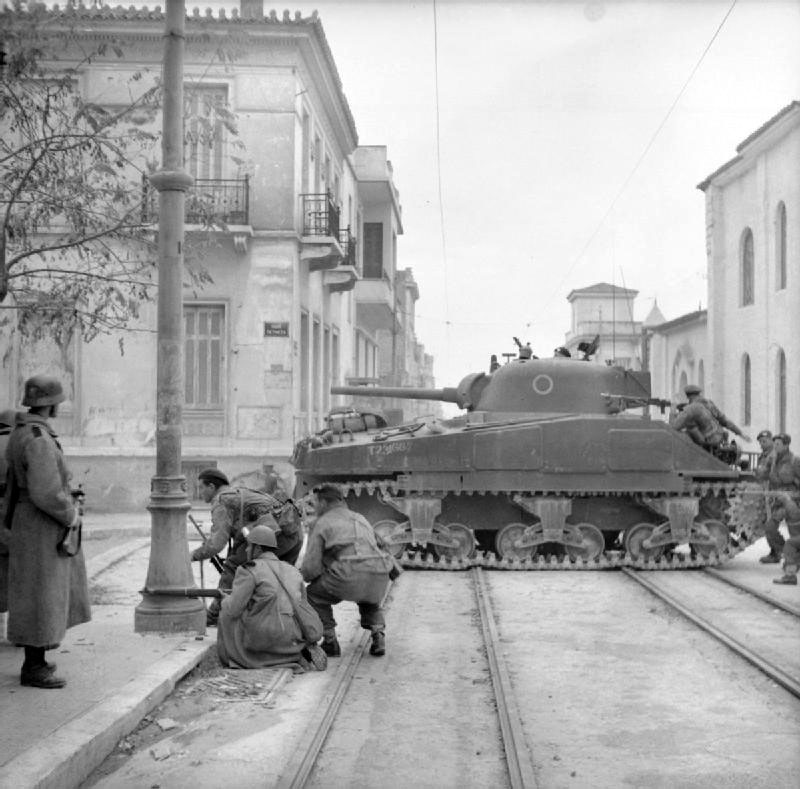
After the liberation, the Security Battalions surrendered to Allied forces and were disbanded. Many of their former members were incorporated into the Greek Gendarmerie to fight against ELAS in Athens alongside British and other Greek government forces during the Dekemvriana.
Following the defeat of the EAM during the Dekemvriana, former members of the Security Battalions continued to persecute Greek leftists and republicans during the White Terror that followed the Treaty of Varkiza, which dissolved the ELAS.
Many former members continued to commit atrocities against the Communist Army of Greece during the Greek Civil War. During the civil war, experienced officers of the Security Battalions founded a secret organization known as the Holy League of Greek Officers, which, beginning in 1947, was subsidized by the U.S. Central Intelligence Agency (CIA) as one of Greece’s most important anti-communist groups.
References and literature
Das Deutsche Reich und der Zweite Weltkrieg (10 Bände, Zentrum für Militärgeschichte)
Kriegstagebuch des Oberkommandos der Wehrmacht, Band 1-8 (Percy E. Schramm)
Greek Resistance 1941-45 : Organization, Achievements and Contributions to Allied War Efforts Against the Axis Powers (Chimbos, Pete)